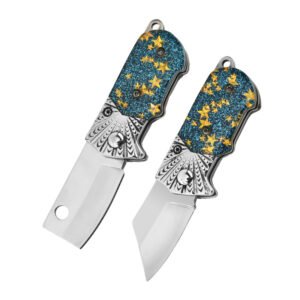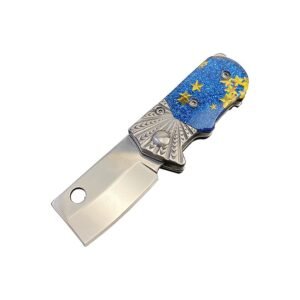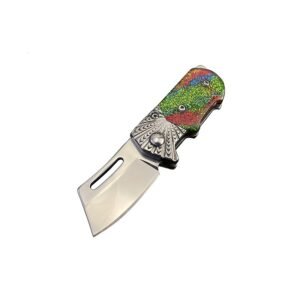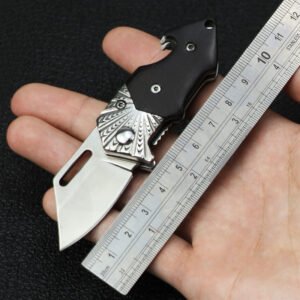


Can I Mix Colors in One OTF Knife Order?

Short answer
Yes, you often can mix colors in one OTF knife order, but approval depends on whether minimums are set by model, color, or SKU. See the exact rules, examples, a
Key Takeaways
- Knife rules can vary by state, city, blade style, opening mechanism, carry method, and intended use.
- Do not treat a product nickname as a legal category; check the actual features and local rule.
- Retailers should keep legal or safety language factual and avoid promising that one item is allowed everywhere.
Terms Used Here
- OTF
- Out-the-front; a knife design where the blade moves forward from the front of the handle.
In this article
- 01 What decides if your mixed-color order is allowed?
- 02 1. How the minimum order quantity is counted
- 03 2. Inner carton or case-pack rules
- 04 3. Whether each color is its own SKU
- 05 4. Lead time by color
- 06 Quick decision rule
- 07 Example order split: one allowed, one not allowed
- 08 Allowed configuration
- 09 Not allowed configuration
- 10 What we need before confirming a mixed-color wholesale order
- 11 Common rule formats you may see from suppliers
- 12 Retail vs. wholesale vs. private-label: the short version
- 13 FAQ
- 14 Can I mix handle colors but keep one blade finish?
- 15 Do mixed-color orders cost more?
- 16 Can I mix colors on a small order?
- 17 Is one purchase order the same as one shipment?
- 18 Source basis
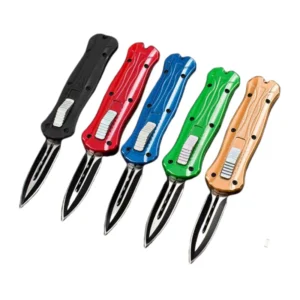
Yes, you often can mix colors in one OTF knife order, but approval depends on how the supplier sets minimums: by model, by color, or by SKU. For U.S.-focused orders, wholesale purchases usually have carton-count and variant rules, while small retail orders are usually simpler if the colors are already in stock.
| Buyer type | Can colors be mixed? | Common restriction | What to confirm |
|---|---|---|---|
| Retail buyer | Usually yes | Only available in-stock units can be combined | Per-unit stock by color and any shipping limits |
| Wholesale buyer | Often yes | MOQ may apply by SKU or full inner carton | Whether the minimum is by model, color, or exact variant |
| Private-label buyer | Sometimes | Custom finishes and packaging can force separate runs | Color consistency, production batch, and packaging requirements |
This page answers only the order-configuration question: whether multiple handle colors can go on one purchase order. It does not address legality of possession, shipping eligibility, or resale rules, which are separate issues from whether a mixed-color order can be accepted.
What decides if your mixed-color order is allowed?
In practice, four operational rules decide most mixed-color requests.
1. How the minimum order quantity is counted
The most important detail is the basis of the minimum order quantity, or MOQ. Suppliers typically use one of these formats:
- By model family: Example: 120 units total of Model A, in any in-stock color split.
- By color: Example: 60 units minimum per color of Model A.
- By SKU: Example: 24 units minimum for each exact combination of handle color, blade finish, and edge style.
If a supplier says “minimum 100 pieces,” that statement is incomplete until you know which of those three methods applies.
2. Inner carton or case-pack rules
Even when colors can be mixed on one order, they may still need to follow fixed pack counts. A common rule format looks like this:
- 6 units per inner carton per color
- 12 units per color variant
- 24 units per SKU master pack
That means a request for 5 black, 5 tan, and 5 green may be rejected even if the total quantity is high enough, because the split does not match the packing structure. For wholesale buyers, carton rules often matter as much as the headline MOQ.
3. Whether each color is its own SKU
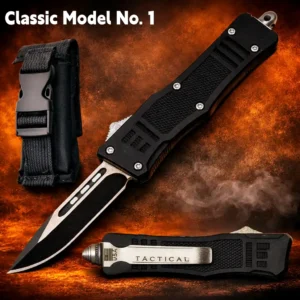
On many OTF knives, handle color is not the only variable. The exact sellable unit may also include blade finish, edge type, hardware color, and packaging. In that case, “black handle” is not one item. It may be several separate SKUs, such as:
- Black handle + stonewashed blade + plain edge
- Black handle + black-coated blade + plain edge
- Black handle + black-coated blade + partially serrated edge
If the supplier counts minimums by SKU, changing blade finish while mixing colors can turn a simple mixed-color order into multiple small variant orders that do not qualify.
4. Lead time by color
Color availability is not always uniform. One finish may be in stock, while another is waiting on a production run or packing cycle. That can affect whether the supplier will:
- Approve the whole order as one shipment
- Split-ship the available colors first
- Decline the mixed split and ask for a revised combination
This is why a mixed-color order can be acceptable in principle but still delayed in practice.
Quick decision rule
A mixed-color order is usually easiest to approve when all three of these are true:
- The supplier treats the knife as one model family with multiple in-stock colors
- The minimum is counted by total model quantity, not by each color or SKU
- Your requested quantities match the supplier’s carton or case-pack increments
If any one of those conditions is missing, the order may still be possible, but it usually needs a custom confirmation first.
Example order split: one allowed, one not allowed
Below is a simple example using a hypothetical wholesale rule set. This is an example format, not a universal industry standard.
Example supplier rule: Model X, 120-unit MOQ by model family; colors can be mixed; each color must be ordered in increments of 12; all units must use the same blade finish.
Allowed configuration
- Model X, 120 units total
- Black: 48
- OD Green: 36
- Tan: 24
- Red: 12
- Blade finish: black-coated on all units
Why this works: The total meets the 120-unit minimum, each color is ordered in multiples of 12, and the blade finish stays constant.
Not allowed configuration
- Model X, 120 units total
- Black: 50
- OD Green: 25
- Tan: 25
- Red: 20
- Blade finish: mixed between stonewashed and black-coated
Why this fails: The color quantities do not follow 12-unit increments, and the mixed blade finishes may create separate SKUs that break the model-family rule.
What we need before confirming a mixed-color wholesale order
For a wholesale quote, the useful information is operational, not promotional. A supplier can usually give a clear yes-or-no answer faster if the request includes these details up front:
- Exact model or item number
- Total unit quantity
- Requested color breakdown by unit count
- Blade finish and edge style
- Packaging type, if more than one is available
- Ship-to country or destination market
A concise format works best. Example: “Model A, 240 units total: 120 black, 60 OD green, 36 tan, 24 red; all plain edge, black-coated blade, standard box, U.S. delivery.”
If you are still comparing variants, you can review the current OTF knife catalog. If you need confirmation on a specific split, use the wholesale inquiry form with the exact quantities rather than a general question like “Can I mix colors?”
Common rule formats you may see from suppliers
Because mixed-color approval depends on order structure, it helps to recognize the wording suppliers often use. These are typical examples of rule formats:
- “Mix colors allowed, same model only” — usually means handle colors can vary, but blade style and packaging must stay the same.
- “MOQ applies per SKU” — usually means each color and finish combination must meet its own minimum.
- “Assorted colors packed by inner carton” — usually means you can mix colors, but only in fixed pack counts.
- “Stock colors only” — usually means standard finishes can be mixed, but custom colors cannot.
- “Lead time subject to color availability” — usually means the order is acceptable only if all requested colors are currently in stock or scheduled in the same production window.
These phrases are not legal terms; they are operational shorthand. The safest basis for a final decision is the written quote or order confirmation for the exact model and split you want.
Retail vs. wholesale vs. private-label: the short version
Retail: If the seller stocks multiple colors and sells by individual unit, mixing colors is usually straightforward. The main limit is stock availability.
Wholesale: Mixed colors are common, but only when the split fits the supplier’s MOQ basis and carton structure.
Private-label: Mixed colors may be possible, but custom packaging, branding, or finish matching often makes the order more restrictive than a standard stock wholesale order.
FAQ
Can I mix handle colors but keep one blade finish?
Often yes, and that is usually the easiest wholesale setup. Keeping one blade finish reduces the chance that each color becomes a separate SKU group.
Do mixed-color orders cost more?
Not always. If all requested colors are standard stock variants and the order follows normal carton rules, pricing may stay the same. Extra cost is more likely when the order needs manual assorting, repacking, or special production.
Can I mix colors on a small order?
For retail purchases, often yes if the units are in stock. For wholesale, a small mixed-color order may be rejected if it does not meet per-color, per-SKU, or case-pack minimums.
Is one purchase order the same as one shipment?
Not necessarily. A supplier may accept one mixed-color order but split shipment dates if some colors are in stock and others are delayed.
Source basis
This answer is based on standard wholesale order mechanics: MOQ counted by model, color, or SKU; inner-carton packing rules; and stock or production availability by variant. Those are common operational factors in knife distribution, but the exact rule is supplier-specific. For that reason, the reliable basis for any final answer is the supplier’s written confirmation for the exact model, quantities, and color split requested.