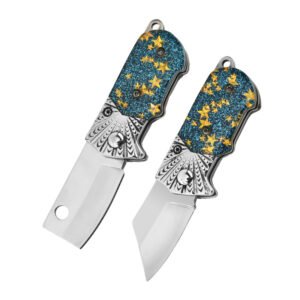


Can I Mix Blade Styles in One OTF Knife Order?

Short answer
Yes, many wholesale OTF knife orders can mix blade styles, but the real answer depends on MOQ, handle compatibility, packaging, and QC. See the practical criter
Key Takeaways
- Knife rules can vary by state, city, blade style, opening mechanism, carry method, and intended use.
- Do not treat a product nickname as a legal category; check the actual features and local rule.
- Retailers should keep legal or safety language factual and avoid promising that one item is allowed everywhere.
Terms Used Here
- OTF
- Out-the-front; a knife design where the blade moves forward from the front of the handle.
- Automatic knife
- A knife that opens by a spring-driven mechanism after the user activates a button, switch, or slider.
In this article
- 01 What actually determines whether a mixed blade-style order is workable
- 02 When mixing blade styles makes sense for wholesale buyers
- 03 Decision criteria: when to approve the mixed order and when to split it
- 04 The most common mistakes buyers make with mixed OTF blade-style orders
- 05 1. Treating all blade profiles as equal in action performance
- 06 2. Ignoring MOQ at the variant level
- 07 3. Combining too many changes in one run
- 08 4. Forgetting compliance and channel rules
- 09 5. Using vague SKU language
- 10 A practical ordering example for OTF buyers
- 11 FAQ
- 12 Can I put two or three blade styles on one purchase order?
- 13 Will mixed blade styles increase my unit cost?
- 14 Is it better to mix blade styles or order one style only?
- 15 Should I sample every blade style before production?
- 16 What is the safest way to ask for a mixed OTF order?
Yes, you often can mix blade styles in one OTF knife order, especially in wholesale and private-label buying, but only when the order is built around the same OTF platform, agreed minimums, and clear QC rules. For U.S.-focused wholesale buyers, distributors, and resellers, the practical question is not just whether mixing is allowed, but whether the mixed order still works for production, packaging, pricing, and after-sales support.
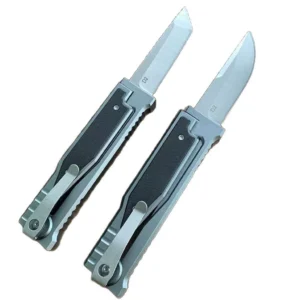
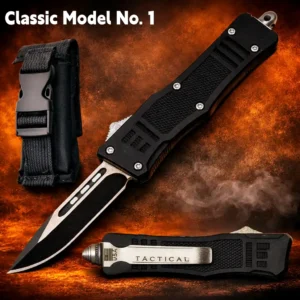
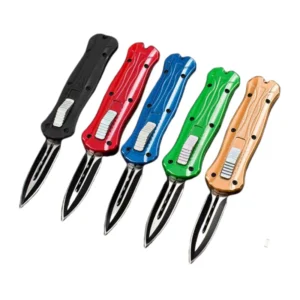
In OTF buying, a “mixed blade style” order normally means one handle chassis and one firing mechanism paired with two or more blade grinds or profiles, such as drop point, tanto, dagger, or spear point. That is very different from mixing completely different knife platforms. If you are sourcing from a catalog of OTF knife models, the easiest mixed order is one where the handle, hardware, finish, and mechanism stay the same while only the blade profile changes.
The short rule is quotable because it is true in day-to-day wholesale work: mix blade styles when the platform stays constant; avoid mixing variables that change tooling, QC, or packaging at the same time.
What actually determines whether a mixed blade-style order is workable
Wholesale OTF orders succeed or fail on operational details. Blade style is only one variable. Before you ask for a mixed order, confirm these five points.
- Shared chassis: The blade styles should fit the same handle frame, slider travel, stop-pin geometry, and internal track system.
- Shared blade stock and heat-treat plan: If all styles use the same steel, thickness, hardness target, and finish, production is simpler.
- MOQ by variant: Many suppliers can mix styles in one PO, but still require a minimum quantity per blade profile, finish, or logo setup.
- Common packaging: Retail box inserts, foam cuts, and label copy may need changes if blade shapes differ significantly.
- QC tolerance: OTF action must be checked by style, because blade weight and grind geometry can affect deployment consistency.
That last point matters more in OTF knives than in standard folders. A side-opening folder can tolerate more variation in blade profile without affecting opening force. An OTF mechanism is more sensitive because spring force, blade mass, friction, and track alignment all interact. A dagger blade and a thick tanto may both fit the same frame on paper, but they may not behave identically in repeated cycling.
If your order mixes blade styles but keeps all other specs stable, it is often commercially efficient. If you also want different steels, coatings, serration patterns, and packaging in the same run, complexity rises quickly and costs follow.
When mixing blade styles makes sense for wholesale buyers
Mixed blade-style orders are most useful when you want one product family with wider shelf appeal. Retailers and distributors often use this strategy to cover multiple buyer preferences without carrying several unrelated OTF models.
Good use cases include:
- Retail assortment planning: One handle design in drop point and tanto gives shoppers choice while keeping the display visually consistent.
- Private-label launch: A new brand can test which blade profile sells faster without investing in multiple handle molds.
- Regional demand splits: One distributor may know that tactical-oriented dealers prefer tanto while everyday buyers choose drop point.
- Dealer exclusives: A base model can stay standard while one blade style is reserved for a specific channel or account.
A practical threshold: if at least 70% to 80% of the knife remains identical across variants, mixing is often manageable. That is an operational inference rather than a legal standard, but it reflects how many buyers keep complexity under control. Once too many components change, the order stops acting like one family and starts acting like several separate SKUs sharing a name.
For serious buyers, the better question to send a supplier is not “Can I mix blade styles?” but “Can we hold one chassis, one steel, one finish, one packaging format, and split quantities by blade profile?” That framing gets a faster and more accurate answer.
Decision criteria: when to approve the mixed order and when to split it
Use the comparison below before you issue a PO or request samples.
- Approve a mixed order if the blade styles use the same pivotless OTF track geometry, same blade stock thickness, same steel, same coating, same logo placement, and the supplier confirms equal cycling reliability across profiles.
- Split into separate orders or separate SKUs if one style needs partial serration, a different swedge, a different finish, or a different retail insert and barcode label.
- Request pilot samples first if one profile is notably heavier at the tip, has a broader shoulder near the base, or changes the edge exposure in the closed position.
Here is a simple buyer checklist specific to OTF wholesale orders:
- Confirm that all requested blade styles are approved for the same handle platform.
- Ask for the minimum quantity per blade style, not just the total order MOQ.
- Verify blade stock thickness in millimeters for each profile.
- Confirm whether spring rate or internal tuning changes by blade style.
- Ask whether deployment and retraction tests are performed per variant or only per model family.
- Check whether packaging trays or box labels must change for each style.
- Specify whether replacement parts and warranty support will be stocked by style.
- Request final SKU naming that clearly separates drop point, tanto, dagger, or serrated variants.
If you are still early in the buying process, a direct material and MOQ inquiry is the fastest way to confirm which combinations are realistic before artwork and packaging are finalized.
The most common mistakes buyers make with mixed OTF blade-style orders
Most problems do not start at checkout. They start when the buyer assumes that a blade profile change is cosmetic. In OTF knives, it is not always cosmetic.
1. Treating all blade profiles as equal in action performance
Different blade geometries can change weight distribution and friction points. That can affect deployment feel, lockup, and failure rates in repetitive cycle testing. Ask for variant-specific test results or pre-production samples.
2. Ignoring MOQ at the variant level
A supplier may accept a 500-piece order but still require 100 pieces per blade style. If you want four styles in uneven quantities, the order may not fit production planning. Always ask for the minimum per profile, per finish, and per packaging type.
3. Combining too many changes in one run
Blade style plus steel change plus color change plus retail box change is where margins disappear. If your goal is assortment, keep the handle and packaging stable. If your goal is premium segmentation, split the project into phases.
4. Forgetting compliance and channel rules
For automatic knives, compliance is not one single question. Buyers should separate admissibility, shipping, sale, and possession. In the U.S., those issues can differ by federal, state, and local rule, and by buyer type. A mixed blade-style order does not automatically change the automatic-knife status, but blade length, edge style, and product description can still affect channel acceptance, dealer comfort, and shipping paperwork. That is a business reality, not a blanket ban.
5. Using vague SKU language
“Black OTF, mixed blades” is not enough for wholesale receiving, dealer catalogs, or warranty claims. Use distinct SKU codes and carton labels for each profile. That reduces shipping errors and helps you learn what actually sells.
A practical ordering example for OTF buyers
Suppose a retailer wants 600 units of one OTF platform for the U.S. market. The buyer wants 300 drop point, 200 tanto, and 100 dagger units, all in black aluminum handles with the same steel and stonewashed finish.
This is a workable mixed order if:
- The three blade styles fit the same internal mechanism without different springs or machining changes.
- The supplier accepts the per-style quantities.
- The retail box can use one outer design with a small style sticker or label change.
- QC tests are run for each profile, not just the drop point sample.
The same order becomes less efficient if the buyer also asks for one style in coated finish, one style with serrations, and one style in gift tin packaging. At that point, the buyer is no longer buying one family with blade options. They are managing several production paths.
Source basis for this conclusion: the answer is grounded in standard wholesale manufacturing constraints for OTF knives, including shared-platform compatibility, variant-level MOQ, packaging control, and action testing by profile. Those are operational factors buyers can verify directly in quotes, samples, and production approvals.
FAQ
Can I put two or three blade styles on one purchase order?
Yes, if the supplier allows mixed variants under one model family and each style meets the minimum quantity requirement.
Will mixed blade styles increase my unit cost?
They can. Cost tends to rise when each style needs separate QC, packaging labels, or smaller per-style quantities. If the chassis and finish stay the same, the increase is often more manageable.
Is it better to mix blade styles or order one style only?
Order one style only if you need the lowest complexity and fastest replenishment. Mix styles if you want broader retail appeal and can support separate SKUs, inventory counts, and warranty tracking.
Should I sample every blade style before production?
Yes. In OTF knives, every blade profile should be sampled and cycle-tested because action consistency can change with blade geometry and mass.
What is the safest way to ask for a mixed OTF order?
Ask for one handle platform, one steel, one finish, one packaging format, and a quantity split by blade style. Then confirm per-style MOQ, QC method, and final SKU labeling in writing.