
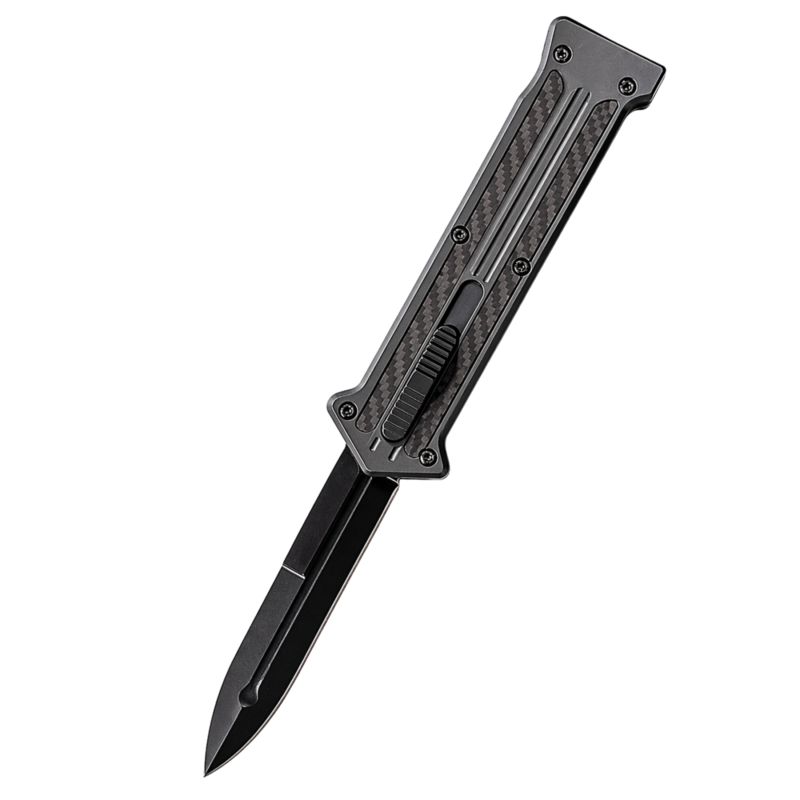
Short answer
Yes, you can use an OTF knife for camping, but it is best for light utility tasks like cord, packaging, tape, and small repairs—not batoning, prying, digging, o
Key Takeaways
- Knife rules can vary by state, city, blade style, opening mechanism, carry method, and intended use.
- Do not treat a product nickname as a legal category; check the actual features and local rule.
- Retailers should keep legal or safety language factual and avoid promising that one item is allowed everywhere.
Terms Used Here
- OTF
- Out-the-front; a knife design where the blade moves forward from the front of the handle.
- Automatic knife
- A knife that opens by a spring-driven mechanism after the user activates a button, switch, or slider.
- Fixed blade
- A knife with a blade that does not fold or retract into the handle.
In this article
- 01 Why an OTF is limited at camp
- 02 What an OTF knife does well while camping
- 03 Normal, borderline, and problem tasks
- 04 Normal tasks
- 05 Borderline tasks
- 06 Problem tasks
- 07 Can an OTF be your only camping knife?
- 08 OTF vs fixed blade vs manual folder for camping
- 09 Food prep, wet weather, and dirty conditions
- 10 Food prep
- 11 Wet weather
- 12 Sand, dust, ash, and sap
- 13 Compact pass/fail checklist before a trip
- 14 Mistakes to avoid when camping with an OTF
- 15 What to look for if you want an OTF for camping
- 16 FAQ
- 17 Can dirt or sand stop an OTF from working?
- 18 Is an OTF good for firemaking?
- 19 Is an OTF good for camping food prep?
- 20 Should I bring an OTF camping?
Yes—an OTF knife can be used for camping, but only as a light-duty camp knife. If your trip involves opening food packs, cutting cord, trimming straps, and doing small repairs, it can work well; if you need to split wood, pry, dig, or work in sand and mud, it is the wrong primary knife.
The short answer is yes for utility cuts, no for hard campcraft. An OTF is convenient and fast for controlled slicing, but the out-the-front mechanism is more sensitive to grit, sticky residue, and side pressure than a fixed blade.
| Normal use | Borderline use | Problem use |
|---|---|---|
| Food packaging, paracord, tape, zip ties, loose webbing, first-aid packs | Short whittling, light food prep, repeated rope cuts, damp use if cleaned later | Batoning, prying, digging, heavy wood work, sand, mud, ash, resin-heavy carving |
Why an OTF is limited at camp
The reason is simple: the blade travels in and out of the handle. That means fine sand, wood dust, lint, sap, ash, and moisture have more places to interfere with the action. A fixed blade has almost nothing to jam. A manual folder also tends to be easier to rinse, inspect, and keep working in dirty outdoor conditions.
That does not make an OTF useless outdoors. It just means you should treat it like a fast-access utility cutter, not like a survival knife or wood-processing tool.
What an OTF knife does well while camping
An OTF is at its best when the cut is clean, controlled, and mostly straight. Many campground jobs fit that description.
- Opening packaging: freeze-dried meal pouches, snack bags, cardboard boxes, plastic wrap, accessory packs
- Cord and strap cutting: paracord, guyline, zip ties, nylon straps, loose webbing ends
- Minor repairs: trimming duct tape, cutting moleskin, opening patch kits, shaping small repair materials
- Tarp and tent setup: shortening a strap, trimming line, opening stake or hardware packs
- Vehicle or campground utility: quick cuts where one-handed access is convenient and the knife stays fairly clean
A plain-English rule: if the job feels like box-cutter work, an OTF is usually fine; if it feels like campcraft work, bring a fixed blade.
Normal, borderline, and problem tasks
Normal tasks
- Cutting 1/8-inch to 1/4-inch cordage in one or two pulls
- Opening meal pouches and supply packaging
- Cutting tape, plastic, cloth, and loose threads
- Small, clean slicing jobs around a campsite table or gear bin
Borderline tasks
- Whittling dry wood for a few minutes
- Repeated cuts through rope around 3/8 inch or more
- Light food support, such as slicing cheese or opening sausage packs
- Use in drizzle or around light dust if you clean the knife afterward
Problem tasks
- Batoning: striking the blade spine to split wood
- Prying: twisting the blade sideways under load
- Digging: using the tip in dirt, gravel, ash, or ice
- Heavy fire prep: long carving sessions, hard scraping, resin-heavy wood work
- Dirty storage: tossing it loose into a sandy tote, truck box, or dusty camp bin
That is the real camping answer: an OTF is good for cutting, weak for leverage, and poor for impact work.
Can an OTF be your only camping knife?
Sometimes, yes—but only on light-duty trips. If you are car camping, staying at an organized campground, or bringing other tools for wood and rough work, an OTF can be your only knife.
It can be your only camp knife if:
- You mostly cut packaging, cord, tape, and straps
- You already have prepared firewood or another tool for wood processing
- Your campsite is relatively clean and dry
- You are willing to wipe down and inspect the knife during the trip
It should be a backup, not the main knife, if:
- You expect to make kindling or carve wood for long periods
- You are camping on beaches, riverbanks, muddy sites, or very dusty ground
- You want one knife to do every cutting and camp task
- You tend to twist, scrape, pry, or dig with your knife
Realistic example: on a weekend state-park trip, an OTF can handle freeze-dried meal pouches, paracord, tarp straps, repair tape, and snack packaging with no trouble. On a wet backcountry trip where you are cleaning muddy stakes, making feather sticks, and working around ash and sap, it makes more sense as a secondary cutter while a fixed blade does the hard work.
OTF vs fixed blade vs manual folder for camping
If you are choosing what to bring, this is the practical comparison.
- OTF knife: fastest one-handed access, excellent for quick utility cuts, but more vulnerable to grit and less forgiving of side load
- Fixed blade: strongest and simplest option, best for wood work, dirty environments, wet conditions, and easy cleaning
- Manual folder: usually slower than an OTF, but often more tolerant of dirt and easier to maintain outdoors
If your camping is mostly coolers, packaged food, and simple campsite chores, an OTF can be enough. If your camping includes fire prep, wet ground, and one knife doing everything, a fixed blade is the safer choice.
Food prep, wet weather, and dirty conditions
Food prep
An OTF is acceptable for light food support: opening packs, slicing cheese, trimming sausage wrappers, or cutting soft food on a clean surface. It is less ideal for full meal prep because the handle internals are harder to clean thoroughly than a fixed blade.
Wet weather
Light rain is manageable if you dry the knife soon after use. Extended wet carry is different. If water sits in the knife, corrosion risk and sluggish action become more likely. Stainless blade steel helps, but drying still matters.
Sand, dust, ash, and sap
This is where OTFs lose the most ground. Fine grit can interfere with deployment. Sticky sap can transfer into the blade path. Ash and sawdust can build up around the opening and switch. If your camp environment is dirty, the knife needs more attention than a fixed blade would.
Compact pass/fail checklist before a trip
- Pass: opens and closes 20 times in a row without hesitation
- Pass: cleanly cuts 1/4-inch paracord in one controlled pull
- Pass: switch feels smooth, not gritty or unusually stiff
- Pass: grip stays secure with a slightly damp hand
- Fail: action becomes weak after pocket lint or light dust exposure
- Fail: you hear scraping or feel drag during deployment
- Fail: sticky residue on the blade gets pulled into the handle
- Fail: noticeable blade play makes straight cuts awkward
If it fails more than one of those checks, treat it as casual carry or backup rather than your primary camp knife.
Mistakes to avoid when camping with an OTF
- Do not keep firing it after it gets sandy. Repeated cycling can push grit deeper into the mechanism.
- Do not retract a sap-covered blade without wiping it first. Sticky residue inside the handle can slow the action.
- Do not use it as a pry tool. OTFs are for cutting, not leverage.
- Do not leave it loose in the bottom of a tote. Crumbs, dust, and hardware are bad for the blade track.
- Do not assume “outdoor use” means “abuse-proof.” Camping includes many easy tasks, but also many dirty ones.
What to look for if you want an OTF for camping
- Blade shape: a plain-edge drop point is usually the most practical for camp utility
- Blade length: around 3 to 3.75 inches works well for most camping chores
- Grip: choose a handle that stays secure when your hands are damp
- Blade steel: stainless steel is usually the practical choice for humidity, food tasks, and rain
- Maintenance: easier cleaning and sensible lubrication matter more outdoors than they do in office pocket carry
If you want to compare practical sizes and blade styles, see the OTF knife collection. If you want to browse other utility-oriented options, you can also view related utility and self defense products.
FAQ
Can dirt or sand stop an OTF from working?
Yes. Fine grit can slow or interrupt deployment because the blade runs inside the handle.
Is an OTF good for firemaking?
It is fine for cutting tinder, opening fire starter packs, and trimming cord. It is not a good choice for batoning or hard scraping.
Is an OTF good for camping food prep?
For light support tasks, yes. For full prep and easy cleaning, a fixed blade is better.
Should I bring an OTF camping?
Bring it for light-duty camping where the knife stays fairly clean and controlled. For rough, wet, or wood-heavy trips, bring a sturdier primary knife and use the OTF as a secondary cutter.
Before carrying any automatic knife, check local knife laws and any campground, park, or event rules where you plan to camp.