
Short answer
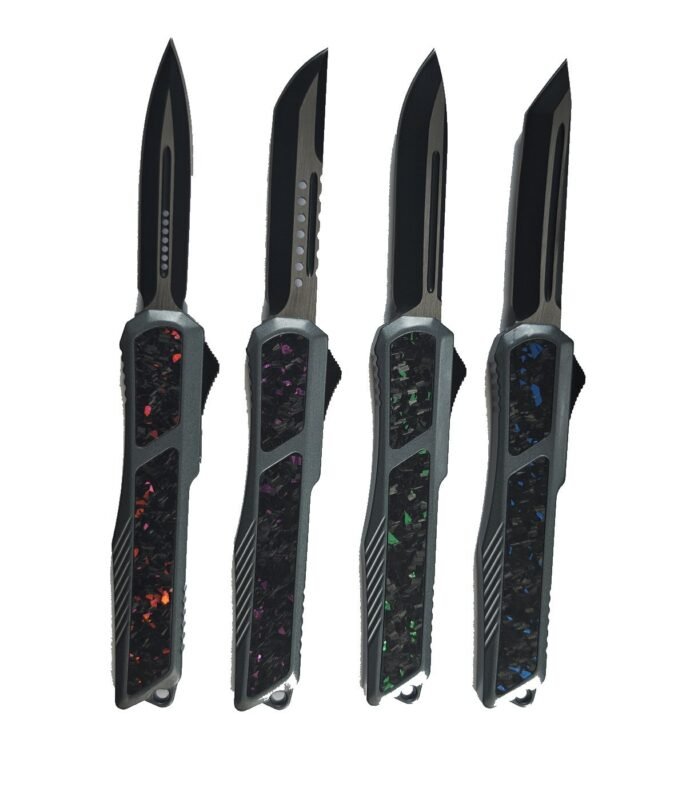
Yes—sharpen a single-edge tanto OTF by treating the main edge and front edge as two separate straight sections, matching the factory bevel, and cleaning away bu
Key Takeaways
- Start with a mild method and increase pressure or abrasion only when the blade condition requires it.
- Edge angle, steel type, corrosion level, and handle material all affect the right care method.
- For wholesale assortments, simple care instructions help customers keep knives useful longer.
Terms Used Here
- OTF
- Out-the-front; a knife design where the blade moves forward from the front of the handle.
- Folding knife
- A knife with a blade that pivots into the handle for storage.
In this article
- 01 Before you start
- 02 A compact tool setup that works well
- 03 The sharpening rule that matters most
- 04 Step-by-step: sharpening a single-edge tanto OTF
- 05 1. Clean and inspect before you abrade anything
- 06 2. Mark the bevel
- 07 3. Sharpen the main edge first
- 08 4. Reposition and sharpen the front edge separately
- 09 5. Raise only a small burr
- 10 Deburring matters more on an OTF than many owners expect
- 11 How to hold and support the knife safely
- 12 What to avoid
- 13 After sharpening: a quick diagnostic check
- 14 Quick FAQ
- 15 Can I use a pull-through sharpener on a tanto OTF?
- 16 Can I sharpen a tanto OTF with a ceramic rod?
- 17 What angle should I use if I do not know the factory bevel?
- 18 Why did my OTF feel draggy after sharpening?
- 19 Should I sharpen a dagger-style OTF the same way?
- 20 When should I stop and get help?
Yes—if you have a single-edge tanto OTF, you can sharpen it at home by treating the main edge and the front edge as two separate straight segments. The key limit is this: if the blade is severely chipped, the tip is bent, or deployment changes after sharpening and cleaning, stop and treat it as a service issue rather than a sharpening issue.
A tanto OTF should not be sharpened in one long sweeping stroke. That is the fastest way to round the transition corner and change how the tip cuts. If the knife still fires normally but cuts badly, suspect a dull edge. If it suddenly feels draggy only after sharpening, suspect burr, swarf, or edge-shoulder interference before assuming the mechanism failed.
Before you start
Scope: this guide applies to single-edge tanto OTF blades. It does not cover double-edge dagger OTFs, false-edge variants that have been sharpened on both sides, or blades with major damage.
Safe-use caveat: sharpen only with the blade fully deployed and locked, with the knife supported so you are not pressing hard against the handle or opening. On OTFs, aggressive bench pressure, powered sharpeners, and dirty retraction are the main avoidable mistakes.
Angle fallback: if you do not know the maker’s angle, match the factory bevel first using a marker. If that is unclear, a cautious starting range is often around 17 to 20 degrees per side on many working OTF edges, but the existing bevel on your knife matters more than any generic number.
General guidance: on an OTF, preserving factory geometry and clean deployment matters more than chasing a mirror polish or the thinnest possible edge.
A compact tool setup that works well
| Tool | Best for | Why it works on a tanto OTF |
|---|---|---|
| Guided sharpening system | Most owners; consistent angle control | Best option for keeping the two straight sections distinct and preserving the transition corner |
| Ceramic rod or ceramic bench hone | Light touch-ups | Good for restoring bite without removing much steel, but use short section-by-section strokes |
| Fine stone | Routine sharpening and deburring | Offers control near the tip and helps avoid overgrinding the front edge |
| Coarse stone | Only for clearly dull edges or light rolling | Use sparingly; too much coarse work changes the tanto profile quickly |
Useful extras: a permanent marker, bright light, a clean cloth, and optionally compressed air or a soft brush for cleaning residue off the blade exterior before retraction. Avoid powered wheels, belt sharpeners, and pull-through sharpeners on a tanto OTF.
The sharpening rule that matters most
Think of the blade as having two separate edges:
- Main edge: the long straight section
- Front edge: the shorter straight section near the tip
Sharpen each one independently. Stop at the transition every pass. Do not blend through the corner.
Step-by-step: sharpening a single-edge tanto OTF
1. Clean and inspect before you abrade anything
Wipe the blade so dirt and old residue do not get dragged toward the handle opening. Under bright light, look for shiny flat spots on the edge, light rolling, chips, or a damaged tip. Routine dullness is a home-sharpening job. A bent tip, large chip, or heavily uneven bevel is where home sharpening often becomes profile repair.
If deployment was already unreliable before you started, sharpening is unlikely to fix that. Normal dullness is an edge problem; repeated failure to lock is likely a mechanical fault.
2. Mark the bevel
Color both edge sections with marker. Make two or three very light passes on your chosen abrasive. If the marker removes evenly across the bevel, your angle is close. If it comes off only at the shoulder or only at the very apex, adjust.
This is the easiest way to avoid widening the bevel or accidentally creating a new angle that makes the blade thicker behind the edge.
3. Sharpen the main edge first
Work only on the long straight section. Use short, controlled strokes and light pressure. If the knife is just losing bite, start fine. If it is clearly dull, begin with a medium grit, then refine on fine.
Your goal is not speed. Your goal is to apex the edge while removing as little steel as possible. On an OTF, heavy pressure can also make the process less stable because you are working against a handle that houses the mechanism.
Do several passes on one side, then the other, checking the scratch pattern and marker. Stop at the transition every time.
4. Reposition and sharpen the front edge separately
Now treat the short front section as its own edge. Use even lighter pressure here. The tip area is easy to overwork, and once the transition gets rounded, it is difficult to restore cleanly without removing extra steel.
Make short strokes from the transition toward the tip. Keep the angle consistent. A common owner mistake is trying to make this section feel smoother by sweeping through it in one long motion from heel to tip. On a tanto, that usually washes out the corner.
5. Raise only a small burr
You do not need a heavy burr. In fact, on an OTF, a large burr is counterproductive because fine metal can cling near the tip or shoulder and contribute to drag after sharpening. Feel for a small burr by moving your fingertip across the edge, spine to edge, never along it.
Once both sections are apexed, reduce the burr with lighter alternating passes.
Deburring matters more on an OTF than many owners expect
After apexing, switch to a fine stone, fine ceramic, or your finishing stage on a guided system. Use very light alternating passes on the main edge, then on the front edge. Keep the sections separate all the way through finishing.
If you strop, use a very light touch and only a few passes per section. Overstropping can round the crisp corner and soften the tip. That may still slice paper, but it changes the defining geometry of a tanto.
Before retracting the blade, wipe it thoroughly. Remove visible swarf, abrasive dust, and any compound. On an OTF, grit or a hanging burr can affect deployment feel. If the knife feels different after sharpening, clean first, then test again. If it still misfires or drags after cleaning, stop and seek service rather than continuing to fire it repeatedly.
How to hold and support the knife safely
Support the handle so the blade is stable, but do not bear down hard into the chassis. Many single-edge OTFs can be touched up safely while fully deployed, but they are not ideal candidates for aggressive bench pressure. If your setup requires clamping or pushing hard to reach the edge, switch to a gentler method.
Keep your fingers clear of the opening and avoid letting slurry, oil, or metal filings collect near the blade slot. A little residue on an ordinary folding knife is one thing; on an OTF, contamination around the opening is more likely to cause confusion about whether the problem is the edge or the mechanism.
What to avoid
- Pull-through sharpeners: they remove steel unevenly and are poor at preserving a tanto transition.
- Powered tools: easy to overheat the tip, remove too much steel, and alter the profile fast.
- One-pass heel-to-tip strokes: the classic cause of a rounded transition corner.
- Starting too coarse: unnecessary steel removal makes future sharpening harder.
- Retracting the blade dirty: swarf and grit can migrate toward the opening.
- Ignoring post-sharpening drag: if cleaning does not solve it, treat it as a service issue.
After sharpening: a quick diagnostic check
Test in this order:
- Edge: slice paper or thin cardboard. The main edge should cut cleanly, and the front edge should no longer skid near the tip.
- Visual: under light, a dull spot reflects; a clean apex usually does not.
- Deployment: only after the blade is wiped clean, fire and retract in a safe direction a few times.
If cutting improved and deployment feels unchanged, the sharpening was successful. If the edge is sharper but the action feels newly rough, suspect leftover burr or residue first. If that persists after cleaning, stop.
Quick FAQ
Can I use a pull-through sharpener on a tanto OTF?
No. It is one of the worst choices for this blade shape because it tends to round the transition and remove steel unevenly.
Can I sharpen a tanto OTF with a ceramic rod?
Yes, for light touch-ups. It works best when the edge is only mildly dull and you are careful to treat each straight section separately.
What angle should I use if I do not know the factory bevel?
Match the existing bevel first with the marker method. If that is unclear, a cautious starting point is often around 17 to 20 degrees per side, then adjust to match what the blade is already showing you.
Why did my OTF feel draggy after sharpening?
Most often because of burr, swarf, or residue left on the blade, especially near the tip or edge shoulder. Clean it thoroughly before retracting. If drag or misfire remains after cleaning, stop and seek service.
Should I sharpen a dagger-style OTF the same way?
No. This guide is for single-edge tanto OTF blades. Double-edge dagger OTFs need a different approach because both edges and the symmetry matter.
When should I stop and get help?
Stop if the tip is bent or broken, chip removal would noticeably change the blade line, or the knife develops persistent misfire or lockup issues after sharpening and cleaning. For support, use the after-sales inquiry form. If you need to confirm whether your knife is a single-edge tanto rather than another OTF blade style, you can compare examples in the OTF knife catalog.