

How Does Knife Sharpening Work?


Short answer
Learn how knife sharpening works, what changes at the edge, which sharpening methods fit different blades, and what buyers should look for when sourcing quality
In this article
- 01 What actually happens at the edge
- 02 Sharpening is different from honing
- 03 The main ways knives are sharpened
- 04 Whetstones and sharpening stones
- 05 Manual pull-through sharpeners
- 06 Electric sharpeners
- 07 Professional sharpening services
- 08 Why angle matters so much
- 09 What makes one knife easier to sharpen than another
- 10 Common mistakes that ruin the edge
- 11 How to tell when a knife needs sharpening
- 12 What wholesale buyers should consider before sourcing knives
- 13 Keeping the edge longer after sharpening
- 14 FAQ: knife sharpening basics
- 15 Does sharpening make a knife thinner?
- 16 Can all knives be sharpened the same way?
- 17 How often should a knife be sharpened?
- 18 Is a sharper knife always better?
- 19 What should wholesale buyers ask before placing an order?
Knife sharpening works by removing a tiny amount of metal from the blade to rebuild a clean, even edge that can cut efficiently again. Over time, a knife’s edge bends, dulls, chips, or becomes rounded from normal use, and sharpening restores the angle and shape so the blade bites into material instead of sliding off it.
What actually happens at the edge
A sharp knife is not simply “pointy.” The cutting edge is the meeting point of two very fine bevels. With use, that edge becomes worn or rolled over, especially on softer steels or blades used on hard surfaces. Sharpening corrects that damage by grinding away enough material to expose fresh steel and recreate a consistent edge angle.
In practical terms, the process has two parts. First, the sharpener removes damaged metal and re-forms the bevel. Second, the edge is refined so it feels smooth and cuts cleanly. A well-sharpened knife should glide through food, packaging, rope, or everyday materials with less pressure and better control.
Sharpening is different from honing
Many people use these terms interchangeably, but they are not the same. Honing realigns an edge that has bent slightly out of place; sharpening removes metal to create a new edge. If a knife feels less responsive but has not truly dulled, honing may help temporarily. If it still struggles to cut after honing, it likely needs sharpening.
This matters for buyers and resellers because customers often expect a knife to stay “sharp” forever. In reality, edge maintenance is part of ownership. A knife with good steel and proper geometry can hold its edge longer, but every cutting tool eventually needs service.
The main ways knives are sharpened
Different tools and machines can sharpen a knife, and each method has strengths depending on the blade, steel, and intended use.
Whetstones and sharpening stones
Stones are the classic method and give the user the most control. Coarser grits remove metal faster to repair dull or damaged edges, while finer grits polish and refine the edge. This method is popular with cooks, collectors, and enthusiasts because it can produce excellent results when used carefully.
For wholesale buyers, knives that are easy to sharpen on stones are often attractive to end users who value long-term maintenance and precise edge quality.
Manual pull-through sharpeners
These devices guide the blade through fixed abrasive slots. They are simple and convenient, which makes them appealing for casual users and retail customers looking for fast maintenance. The tradeoff is less control over edge geometry, and aggressive models can remove more metal than necessary.
Electric sharpeners
Electric sharpeners use powered abrasive wheels or belts to speed up the process. They are efficient for busy kitchens, commercial settings, and users who sharpen frequently. The best units create consistent results, but lower-quality machines can overheat a blade or grind too much material if used carelessly.
Professional sharpening services
Some customers prefer to send knives out for sharpening, especially premium kitchen knives, specialty blades, or large-volume collections. This can be a good option when edge consistency matters more than convenience. For retailers and distributors, it is useful to understand which products are easy for end users to maintain and which ones may require more expertise.
Why angle matters so much
The sharpening angle determines how durable and how fine the edge will be. A smaller angle usually feels sharper and cuts more easily, while a larger angle tends to be stronger and last longer under rougher use. The right choice depends on the knife’s purpose and steel.
For example, a kitchen knife used for slicing vegetables may perform well with a finer edge, while a work knife intended for heavier tasks may need a more robust angle. Matching the edge to the blade design is one of the most important parts of successful sharpening.
What makes one knife easier to sharpen than another
Not all knives respond the same way. Buyers comparing products should look at a few practical factors:
- Steel type: Harder steels can hold an edge longer but may take more effort to sharpen.
- Blade thickness: Thinner blades often sharpen faster and cut more cleanly.
- Factory edge quality: A well-ground edge is easier to maintain than a rough or uneven one.
- Intended use: A knife built for light utility will usually sharpen differently than one designed for heavier tasks.
- Handle and balance: Good control helps users maintain a steady angle during sharpening.
For wholesale sourcing, these details can affect customer satisfaction as much as the blade style itself. A knife that is difficult to maintain may generate more complaints even if it looks impressive on the shelf.
Common mistakes that ruin the edge
Many dulling problems come from technique, not the knife itself. A few common errors can shorten blade life or create uneven results:
- Using the wrong angle: Too steep can make the edge weak; too shallow may not reach the damaged metal.
- Pressing too hard: Heavy pressure can scratch the blade, create a wire edge, or remove unnecessary material.
- Skipping grit progression: Jumping straight from coarse to very fine can leave the edge inconsistent.
- Over-sharpening: Sharpening too often or too aggressively shortens blade life over time.
- Ignoring blade condition: Chips, bends, and corrosion should be addressed before final edge refinement.
Users should also keep safety in mind. A sharp knife is safer than a dull one when used properly, but it still deserves careful handling, clean storage, and responsible use. Local rules about carrying, sale, and ownership vary, so buyers should verify applicable laws in their area.
How to tell when a knife needs sharpening
The simplest test is performance. If a blade tears instead of cutting, slips on the surface, or requires extra force, it likely needs attention. In kitchens, this may show up when tomatoes crush instead of slicing cleanly or herbs bruise rather than cut. In utility use, it may appear as snagging on cardboard or rope.
A knife does not need to be visibly damaged before sharpening. Often the edge just becomes less efficient. Regular light maintenance is usually better than waiting until the blade is severely dull.
What wholesale buyers should consider before sourcing knives
For retailers, distributors, and online resellers, sharpening performance can influence returns and repeat business. A customer may not use technical language, but they will notice whether a knife feels ready to use and how easy it is to maintain.
When evaluating products, consider whether the knife:
- arrives with a consistent factory edge
- uses steel that matches the customer’s expected maintenance level
- has a blade profile that sharpens evenly
- fits the buyer’s intended use, from everyday utility to collection display
- can be paired with practical care guidance or sharpening accessories
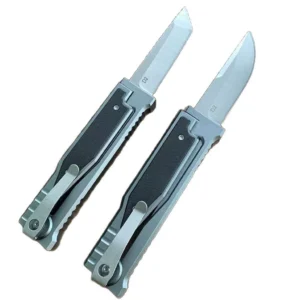
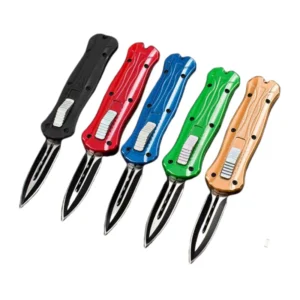
If you are building a product line for store shelves or online listings, it also helps to offer a clear path for buyers who want related categories. For example, customers shopping for automatic or OTF styles often look for product variety and maintenance-friendly options, which is why a dedicated OTF and auto knife wholesale category can be useful when planning inventory.
Keeping the edge longer after sharpening
Good sharpening is only part of the story. Edge retention depends on how the knife is used and stored. Cutting on appropriate surfaces, wiping the blade clean, and storing it safely can make a noticeable difference. Hard glass, stone, and metal surfaces wear edges quickly, while wood and quality cutting boards are gentler.
For resellers and buyers, this is worth explaining to customers. A knife that performs well and is easy to maintain tends to create better long-term value than one that only looks good out of the box.
FAQ: knife sharpening basics
Does sharpening make a knife thinner?
Yes, over time sharpening removes some metal from the blade, including a small amount near the edge. That is normal, which is why controlled sharpening matters.
Can all knives be sharpened the same way?
No. Blade shape, steel hardness, coating, and intended use all affect the best method. Some knives respond well to stones, while others are better suited to guided or powered systems.
How often should a knife be sharpened?
There is no single schedule. It depends on how often the knife is used, what it cuts, and how it is maintained. Light honing and careful use can extend the time between sharpenings.
Is a sharper knife always better?
Not always. The ideal edge balances sharpness with durability. A very fine edge may cut beautifully but wear faster if the blade is used for heavier tasks.
What should wholesale buyers ask before placing an order?
Ask about steel type, factory edge consistency, maintenance expectations, and whether the product line fits the customer base. If you are planning a larger order or want to discuss product fit, you can start with a wholesale inquiry.
In the end, knife sharpening works by restoring the blade’s edge geometry so the knife can cut cleanly, safely, and efficiently again. Understanding the process helps everyday users maintain their tools and helps wholesale buyers choose products that customers will actually appreciate, use, and keep in service.