




How to Price OTF Knives for Flea Markets

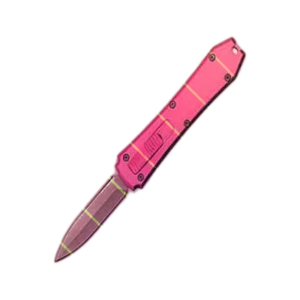
Price most flea-market OTF knives by calculating your landed cost per sellable unit, setting a hard floor around 1.3x to 1.5x that cost, and tagging typical imported pieces around 1.8x to 2.4x cost with room for normal bargaining.
How we are judging this: this is an example framework for unbranded or lightly branded imported OTFs, based on repeated weekend-market seller observations, side-by-side local comp checks, and batch QC realities such as misfires, weak action, cosmetic rejects, and 90%+ sellable yield. These are estimates, not a national market standard.
If you want the shortest practical answer: many flea-market sellers do best when they price to close, not just to display. A knife that fires cleanly, has acceptable blade play for the type, and comes in decent packaging can usually sit higher in the range than a loose, rougher sample from the same invoice.
Before you price: quick checklist
- Confirm legality: check state and local rules for possession, display, and sale of automatic or OTF knives.
- Check market rules: some flea markets ban automatic knives even if local law allows them.
- Calculate QC yield: do not price from invoice cost alone; count the units you can actually sell at full price.
- Test a sample from each batch: cycle the mechanism repeatedly and inspect lockup, slider feel, finish, and edge presentation.
- Walk nearby comps: compare actual table prices, packaging, and observed sell-through, not just asking prices.
Example starting ranges for imported, unbranded OTFs
Use these as starting ranges for a typical weekend flea market, not as universal retail rules. They assume your landed cost includes freight, packaging, and QC loss, and that at least 90% of the batch is sellable at normal table price.
| Tier | Typical landed cost per sellable unit | Hard minimum | Usual ticket range | Likely close range |
|---|---|---|---|---|
| Budget / plain packaging | $10 to $15 | $15 to $20 | $24 to $32 | $20 to $29 |
| Mid-tier / cleaner action and finish | $16 to $24 | $22 to $32 | $35 to $45 | $30 to $42 |
| Better-presented / more consistent batch | $25 to $35 | $32 to $45 | $49 to $69 | $45 to $62 |
What is included here: unit cost, freight or delivery allocation, box or sheath cost, and the cost of units you had to downgrade, discount, or pull after inspection.
What moves a knife up or down: local competition, how smoothly the slider tracks, whether the knife fires and retracts repeatedly without hesitation, visible front-to-back blade play, finish quality around the opening, and whether the knife is boxed or loose. In a bargain-heavy market, stay near the low end. If your stock is visibly more consistent than nearby tables, test the upper end.
The simplest pricing rule for most sellers
- Hard floor: 1.3x to 1.5x landed cost per sellable unit
- Normal target sale price: 1.6x to 2.2x landed cost
- Ticket price: usually 10% to 15% above your true target if haggling is expected
This works because flea-market buyers often expect some movement, but not unlimited movement. If you tag too close to your minimum, you lose negotiating room. If you tag too high, customers handle the knife, compare it to the next table, and walk.
Clean round numbers usually help: $25, $30, $35, $39, $49, and $59 are easier to quote and negotiate than awkward tags.
How to calculate landed cost per sellable unit
Formula: total batch cost divided by the number of units you can confidently sell at full price.
For OTF knives, that usually means counting:
- Knife cost
- Freight and delivery allocation
- Box, pouch, or sheath cost
- Meaningful payment processing friction, if applicable
- QC loss from misfires, weak springs, finish flaws, or units you must downgrade
Cost logic example: if you bought 100 knives but only 92 are good enough for normal sale, your real cost is spread across 92 units, not 100. That one step changes your floor more than most sellers expect.
OTF-specific checks that affect price
At a flea market, buyers usually judge an OTF fast. They care less about printed claims and more about what happens when the mechanism is actually used in front of them.
- 20-cycle action test: open and close a sample piece 20 times to catch obvious weak action or intermittent lockup problems.
- Slider feel: it should feel deliberate and consistent, not mushy, gritty, or overly loose.
- Lockup and blade play: some play is normal on many OTF designs, but obvious rattle or heavy front-to-back movement usually forces a lower price.
- Retraction reliability: a knife that hesitates on retract or needs a reset in front of a buyer is hard to sell at the top of the range.
- Finish and edge presentation: rough coating edges, uneven grinds, burrs, or visibly sloppy hardware lower the close price.
- Packaging: a basic imported OTF in a decent box often outsells the same knife loose on the table.
These are observable cues, not branding claims. A customer can see and feel them in seconds, which is why they matter so much in flea-market pricing.
Worked example: from batch cost to table tag
Suppose you buy 120 knives.
- Unit cost: $14
- Box cost: $1 each
- Freight allocation: $3 each
- Total batch spend: $2,160
After inspection, 10 pieces have cosmetic or mechanism issues that make them unsuitable for full-price sale. That leaves 110 sellable units.
Landed cost per sellable unit: $2,160 divided by 110 = about $19.64.
A practical flea-market plan from that number would be:
- Hard floor: about $26 to $29
- Target close price: about $34 to $40
- Ticket price: about $39 to $45
If nearby tables are closing similar knives around $35 cash and your sample is only average, a $39 tag is more realistic than a $49 tag. If your batch has cleaner action, better finish, and giftable packaging, the higher end may be justified. That part is market judgment, not a fixed rule.
How to read local comps without fooling yourself
- Walk 3 to 5 nearby sellers with similar OTF inventory.
- Write down the displayed price, packaging, and whether accessories are included.
- Watch for actual sold prices if you can, or ask what is moving rather than what is merely displayed.
- Compare visible factors: firing consistency, slider feel, blade play, finish, and presentation.
- Adjust your tag based on what is clearly better or worse about your stock.
Asking price alone is weak evidence. Two tables may both show $40, but one is really closing at $35 while the other is not moving at all. Actual movement matters more than sticker price.
Table tactics that affect the close price
Separate the table into tiers
Do not pile every OTF into one bin. A clear $25 to $30 row, a $35 to $45 row, and a higher row at $49 and up helps buyers understand the price difference quickly.
Use one sample piece per model
Repeated handling wears the best-looking unit on the table. Let customers handle a sample, and keep cleaner boxed inventory behind the table when possible.
Set bundle pricing in advance
Bundle offers can move slower stock without forcing a bad single-unit price. Common examples are one for $35 and two for $60, or one for $39 and two for $70.
Plan your markdown timing
Early traffic often supports firmer pricing. Midday is where normal bargaining happens. Late-day discounts work best on slower models, opened-box pieces, or older stock you already planned to move.
Common pricing mistakes
- Using invoice cost only: this ignores freight, rejects, and downgraded units.
- Pricing every knife the same: weaker pieces get overpriced and better pieces get hidden.
- Letting buyers handle sale stock freely: visible wear lowers what the next buyer will pay.
- Leaving no room to bargain: many flea-market buyers expect a small concession.
- Discounting too early: if you cut fast in the first hour, buyers learn to wait.
- Ignoring legal or operator rules: one bad market day can cost more than a thin margin ever earns back.
Counterpoint: faster turnover can beat higher markup
Higher markup is not always the best strategy. In some markets, a clean $29 to $35 seller produces better total profit than a slower $59 piece, especially if the crowd is impulse-driven and price-sensitive. If that sounds like your market, test lower tickets over several weekends and track actual close rates before deciding that a higher tag is better.
Short FAQ
Should I price all OTF knives in one bin?
No. Use at least two or three visible tiers based on landed cost, mechanism consistency, and presentation.
How much bargaining room should I leave?
Usually 10% to 15% is enough for a normal flea market. Heavy bargaining markets may need a little more.
When can I price near the top of the range?
When your sample shows repeatable firing and retraction, the slider feels controlled, blade play is acceptable for the type, and your packaging or presentation is better than nearby tables.
What if my QC yield is below 90%?
Recalculate your landed cost before tagging anything. A weak batch often needs either a higher floor or a lower-grade sales plan for the affected pieces.
Where can I review product types or ask sourcing questions?
For separate sourcing research, you can review the wholesale OTF knife catalog or use the bulk inquiry form.