

How OTF Knives Should Be Packaged for Export

Short answer
OTF knives for export should be shipped closed, immobilized in a fitted insert that protects the switch, isolated from abrasion, moisture-protected when needed,
Key Takeaways
- Knife rules can vary by state, city, blade style, opening mechanism, carry method, and intended use.
- Do not treat a product nickname as a legal category; check the actual features and local rule.
- Retailers should keep legal or safety language factual and avoid promising that one item is allowed everywhere.
Terms Used Here
- OTF
- Out-the-front; a knife design where the blade moves forward from the front of the handle.
- Folding knife
- A knife with a blade that pivots into the handle for storage.
In this article
- 01 Quick packaging specification
- 02 Source basis
- 03 1) Unit packaging spec for OTF knives
- 04 What the insert must do
- 05 Best insert types by handle form factor
- 06 When pouch-only packing fails
- 07 2) Carton and pallet spec by shipping mode
- 08 Courier parcel
- 09 Air freight carton
- 10 Ocean pallet shipment
- 11 3) Buyer QA checklist before shipment
- 12 Common mistakes
- 13 FAQ
- 14 Is retail packaging alone enough for export?
- 15 Do all export shipments need desiccant?
- 16 What is the likely HS starting point?
- 17 How can buyers choose the right insert style for a specific model?
OTF knives should be packaged for export in the closed position, immobilized in a fitted inner tray or insert, with the switch recessed or shielded from pressure, the finish isolated from abrasion, and the units packed in rigid corrugated master cartons with matching carton marks and documents. Why: major carrier packaging guidance requires shippers to use strong outer packaging and adequate inner protection so contents can withstand normal transport handling, and OTF knives add one product-specific risk: accidental switch pressure and internal movement during transit.
Quick packaging specification
- Unit pack: ship every knife closed.
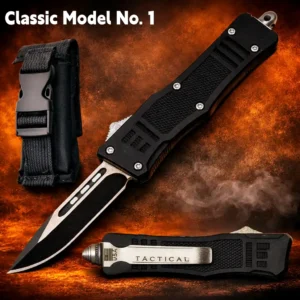
- Immobilization: hold the handle in a fitted molded pulp, EVA, thermoformed, or paperboard insert so the knife does not slide, rotate, or rattle.
- Switch protection: keep the slider/button in a recessed pocket or under a relief area so normal carton pressure cannot actuate it.
- Finish protection: use a sleeve, poly bag, or nonwoven wrap to prevent clip, handle, and blade-finish rub marks.
- Moisture protection: add desiccant, sealed bagging, or VCI for humid routes, ocean freight, or long storage.
- Outer carton: use rigid corrugated master cartons with minimal void space and even loading.
- Documents: keep carton marks, packing list, and invoice details identical.
Source basis
- UPS Tariff/Terms and Conditions of Service and UPS packaging guidance: packages must be prepared for ordinary care in handling and transportation, with suitable outer packaging and inner protection.
- FedEx general packaging guidance: use a rigid outer container, proper cushioning, and packaging that prevents movement and damage in transit.
- Likely customs starting point: many knives are first reviewed under HS heading 8211, subject to product details and destination-country interpretation.
- Directly stated: carriers place packaging responsibility on the shipper and expect packaging strong enough for normal transport handling.
- Directly stated: rigid outer packaging and adequate internal protection are required to prevent movement-related damage.
- Inferred for OTF knives: because an OTF has a sliding or button-actuated mechanism, switch shielding and handle immobilization matter more than they do for many simple fixed or manual folding knives.
- Inferred for export packing: pouch-only packaging is usually inadequate because it protects cosmetics but does not reliably stop switch contact, vibration, or internal impact.
1) Unit packaging spec for OTF knives
The most important packaging decision is the unit pack. If the knife is loose inside its own box, the master carton cannot fix that later. For export, the acceptance standard should be simple: closed, protected, and no internal rattle.
What the insert must do
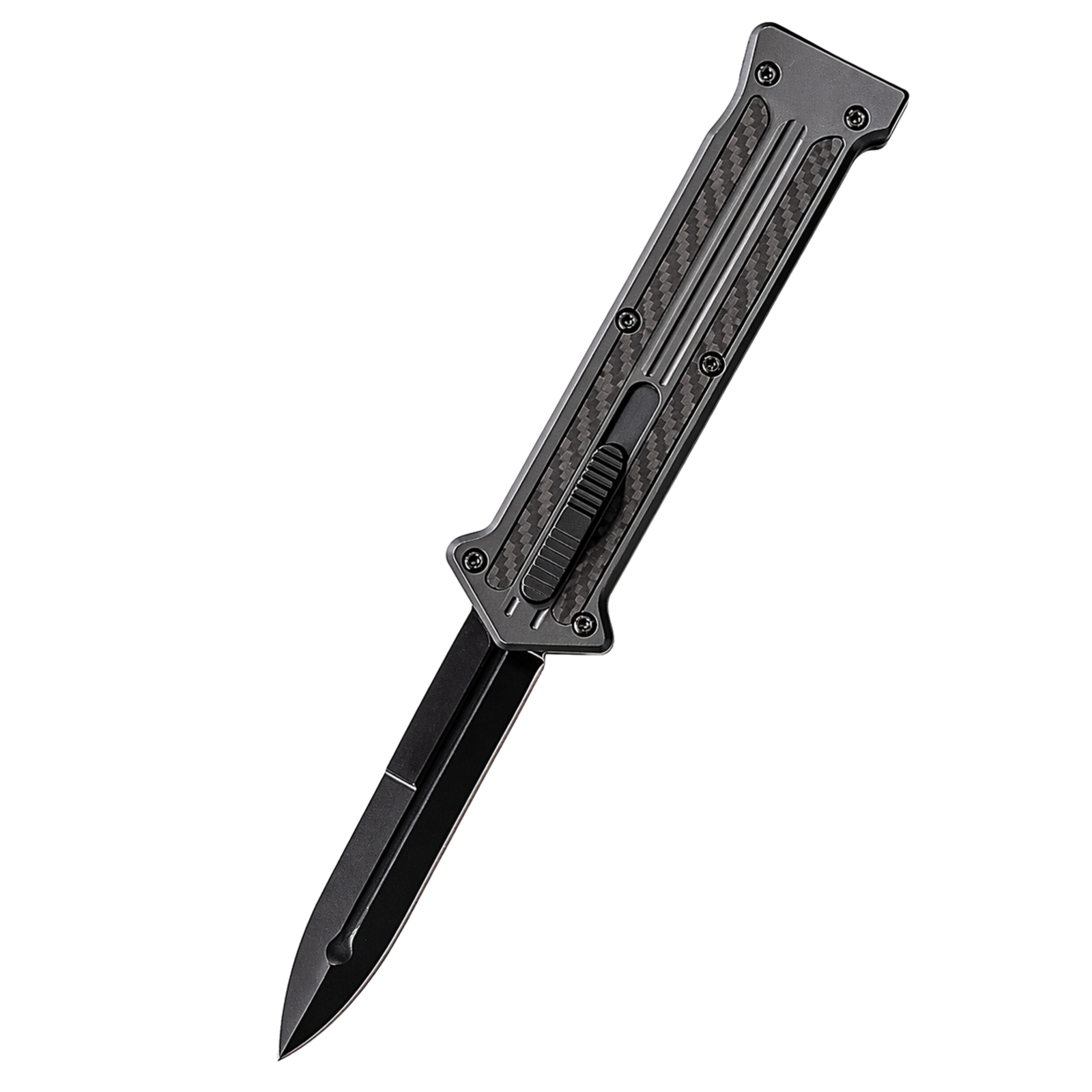
- Hold the handle, not just surround the box. The insert should capture the handle profile so the knife cannot walk side to side during vibration.
- Protect the switch area. Build a relief pocket or recessed zone over the slider/button. As a practical house spec, leave enough clearance that light top pressure from adjacent packaging does not contact the switch directly.
- Control end movement. If the model has a glass breaker, exposed hardware, or pronounced clip, the cavity should stop fore-aft shifting so those points do not wear through the sleeve or box.
- Separate cosmetic surfaces. A thin poly bag, nonwoven sleeve, or tissue wrap prevents handle-to-insert scuffing, especially on coated aluminum, stonewashed clips, and polished hardware.
Practical tolerance guidance: the fit should be snug enough that the packed knife does not audibly move when the unit box is shaken by hand, but not so tight that the insert presses on the switch. For many OTF handle shapes, buyers use a small clearance around the handle body and a larger relief around the switch location. The exact recess dimension depends on the slider height and box compression, but the design goal is consistent: no direct switch loading in normal transit.
Best insert types by handle form factor
- Flat-sided standard handles: folded paperboard retainer or molded pulp tray can work well at lower cost.
- Contoured or premium handles: EVA foam or thermoformed cavities usually give better control and cleaner presentation.
- Large OTFs with glass breakers or aggressive clips: deeper cavities with end stops are safer than shallow trays.
- Retail gift boxes: add a transit insert or overbox if the retail box was designed for display rather than vibration resistance.
When pouch-only packing fails
A nylon or microfiber pouch is useful as a surface protector, but it is not a full export pack. It usually fails in three situations:
- the knife can slide and strike the box wall,
- the pouch allows pressure onto the switch area, or
- multiple units are packed tightly enough that clips, breakers, or corners press into neighboring units.
If a buyer wants pouch presentation, use the pouch inside a fitted insert, not instead of one.
2) Carton and pallet spec by shipping mode
Once the unit pack is stable, choose the master-carton build based on route and handling intensity. The table below gives a buyer-ready starting spec.
| Shipment mode | Typical order size | Recommended unit pack | Master carton / pallet spec |
|---|---|---|---|
| Courier parcel | 12-100 units | Closed knife, sleeve or bag, fitted insert, rigid unit box | Strong corrugated carton, tight pack-out, minimal voids, dividers if mixed SKUs |
| Air freight carton | 100-500 units | Closed knife, fitted tray, abrasion barrier, rigid unit box | Corrugated master cartons sized for stacking, even load distribution, reinforced sealing |
| Ocean pallet shipment | 500+ units | Closed knife, fitted insert, bagged unit, desiccant or VCI as needed | Double-wall or stronger cartons, palletized, stretch-wrapped, moisture-aware loading, limited overhang |
Courier parcel
Courier networks create the most repeated handling: conveyor movement, sorting, drops, and frequent relabeling. That makes internal movement control more important than decorative presentation. Use rigid unit boxes, avoid oversized masters, and keep void fill low so inner boxes cannot collide.
Air freight carton
Air freight still needs strong cartons, but the main issue is usually compression and handling through terminals rather than long-term humidity. A clean fitted insert, rigid unit box, and properly sized corrugated master carton are usually sufficient unless the destination climate or storage time is harsh.
Ocean pallet shipment
Ocean freight adds a different risk profile: longer transit, container condensation, port dwell time, and warehouse storage. For steel goods, that is when desiccant, sealed bagging, or VCI becomes commercially useful. Keep cartons off direct moisture exposure where possible, palletize squarely, and avoid retail-only packaging carrying the full stacking load.
3) Buyer QA checklist before shipment
- Closed position confirmed: every unit packed with blade fully retracted.
- No-rattle standard passed: no audible movement when the packed unit is shaken by hand.
- Switch relief confirmed: insert does not place direct pressure on the slider/button.
- Finish isolated: sleeve, bag, or wrap prevents rub marks on coated or polished surfaces.
- Route matched: desiccant or VCI added for ocean, humid, or long-storage shipments.
- Carton fit correct: master carton has minimal void space and no box collapse risk.
- Load even: heavier SKUs are not crushing lighter retail boxes below.
- Marks and documents match: consignee, SKU, quantity, carton count, and descriptions are consistent across labels, packing list, and invoice.
Common mistakes
- Using a pouch as the only unit protection.
- Letting the knife float inside a presentation box.
- Using a switch cavity that is too shallow, so top pressure can contact the slider.
- Ignoring moisture control on ocean shipments.
- Using oversized master cartons with large voids.
- Changing carton wording after the buyer has approved shipping marks.
FAQ
Is retail packaging alone enough for export?
Usually not. It is acceptable only if the retail pack also immobilizes the knife, protects the switch, and can survive the intended route inside a proper master carton.
Do all export shipments need desiccant?
No. Desiccant is most useful for ocean freight, humid destinations, and long storage periods. Short, dry courier routes may not need it.
What is the likely HS starting point?
For many knives, the first review point is HS heading 8211, but the final code depends on product details and destination-country interpretation. That affects documentation more than physical packaging, but the invoice description and carton marks should still stay consistent.
How can buyers choose the right insert style for a specific model?
Use model dimensions, handle shape, clip position, and switch location to choose the cavity style. If you are comparing form factors before approving pack-out, the OTF knife catalog can help identify which models need deeper trays, end stops, or more switch relief. For order-specific packaging confirmation, buyers can use the wholesale inquiry form to request unit-pack and carton-pack details.