

Can an OTF Knife Be Confiscated by Customs?

Short answer
Yes—customs can confiscate an OTF knife if the destination country restricts automatic knives or the shipment is misdeclared or undocumented. See U.S., Canada,
Key Takeaways
- Knife rules can vary by state, city, blade style, opening mechanism, carry method, and intended use.
- Do not treat a product nickname as a legal category; check the actual features and local rule.
- Retailers should keep legal or safety language factual and avoid promising that one item is allowed everywhere.
Terms Used Here
- OTF
- Out-the-front; a knife design where the blade moves forward from the front of the handle.
- Automatic knife
- A knife that opens by a spring-driven mechanism after the user activates a button, switch, or slider.
In this article
- 01 Four main reasons customs may confiscate an OTF knife
- 02 Country examples and source basis
- 03 Canada: high risk for true automatic OTF knives
- 04 Australia: import often turns on both product type and paperwork
- 05 United States: more nuanced, but federal import law still matters
- 06 What happens at the border: detain, return, or seize
- 07 Compact buyer checklist
- 08 FAQ
- 09 Can customs confiscate one sample OTF knife?
- 10 Does the HS code make the knife legal to import?
- 11 Does changing to a single-edge blade solve the customs issue?
- 12 Related resources
Last reviewed: May 5, 2026
Jurisdiction scope: United States, Canada, and Australia only
Reviewed by: Editorial team at OTFKnifeWholesale.com using primary government statutes, regulations, and customs guidance. This page is informational only, not legal advice.
Yes. Customs can confiscate an OTF knife if the destination country restricts automatic knives or if the shipment is misdeclared, incomplete, or imported without required authorization.
Why: border agencies can stop goods that are prohibited imports, falsely described, or unsupported by required permits under their customs and weapons laws.
The short rule is simple: customs decisions usually turn on destination-country import law, the knife’s opening mechanism, declaration accuracy, and whether the importer has any required permit or exemption.
Four main reasons customs may confiscate an OTF knife
For tariff classification, a knife shipment will often start under HS heading 8211, the Harmonized System heading for knives with cutting blades. That helps with customs classification and duty treatment, but it does not decide whether the knife is legal to import. Admissibility is usually decided under separate prohibited-import or weapons rules.
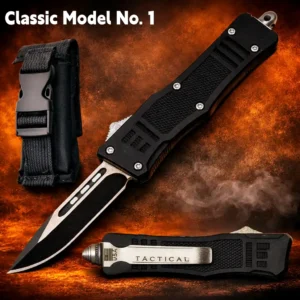
- 1. The knife is treated as a prohibited automatic or switchblade design. A true out-the-front knife with a spring-driven blade is the first feature customs will examine.
- 2. The importer lacks a permit, exemption, or lawful authority. Some countries allow controlled import only for approved users, licensed entities, or permit holders.
- 3. The shipment is misdeclared. Describing an automatic knife as a generic tool, sample, camping accessory, or gift can trigger seizure risk separate from the knife law itself.
- 4. The shipped variant does not match the documents. Customs may focus on whether the item is automatic rather than manual, single-edge rather than double-edge, or a live blade rather than trainer.
Likely confiscation if… the destination country bans switchblade-style imports, the invoice hides the mechanism, or the importer cannot produce the required approval.
May clear if… the model is lawful in that country, the mechanism is accurately described, and all permits or exemption documents are ready before arrival.
Country examples and source basis
These are examples only, not a worldwide survey. Local possession or carry laws are not the same as border import rules.
Canada: high risk for true automatic OTF knives
Source basis: Canada Border Services Agency Memorandum D19-13-2, Importing and Exporting Firearms, Weapons and Devices, and the Criminal Code definition of prohibited weapons. The memorandum has been updated over time; importers should verify the current version in force on the date of shipment.
Canada is one of the clearer examples because the legal test focuses heavily on how the knife opens. Canadian law treats as prohibited certain knives that open automatically by gravity, centrifugal force, or hand pressure applied to a button, spring, or other device in or attached to the handle.
- Directly stated: CBSA guidance ties admissibility to the prohibited-weapon rules in the Criminal Code. A knife falling within that prohibited definition is generally not admissible for ordinary import.
- Directly stated: the opening method matters more than branding, blade steel, or whether the shipment is a sample.
- Inferred: many classic double-action OTF knives are likely to draw refusal or seizure risk because their blade is deployed by a mechanism Canadian authorities closely scrutinize under prohibited-weapon rules.
Likely confiscation if… the knife is a true automatic OTF and the importer is an ordinary buyer without a recognized legal basis to import it.
May clear if… the product is not actually automatic under the applicable test, or the shipment falls within a narrow lawful pathway recognized by Canadian authorities.
Australia: import often turns on both product type and paperwork
Source basis: Customs (Prohibited Imports) Regulations 1956, as administered by the Australian Border Force, plus current ABF guidance on prohibited weapons imports. Import conditions can change by amendment, so the operative version should be checked at the time of entry.
Australia is important because federal import controls can apply even when a person is focused on state or territory possession rules. For border purposes, certain knives including switchblade or automatic-opening designs may be prohibited imports unless the importer holds a permit, police certification, exemption, or other lawful authority.
- Directly stated: some controlled knives are prohibited imports unless permission or an exemption applies under the federal import regime.
- Directly stated: ABF can stop goods at the border when required import permission is missing.
- Inferred: an OTF knife may be stopped even if the buyer believes local possession is lawful, because import permission is a separate federal question.
Likely confiscation if… the knife fits the controlled category and arrives without the permit or supporting approval the importer needed before shipment.
May clear if… the importer can document a valid exemption or permit and the commercial paperwork accurately matches the knife shipped.
United States: more nuanced, but federal import law still matters
Source basis: Switchblade Knife Act, 15 U.S.C. §§ 1241-1245, together with U.S. Customs and Border Protection enforcement authority over imported merchandise. Importers should use the current statutory text and any current CBP rulings or entry guidance in effect on the shipment date.
The U.S. is less simple than Canada because state-law ownership rules vary widely, but federal import law still matters. The Switchblade Knife Act defines a switchblade knife in federal law and restricts importation of switchblade knives, subject to specific statutory exceptions.
- Directly stated: 15 U.S.C. § 1241 defines a switchblade knife as a knife having a blade which opens automatically by hand pressure applied to a button or other device in the handle, or by operation of inertia, gravity, or both.
- Directly stated: 15 U.S.C. § 1242 restricts introduction and importation of switchblade knives in interstate commerce and into the United States, subject to listed exceptions.
- Directly stated: the statute contains exceptions, including certain armed forces and government-related supply situations, and one-armed persons under the statute’s terms.
- Inferred: a true automatic OTF is more likely to be stopped than a manual knife because the mechanism aligns closely with the federal switchblade definition.
For U.S. entries, the practical questions are narrower than generic statements like “legal in America.” Customs will care about what mechanism the knife actually uses, whether it fits the federal definition, who the consignee is, and whether any statutory exception genuinely applies. A knife that is lawful to possess under one state’s law can still raise a federal import problem at the border.
Likely confiscation if… the knife is a true switchblade under federal law, the consignee is a normal commercial or consumer buyer, and no exception applies.
May clear if… the product is not a switchblade under the federal definition, or the importer fits a specific statutory exception and can document it clearly.
What happens at the border: detain, return, or seize
Customs does not always move straight to permanent confiscation. In practice, there are three common outcomes:
- Detained: customs holds the shipment while asking for invoices, specifications, permits, photos, or a legal explanation of the mechanism.
- Returned or re-exported: the goods are not admitted and must be sent back or redirected, often at the importer’s cost.
- Seized or confiscated: customs treats the goods as prohibited or unlawfully imported and takes possession, sometimes permanently.
A detention can become a seizure if the importer misses deadlines, cannot prove lawful import status, or the paperwork appears misleading. Misdeclaration often makes the outcome worse.
Compact buyer checklist
- Check the destination country’s rule for automatic knives specifically. Do not rely on general knife legality.
- Confirm the exact mechanism. “OTF” is a product style; customs will care whether it is truly automatic.
- Verify the importer’s status. If a permit, exemption, or government-use basis is required, secure it before shipping.
- Match the documents to the goods. Invoice, packing list, and product description should clearly state the actual knife type.
- Keep technical support ready. Photos, opening-method explanation, blade measurements, and model specifications can help if customs detains the shipment.
- Check carrier rules too. Even a legally admissible knife may be refused by a courier or postal operator.
FAQ
Can customs confiscate one sample OTF knife?
Yes. A single sample can be detained or seized if the mechanism is prohibited or the declaration is inaccurate.
Does the HS code make the knife legal to import?
No. HS heading 8211 may be the likely classification starting point, but import legality is decided separately under weapons and prohibited-import rules.
Does changing to a single-edge blade solve the customs issue?
Usually not by itself. In these three jurisdictions, the opening mechanism is often the first border question.
Related resources
If you need model specifications for compliance review, see current OTF models. For private-label or OEM documentation requests, use the OEM and private label inquiry page.