

Do OTF Knives Need a Special Customs Declaration in the U.S.?

Short answer
Usually no. In the U.S., OTF knives do not normally need an OTF-specific customs form. The key issues are standard entry documents, accurate invoice wording, ta
Key Takeaways
- Knife rules can vary by state, city, blade style, opening mechanism, carry method, and intended use.
- Do not treat a product nickname as a legal category; check the actual features and local rule.
- Retailers should keep legal or safety language factual and avoid promising that one item is allowed everywhere.
Terms Used Here
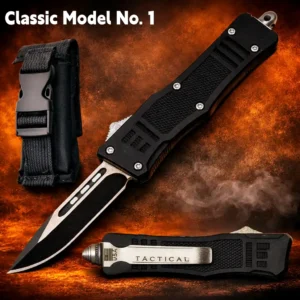
- OTF
- Out-the-front; a knife design where the blade moves forward from the front of the handle.
- Automatic knife
- A knife that opens by a spring-driven mechanism after the user activates a button, switch, or slider.
In this article
- 01 Source basis
- 02 What the sources say, and what importers infer from them
- 03 Likely tariff treatment first, then the caveat
- 04 What customs usually needs
- 05 Example of an acceptable invoice line
- 06 Another acceptable invoice line
- 07 Example of problematic wording
- 08 What this does not solve
- 09 Practical buyer guidance for U.S.-bound OTF shipments
- 10 Common mistakes that cause delays
- 11 FAQ
- 12 Do sample OTF knives need a different customs declaration?
- 13 Is HTSUS heading 8211 the correct code for every OTF knife?
- 14 What is the safest invoice wording?
No. In the United States, OTF knives do not usually require a special customs declaration form just because they are OTF. Importers generally use the same standard entry documents used for other goods; the real issues are accurate product description, tariff classification, and separate admissibility restrictions that can apply to automatic knives.
Why: CBP’s importer guidance is built around ordinary entry data and documents, while the tariff schedule classifies knives by HTSUS headings and subheadings rather than by an “OTF form,” and federal switchblade restrictions appear separately in 15 U.S.C. Chapter 29, not as a special customs declaration requirement.
U.S. scope: This page is U.S.-focused. It does not try to generalize across other countries, because customs treatment, knife laws, and carrier acceptance rules vary by destination.
Source basis
- CBP: Importing Into the United States: A Guide for Commercial Importers. CBP explains that imported merchandise is entered using standard customs entry procedures and supporting documents such as the commercial invoice, bill of lading or air waybill, packing information, tariff classification, value, and country of origin.
- HTSUS: Heading 8211, covering “Knives with cutting blades, serrated or not (including pruning knives), other than knives of heading 8208, and blades therefor.” This is the starting heading many knife imports are reviewed under, subject to the product’s actual characteristics and any applicable subheading.
- Federal law: 15 U.S.C. Chapter 29, commonly known as the Switchblade Knife Act. In particular, 15 U.S.C. 1242 addresses introduction and manufacture for introduction into interstate commerce, and 15 U.S.C. 1244 lists exceptions. These are separate legal questions from tariff classification.
What the sources say, and what importers infer from them
Directly stated:
- CBP requires standard import entry information and supporting documents; it does not publish an OTF-specific customs declaration form for ordinary knife entries.
- The HTSUS provides tariff headings for knives, including heading 8211, rather than a separate customs category called “OTF knife declaration.”
- Federal switchblade restrictions are addressed in separate U.S. law, not inside the customs form itself.
Inferred:
- Because “OTF” describes the opening mechanism, not a standalone customs filing category, most shipment problems come from weak descriptions, wrong classification, or separate admissibility issues rather than from using the wrong form.
- A shipment can have a plausible tariff heading and still be stopped or questioned if the product is restricted, the paperwork is vague, or the carrier will not carry it.
Likely tariff treatment first, then the caveat
Likely starting point: many imported knives are first considered under HTSUS heading 8211. For a commercial shipment, that is often the practical place a broker starts when reviewing an OTF knife.
Caveat: heading 8211 is only the starting point, not the final answer for every model. Final classification depends on the actual product details and the applicable subheading logic. Blade configuration, whether the article is entered as a complete knife or parts, and the exact construction can all matter. If you need a binding answer on classification, use a licensed customs broker or seek a CBP ruling rather than relying on a generic article.
The useful takeaway is simple: customs classification is a tariff question, not proof that the item is lawful to import, sell, mail, or possess.
What customs usually needs
For a normal U.S. commercial import, customs and the broker usually need the standard file set:
- Commercial invoice
- Packing list
- Air waybill or bill of lading
- Tariff classification proposed by the importer or broker
- Declared value
- Country of origin
- Quantity and unit of measure
What matters for OTF knives is not a special declaration form, but a more precise description than many importers use for ordinary hardware or tools.
Example of an acceptable invoice line
Model X12 automatic out-the-front knife, single-edge stainless steel blade, aluminum handle, manual safety, 500 pcs, country of origin China, unit value USD 18.50.
Another acceptable invoice line
Automatic OTF knife, model M7, 3.2 in black-coated steel blade, zinc-alloy handle, retail boxed, 120 pcs.
Example of problematic wording
Outdoor tool accessory or hardware sample.
That kind of wording is risky because it does not match the actual product. If the invoice says “tool accessory” but the retail box, website listing, or carton markings say “automatic OTF knife,” the mismatch can trigger questions about description accuracy, value, or admissibility.
What this does not solve
Even perfect customs paperwork does not solve three separate issues:
- Federal admissibility questions: automatic knives can raise issues under the Switchblade Knife Act framework in 15 U.S.C. Chapter 29.
- State and local law: possession, sale, carry, or transfer may be restricted even if entry paperwork is complete.
- Carrier and postal policy: private couriers, airlines, and postal channels may impose stricter rules than customs law.
That separation matters. A broker can help classify the goods under the tariff schedule, but the tariff schedule alone does not guarantee that the shipment is admissible or transportable.
Practical buyer guidance for U.S.-bound OTF shipments
- Describe the product as it actually is. If it is an automatic out-the-front knife, say so plainly on the invoice.
- Give the broker model-level detail. Include model number, blade material, handle material, edge type, quantity, and value.
- Keep documents consistent. Invoice, packing list, carton labels, and retail packaging should describe the same goods.
- Do not assume heading 8211 answers legality. It is a tariff starting point, not a legal clearance.
- Check admissibility separately. Review federal, state, and local restrictions with qualified counsel or your compliance team if the shipment is commercially significant.
- Confirm carrier acceptance before dispatch. A shipment can be customs-ready and still be refused by the transport channel.
Common mistakes that cause delays
- Using euphemisms. Terms like “outdoor item,” “metal tool,” or “accessory” often create more risk, not less.
- Leaving out the automatic mechanism. For a sensitive product, omission can look misleading.
- Treating samples casually. A sample still needs a truthful description, value, and origin.
- Mismatched paperwork and packaging. Inspectors notice when the box says more than the invoice says.
- Relying only on a supplier’s guess at classification. Final U.S. entry treatment is fact-specific.
FAQ
Do sample OTF knives need a different customs declaration?
No special OTF-only form usually applies to samples. But samples still need accurate invoice wording, quantity, value, and country of origin.
Is HTSUS heading 8211 the correct code for every OTF knife?
No. It is a common starting heading for knives with cutting blades, but the final subheading and treatment depend on the exact item. Use a broker or CBP ruling for a definitive answer.
What is the safest invoice wording?
Use plain, truthful wording that matches the goods and packaging, such as automatic out-the-front knife plus model number, materials, quantity, and value. Avoid vague descriptions that hide the nature of the product.
For current models and sourcing details, review current OTF models and OEM and private label inquiry.