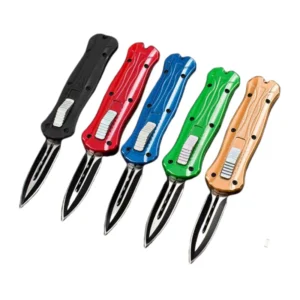


What Is a Utility Knife Used For? A Practical Buyer Guide

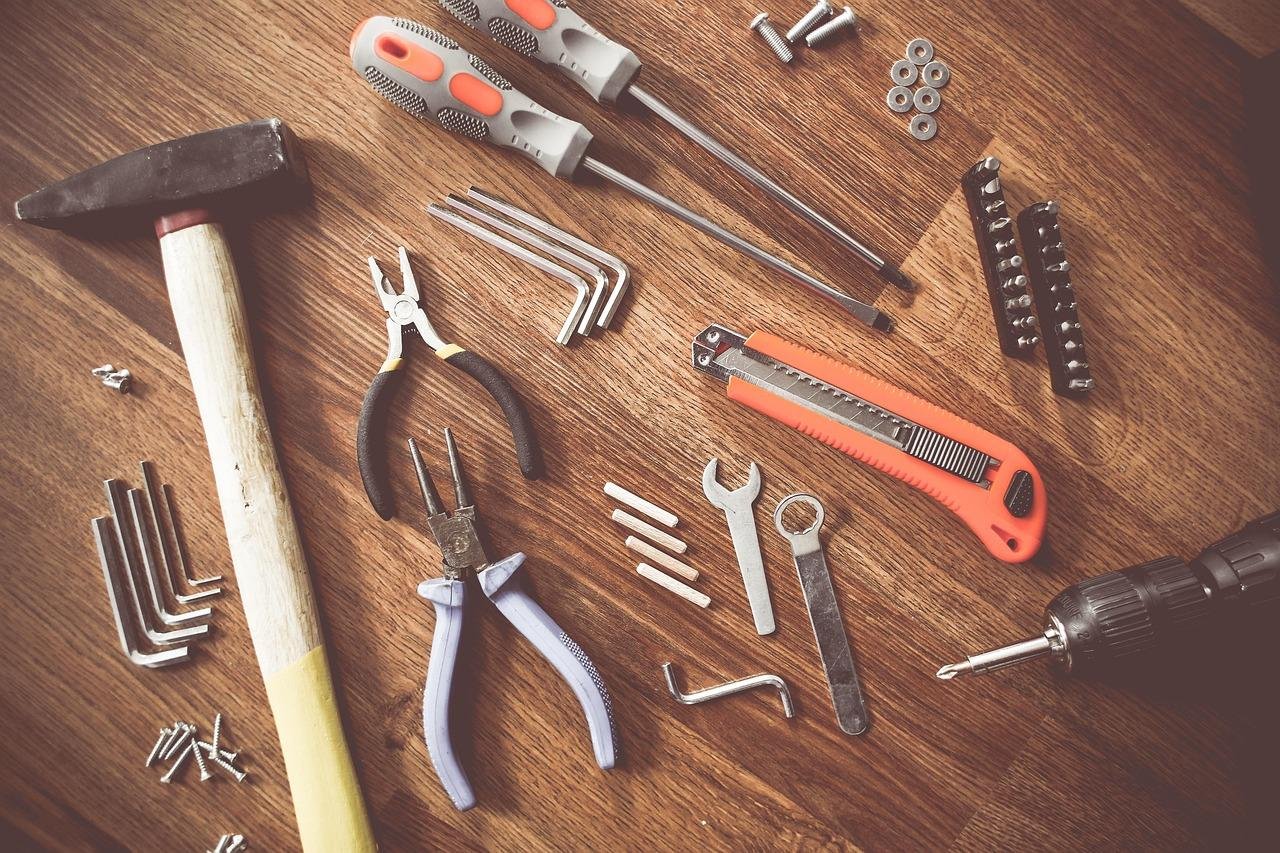
Short answer
What is a utility knife used for? Learn common uses, blade types, safety limits, and wholesale buying tips for work, retail, and tool kits.
Key Takeaways
- Knife rules can vary by state, city, blade style, opening mechanism, carry method, and intended use.
- Do not treat a product nickname as a legal category; check the actual features and local rule.
- Retailers should keep legal or safety language factual and avoid promising that one item is allowed everywhere.
Terms Used Here
- OTF
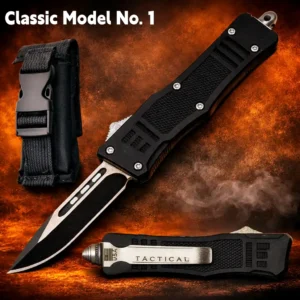
- Out-the-front; a knife design where the blade moves forward from the front of the handle.
- Pocket knife
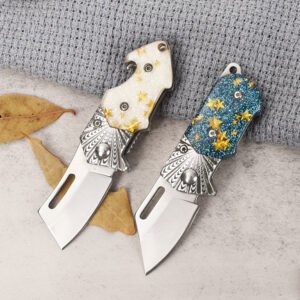
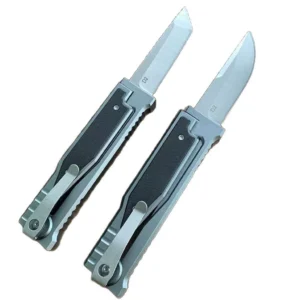
- A compact knife intended for pocket carry, often with a folding blade.
- Folding knife
- A knife with a blade that pivots into the handle for storage.
- Fixed blade
- A knife with a blade that does not fold or retract into the handle.
- Sheath
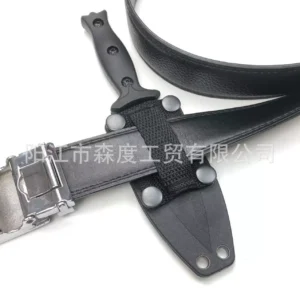
- A protective cover used to store or carry a knife safely.
In this article
- 01 Common Jobs for a Utility Knife
- 02 What a Utility Knife Is Not For
- 03 Fixed Blade, Folding, or Replaceable Blade?
- 04 How to Choose a Good Utility Knife
- 05 Safety Notes for Customers
- 06 Wholesale Sourcing Notes
- 07 FAQ
- 08 Is a utility knife the same as a pocket knife?
- 09 Can a utility knife cut cardboard?
- 10 Do utility knives need sharpening?
- 11 What should wholesale buyers check before ordering?
Quick answer: a utility knife is used for controlled everyday cutting tasks such as opening cartons, trimming packaging, cutting tape, scoring light materials, and handling warehouse or workshop jobs. It is not meant for prying, chopping, food prep, or heavy cutting that requires a thicker fixed blade.
That simple distinction matters. Many knives look useful, but a true utility knife is designed around repeatable work. The buyer usually wants a secure grip, a blade that is easy to control, and in many cases a replaceable blade system. For stores, distributors, and work-supply buyers, the value is not just the blade itself; it is how reliably the knife performs across daily tasks.
Common Jobs for a Utility Knife
The most common use is opening boxes. A utility knife can slice tape, cardboard seams, plastic wrap, and shipping straps with less effort than scissors. In retail and warehouse settings, that saves time because the tool is quick to access and easy to replace when the edge gets dull.
Utility knives are also used for trimming packaging, cutting thin plastic sheets, scoring drywall or craft materials, and making controlled cuts where a large knife would be clumsy. Some buyers keep them in tool kits, delivery stations, packing benches, garage work areas, and maintenance carts.
The key word is controlled. A utility knife works best when the material is supported, the cut is short and deliberate, and the user can keep hands away from the blade path.
What a Utility Knife Is Not For
A utility knife should not be used as a pry bar. The blade is not designed to twist sideways under heavy force. It should not be used for chopping wood, cutting thick branches, or splitting hard materials. It should also not be used for food preparation unless the product is specifically designed and maintained for that environment.
For retailers, explaining these limits helps reduce returns. A customer who understands that a utility knife is for packaging and light work is less likely to damage the blade by using it as a general survival knife or heavy-duty fixed blade.
Fixed Blade, Folding, or Replaceable Blade?
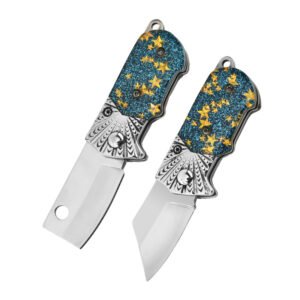
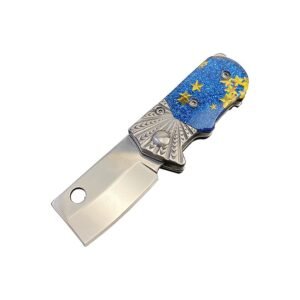
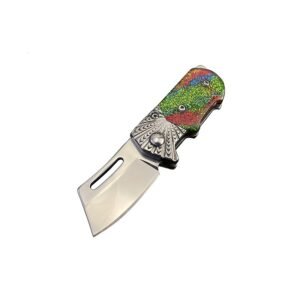
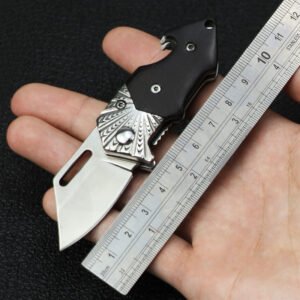
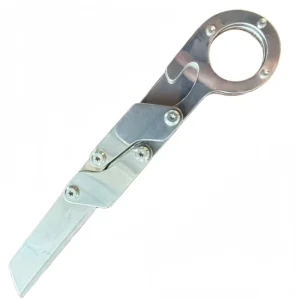
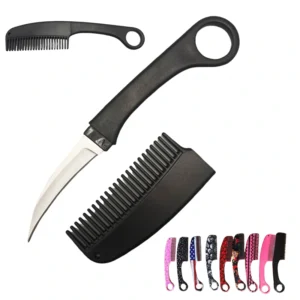
Utility knives come in several forms. A fixed utility knife can feel strong and simple, but it may need a sheath or safe storage solution. A folding utility knife is easier to carry and store, but the lock and pivot quality matter. A retractable utility knife lets the user expose only part of the blade, which is useful in workplaces where controlled cutting depth is important.
Replaceable blade models are popular because the user can swap the blade when it dulls instead of sharpening it. That is useful for warehouse and retail buyers who care about speed and consistency. For wholesale sourcing, check whether replacement blades are standard, easy to source, and clearly described in the product listing.
How to Choose a Good Utility Knife
- Grip: the handle should feel secure, especially when hands are dusty, dry, or slightly damp.
- Blade control: the blade should not wobble during normal cutting.
- Lock or slider: folding and retractable models should engage cleanly and not feel loose.
- Replacement blade access: if the model uses replaceable blades, the process should be simple and safe.
- Packaging: for resale, packaging should explain the blade type and use case clearly.
For repeat wholesale orders, sample consistency is important. One good sample is not enough if later cartons arrive with different hardware, weaker locks, or unclear packaging. Ask the supplier how stable the SKU is and whether replacement blades or display packaging can be included.
Safety Notes for Customers
Use a utility knife on a stable surface and cut away from the body. Extend only as much blade as needed for the material. Do not leave the blade exposed on a workbench, and do not drop loose blades into trash where someone can be cut. If the knife has a locking mechanism, make sure it is fully engaged before cutting.
Utility knives are practical tools, but laws and workplace rules can vary. Buyers should check local rules before carrying, shipping, or reselling any knife. Businesses should also follow their own workplace safety policies.
Wholesale Sourcing Notes
If you are sourcing utility knives for a store, job-site kit, online catalog, or distributor order, compare landed cost, MOQ, packaging, replacement blade compatibility, and reorder stability. For broader knife inventory, you can start with the OTF/AUTO knife wholesale category or send requirements through the wholesale inquiry form.
FAQ
Is a utility knife the same as a pocket knife?
No. A pocket knife is a broad category and may be designed for everyday carry, outdoor use, or general tasks. A utility knife is more task-focused, often built for replaceable blades and controlled cutting jobs.
Can a utility knife cut cardboard?
Yes. Cutting cardboard, tape, and packaging is one of the most common utility knife uses. The safest approach is to keep the material stable and expose only the blade length needed for the cut.
Do utility knives need sharpening?
Some fixed-blade utility knives can be sharpened, but many utility knives use replaceable blades. For replaceable blade models, changing the blade is often faster and more consistent than sharpening.
What should wholesale buyers check before ordering?
Check blade type, handle grip, lock or slider quality, replacement blade compatibility, packaging, MOQ, lead time, and whether the same SKU can be reordered consistently.