

Why Is My OTF Mechanism Weak?


Short answer
Most weak OTF action comes from lint, dried oil, or track drag. Use this expert diagnostic guide to spot OTF misfires, sluggish deployment, over-lubrication, an
Key Takeaways
- Knife rules can vary by state, city, blade style, opening mechanism, carry method, and intended use.
- Do not treat a product nickname as a legal category; check the actual features and local rule.
- Retailers should keep legal or safety language factual and avoid promising that one item is allowed everywhere.
Terms Used Here
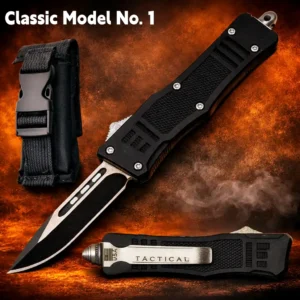
- OTF
- Out-the-front; a knife design where the blade moves forward from the front of the handle.
In this article
- 01 Quick symptom guide: what weak OTF action usually means
- 02 The shortest safe method
- 03 Before you clean: check the maker’s instructions and warranty
- 04 How to tell dirt, too much oil, and spring wear apart
- 05 Lint and debris
- 06 Over-lubrication
- 07 Spring or internal wear
- 08 Track damage, burrs, or impact deformation
- 09 When home cleaning is the wrong move
- 10 Dual-action vs. single-action OTF caveats
- 11 What not to do
- 12 FAQ
- 13 Why does my OTF feel weak after oiling?
- 14 Why does my OTF misfire after pocket carry?
- 15 Why is my OTF sluggish on deployment but not obviously dirty?
- 16 Why won’t my OTF retract fully?
- 17 How many test fires should I do after cleaning?
- 18 When is the spring probably the problem?
Most weak OTF action is caused by lint, dried oil, or drag in the blade track; if one careful clean-and-dry attempt does not restore normal deployment, suspect spring or internal wear and stop cycling it.
That matters more on an OTF than on a manual knife because the mechanism has limited extra force to overcome friction. Repeatedly firing a weak OTF can worsen a minor contamination problem into spring damage, sear wear, finish damage, or a hard lockout. If it feels soft, sluggish, or inconsistent, diagnose it once, clean it once, test it briefly, and stop if the weakness remains.
Quick symptom guide: what weak OTF action usually means
| What you notice | Most likely cause | Best next step |
|---|---|---|
| Slider feels gritty or sandy | Pocket lint, dust, grit in the track or opening | Blow out debris, flush with a maker-approved cleaner if allowed, dry fully, test 3 to 5 cycles |
| Action feels syrupy or heavier after oiling | Too much oil trapping debris or adding drag | Stop adding oil; clean out excess and return to the maker’s recommended lubrication level, often very light or dry |
| Same rough spot every cycle | Burr, rail damage, blade rub, bent hardware, or impact damage | Stop home cycling; inspect for visible marks and use factory service if the rough spot repeats in the same place |
| Knife is clean but still weak | Spring fatigue, internal wear, or sear/interface wear | Do not keep testing; contact the maker or follow the warranty service process |
| Partial lockout or occasional OTF misfires | Contamination, weak spring energy, or drag during travel | One careful clean-and-dry attempt only; if misfires continue, stop |
| Won’t retract fully on a dual-action OTF | Track drag, internal wear, or spring issue affecting both directions | Clean once if allowed; if retraction still fails, service is the right move |
| Single-action OTF fires weakly but manual reset feels normal | Firing spring issue, front-channel fouling, or internal drag on deployment only | Check maker instructions, clean only as approved, then stop if deployment still lacks authority |
The shortest safe method
Use this only if the knife is sluggish or inconsistent but not visibly bent, dropped hard, or scraping badly.
- Clean cloth or paper towels
- Compressed air or a hand air bulb
- Soft nylon brush or clean toothbrush
- Maker-approved cleaner or residue-light knife-safe solvent, if the manufacturer allows flushing
- Flashlight
- Point it in a safe direction and keep fingers clear of the opening.
- Look into the front opening and slider slot. Check for lint plugs, grit, sticky residue, or rust freckles.
- Blow out loose debris. Short bursts are enough.
- If the maker allows it, use a small amount of approved cleaner. Flush the opening and slider area lightly rather than soaking the knife.
- Brush only exposed areas. Use nylon, not metal picks.
- Drain and dry fully. Hold the opening downward so residue can run out.
- Test only 3 to 5 cycles. You are checking whether cleaning fixed it, not trying to force it back to life.
Continue only if the action returns to normal, the slider feels smooth, and lockup is consistent. Stop if it still misfires, still feels weak, hits the same rough spot, or fails to retract or lock out fully.
Before you clean: check the maker’s instructions and warranty
OTF maintenance advice is not universal. Some makers recommend running the knife nearly dry. Others allow a specific light oil in very small amounts. Some explicitly approve aerosol flushing; others want the knife returned for service instead of being opened or flooded with solvent.
This matters for two reasons. First, dual-action OTFs often react badly to over-lubrication because the same internal system has to drive the blade both out and back. Second, warranty coverage can be affected if the handle is disassembled, the wrong solvent is used, or the mechanism is packed with oil or grease. Before you flush or lubricate, follow the manufacturer manual or service instructions for your exact model.
How to tell dirt, too much oil, and spring wear apart
Lint and debris
The most common field pattern is gradual decline after pocket carry. The slider starts feeling grainy, deployment loses snap, and the knife may misfire once in a while before becoming consistently sluggish. This is especially common with front-pocket carry, work pants, sawdust, drywall dust, beach sand, and sweaty summer carry.
Hands-on inspection usually shows fuzz or dark buildup near the opening, and a basic clean often improves it fast. If cleaning clearly changes the behavior, contamination was at least part of the problem.
Over-lubrication
If the knife felt fine until after you oiled it, and now the action feels heavy, damped, or syrupy, excess lubricant is a strong suspect. OTFs do not have much spare energy. A thin film mixed with lint can slow the blade enough to cause sluggish deployment or weak retraction.
This is one of the most common self-inflicted causes of an OTF that feels weak after maintenance. In practice, many dual-action OTFs run better with very little lubricant than with a wet mechanism.
Spring or internal wear
If the knife is visibly clean, fully dry, and still weak every time, the problem is less likely to be lint. Springs can fatigue, internal engagement surfaces can wear, and repeated misfires can take a toll. On a dual-action OTF, weakness may show up in both deployment and retraction. On a single-action OTF, weak firing with a normal manual reset points more toward the firing side of the mechanism.
A clean-but-still-weak OTF is where home troubleshooting should end. More cycling rarely fixes it.
Track damage, burrs, or impact deformation
If you feel a rough spot at the same point in travel every cycle, think physical interference rather than dirt. Look for blade rub marks, a burred opening, uneven wear lines, proud screws, or signs the knife was dropped. Repeating the cycle against a burr or bent rail can worsen the damage quickly.
When home cleaning is the wrong move
Skip home cleaning and go straight to service if any of these apply:
- You hear sharp metal-on-metal scraping
- The blade stops at the same point every time
- The knife was dropped and the handle or opening may be deformed
- You see a burr, dent, bent clip-side hardware, or uneven blade rub
- There is internal rust you cannot reach safely
- The slider locks up, the blade partially deploys, or the knife will not retract fully after one careful cleaning attempt
Those are not “keep flushing it” symptoms. They point to damage, wear, or a service-level problem.
Dual-action vs. single-action OTF caveats
Dual-action OTFs use the same control to deploy and retract the blade, so drag anywhere in the travel can show up as weak deployment, weak retraction, or both. They are especially sensitive to track contamination and excess oil.
Single-action OTFs usually fire under spring power and are manually reset. If a single-action knife fires weakly but resets normally, the issue is often isolated to the firing side: fouling in the front channel, a weakened firing spring, or internal wear related to launch rather than return.
That distinction matters because users sometimes assume every weak OTF has the same fix. It does not. The symptom pattern should match the mechanism type.
What not to do
- Do not keep firing a weak knife to “break it in.”
- Do not flood it with heavy oil, grease, or general-purpose lubricant.
- Do not pry into the opening with a pick, screwdriver, or another blade.
- Do not disassemble the handle unless the maker supports it and you have the exact tools and parts knowledge.
On OTFs, aggressive DIY fixes often create the damage owners were trying to avoid.
FAQ
Why does my OTF feel weak after oiling?
Usually because too much oil added drag or trapped lint inside the track. Many OTFs work best nearly dry or with only the specific lubricant and amount the maker recommends.
Why does my OTF misfire after pocket carry?
Pocket carry feeds lint and grit into the front opening and slider slot. Because an OTF has limited extra spring force, even small debris can cause sluggish deployment or partial lockout.
Why is my OTF sluggish on deployment but not obviously dirty?
Not all contamination is visible from the outside. Dried residue inside the track can slow the blade. If one careful clean-and-dry attempt does not help, suspect spring or internal wear instead of continuing to test it.
Why won’t my OTF retract fully?
On a dual-action OTF, failure to retract fully usually means drag, contamination, or internal wear affecting the return stroke. Clean once if the maker allows it; if the problem remains, stop and use service.
How many test fires should I do after cleaning?
Three to five cycles is enough. If the knife still feels weak after that, more cycling is more likely to worsen the problem than solve it.
When is the spring probably the problem?
When the knife is clean, dry, free of visible external damage, and still deploys or retracts weakly every time. A clean-but-still-weak OTF is a service case, not a lubrication case.
For current models and sourcing details, review OTF knife catalog and wholesale inquiry form.