

Why Is My OTF Slider Hard to Push?


Short answer
An OTF slider is usually hard to push because lint, dried oil, grit, cold-thickened lubricant, or drop-related misalignment increases friction in the switch tra
Key Takeaways
- Knife rules can vary by state, city, blade style, opening mechanism, carry method, and intended use.
- Do not treat a product nickname as a legal category; check the actual features and local rule.
- Retailers should keep legal or safety language factual and avoid promising that one item is allowed everywhere.
Terms Used Here
- OTF
- Out-the-front; a knife design where the blade moves forward from the front of the handle.
- Automatic knife
- A knife that opens by a spring-driven mechanism after the user activates a button, switch, or slider.
In this article
- 01 Quick symptom table: what the feel usually means
- 02 What is normal, and what is not
- 03 Shortest safe method
- 04 Why this happens on OTF knives specifically
- 05 One compact tool list
- 06 How to tell dirt from damage
- 07 Smooth but heavy
- 08 Rough in one exact spot
- 09 Changed right after impact
- 10 Safe limits for owner troubleshooting
- 11 When to stop
- 12 Common mistakes that make a hard slider worse
- 13 FAQ
- 14 Can pocket lint really make an OTF slider hard to push?
- 15 Is a hard slider always a defect?
- 16 Should I oil the slider slot directly?
- 17 What if the slider is only stiff in winter?
- 18 What if cleaning helps for one day, then the stiffness returns?
An OTF slider is usually hard to push because lint, dried oil, grit, cold-thickened lubricant, or drop-related misalignment has increased friction in the switch track; if it has always been firm but smooth and reliable, that may be normal.
Because an OTF uses a spring-driven carriage moving on narrow internal rails, forcing a stiff slider can turn a simple contamination issue into a misfire or internal damage. Start with external cleaning only, and stop if the knife feels gritty in one exact spot, starts misfiring, or became stiff right after a drop.
Try this first
- Unload the knife, keep fingers clear of the blade path, blow out the blade opening and slider slot, then dry-brush the openings.
- If the maker allows lubrication, use one small drop of light knife oil at the blade opening only, then cycle the knife 5 to 10 times.
- Continue only if the slider becomes smoother and the knife remains reliable.
Stop and service if
- The slider catches in one exact place, feels metallic or gritty, or gets worse after cleaning.
- The knife misfires, deploys halfway, retracts unexpectedly, or jams solid.
- The problem started immediately after impact or a hard drop.
Quick symptom table: what the feel usually means
| Symptom | Most likely cause | Next action |
|---|---|---|
| Hard all the time, but smooth and reliable | Normal spring tension, small slider, or short thumb purchase | If it has always felt this way and fires consistently, it may be normal |
| Suddenly stiff after pocket carry | Lint, dust, or dried oil in the track or switch slot | Blow out debris, dry-brush openings, add minimal oil only if allowed |
| Gritty in one spot of travel | Grit, burr, or impact-related internal damage | Stop after basic external cleaning and move to service if unchanged |
| Worse in cold weather | Oil too heavy for low temperature, or old lubricant thickening | Remove excess residue and relubricate very lightly |
| Misfires plus stiff slider | Contamination, carriage drag, weak spring, or damage | Do not keep cycling it; clean externally once, then service if not fixed |
| Stiff right after a drop | Misalignment or damaged internal parts | Do not force it; get service |
What is normal, and what is not
A firm OTF slider is not automatically a defect. Small double-action OTFs often feel harder to fire than larger ones because the switch pad is shorter and your thumb has less leverage. That is common on compact everyday-carry models. By contrast, a full-size OTF with a longer, wider slider may feel easier even with a strong spring.
The key difference is consistency. Normal resistance feels smooth and repeatable from day one. A real problem usually feels new, uneven, gritty, temperature-sensitive, or unreliable.
- Probably normal: firm from the beginning, smooth travel, no change over time, no misfires.
- Probably contamination: suddenly stiffer after pocket carry, dusty work, long storage, or too much oil.
- Probably a service case: catches in one place, changed after a drop, or still feels wrong after one careful cleaning attempt.
Shortest safe method
If you want the fastest low-risk check, do this in order:
- Make sure the knife is pointed in a safe direction and keep fingers out of the blade path.
- Inspect the blade opening and slider slot under good light.
- Use compressed air or a hand blower to remove loose lint and grit.
- Use a dry nylon brush or clean toothbrush on the openings only.
- If the manufacturer allows it, place one drop of light knife oil at the blade opening.
- Cycle the knife 5 to 10 times and reassess.
If the slider becomes smoother, stop there and wipe away any expelled residue. If it stays rough, binds in one spot, or starts misfiring, do not keep testing it.
Why this happens on OTF knives specifically
OTF knives are more sensitive to debris than many side-openers because the firing system rides inside a narrow enclosed track. Dirt usually enters through two places: the blade opening at the front of the handle and the slider slot on the side. A little lint that would not matter on another knife can noticeably change the feel of an OTF switch.
That is also why adding too much oil often makes things worse. Excess oil holds pocket lint, cardboard dust, and grit in the same path the carriage has to travel. The result can feel like a stronger spring, but the real issue is drag.
One compact tool list
- Good light
- Compressed air or hand blower
- Dry nylon brush or clean toothbrush
- Lint-free cloth
- Light knife oil, used sparingly and only if the maker allows it
- Correct driver for external screws only if the maker treats that as normal owner maintenance
How to tell dirt from damage
Smooth but heavy
If the slider feels evenly firm from start to finish, contamination or simple design resistance is more likely than breakage. This is the case where external cleaning may help.
Rough in one exact spot
If your thumb feels a catch at the same point every time, think grit, a burr, or a bent internal part. That is not a case for repeated firing. One cleaning attempt is reasonable; after that, stop.
Changed right after impact
If the knife was dropped and the slider became stiff immediately afterward, treat it as a possible alignment problem. Even if the outside looks fine, the internal carriage or stop surfaces may no longer be tracking correctly.
Safe limits for owner troubleshooting
For most users, low-risk troubleshooting ends with external inspection, air, dry brushing, and minimal lubrication if permitted. That is enough to solve many carry-related stiffness issues.
Do not open the handle, flood the mechanism with oil or solvent, force the slider with both thumbs, or start adjusting screw tension as a tuning method. OTF mechanisms are simple in concept but sensitive in reassembly, and a knife that only needed debris removal can become a bigger problem after unnecessary disassembly.
When to stop
Stop troubleshooting and move to maker or dealer service if any of these happen:
- The slider binds in one exact spot after cleaning
- You hear scraping metal
- The blade deploys halfway, retracts unexpectedly, or misfires more than once
- The slider is jammed solid
- The problem started after a drop or impact
- One careful cleaning cycle did not improve it
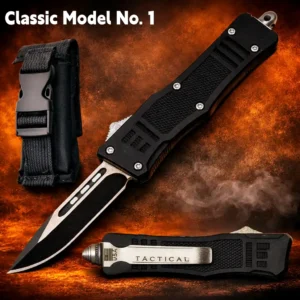
If you need product details for current models, see the OTF knife catalog. If you need business help sourcing or replacing inventory, use the wholesale inquiry form.
Common mistakes that make a hard slider worse
- Adding more oil before removing lint and grit
- Testing the knife over and over when the first few cycles were already rough
- Assuming every firm slider is a bad spring
- Ignoring that the problem began right after a drop
- Using picks, metal tools, or blade tips in the slider slot
- Opening the handle for a problem that was still in the low-risk cleaning stage
FAQ
Can pocket lint really make an OTF slider hard to push?
Yes. On an OTF, lint enters through the blade opening and slider slot and can add drag inside the switch track.
Is a hard slider always a defect?
No. If it has always been firm but remains smooth and reliable, that may simply be how that model is tuned.
Should I oil the slider slot directly?
Usually no. If lubrication is allowed, use a very small amount at the maker’s recommended point, typically the blade opening, not a flood into the switch slot.
What if the slider is only stiff in winter?
That often points to thickened lubricant. Remove excess residue and relubricate very lightly with a suitable light oil.
What if cleaning helps for one day, then the stiffness returns?
That often means excess oil is still trapping debris, or the knife is being carried in a high-lint or dusty environment. If one careful cleaning does not stabilize it, stop repeating the cycle and get service.