

How to Fix a Sticky OTF Slider


Short answer
Fix a sticky OTF slider with a simple clean-and-dry method: blow out lint, flush lightly with isopropyl alcohol or knife-safe cleaner, let it dry fully, test dr
Key Takeaways
- Knife rules can vary by state, city, blade style, opening mechanism, carry method, and intended use.
- Do not treat a product nickname as a legal category; check the actual features and local rule.
- Retailers should keep legal or safety language factual and avoid promising that one item is allowed everywhere.
Terms Used Here
- OTF
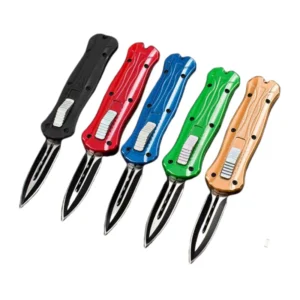
- Out-the-front; a knife design where the blade moves forward from the front of the handle.
In this article
- 01 Quick answer
- 02 What usually causes the problem
- 03 One compact checklist
- 04 Step-by-step: the shortest safe method
- 05 1. Confirm that it is just sticky, not damaged
- 06 2. Blow out loose debris
- 07 3. Flush lightly with cleaner
- 08 4. Wipe and brush the exposed areas
- 09 5. Let it dry fully
- 10 6. Test it dry first
- 11 What not to do
- 12 How to tell whether cleaning worked
- 13 Product variation note
- 14 FAQ
- 15 Can I use WD-40 on a sticky OTF slider?
- 16 How many times should I cycle the knife while cleaning?
- 17 Should I take the knife apart if cleaning does not work?
A sticky OTF slider is usually fixed by blowing out debris, flushing the switch and track lightly with isopropyl alcohol or a knife-safe cleaner, cycling it only a few times, letting it dry completely, and testing it dry before adding any lubricant.
Because an OTF uses a narrow spring-and-carriage track, small amounts of lint, dried residue, or excess oil can slow both the thumb switch and the blade at the same time; if the mechanism binds hard or starts misfiring repeatedly, stop and get service rather than forcing it.
Quick answer
- Point the knife in a safe direction and clear the work area.
- Blow out the slider channel and blade opening with short bursts of compressed air.
- Flush the switch area and opening lightly with isopropyl alcohol or a knife-safe cleaner.
- Cycle the slider only a few times to move residue out.
- Let the knife dry fully, then test it dry.
- Add at most one drop of light knife lube only if the maker recommends lubrication.
Stop and get service if:
- The slider hard-binds or will not move through its normal travel.
- The blade repeatedly deploys only partway.
- The button feels crooked, loose, or scrapes unevenly.
- Spring tension suddenly feels much weaker than before.
What usually causes the problem
Most sticky sliders come from contamination, not a broken part. The usual causes are simple:
- Lint packed around the switch: common on carry knives, especially with textured or recessed sliders.
- Dried residue: old lubricant, evaporated cleaner, or adhesive dust can make the action feel gummy.
- Fine grit in the track: cardboard fibers, pocket dust, and dirt can enter through the blade opening.
- Too much oil: many OTFs run best nearly dry, and extra oil can increase drag instead of reducing it.
- Actual wear or damage: less common, but more likely if cleaning does nothing.
The OTF-specific reason this matters is that the slider is not just an external button. It is part of a straight-line firing system moving a carriage on tight internal rails. Anything that adds friction in that path can make the switch feel sticky and the blade feel weak at the same time.
One compact checklist
- Compressed air or a hand air blower
- 91%+ isopropyl alcohol or a knife-safe cleaner
- Lint-free cloth or paper shop towel
- Soft nylon brush or soft toothbrush
- Good lighting
- Optional: one drop of light knife lubricant, only if your maker recommends it
A simple compatibility rule: alcohol-based cleaner is usually the safest first choice for flushing residue because it evaporates quickly and does not leave much behind. Avoid heavy oils, grease, and general-purpose sprays that leave a waxy film.
If your knife came with care instructions, follow the maker’s cleaning and lubrication guidance first. Some OTF models are specifically designed to run with little to no oil, and some warranty terms discourage user disassembly.
Step-by-step: the shortest safe method
1. Confirm that it is just sticky, not damaged
Move the slider once forward and back once. You are checking feel, not trying to power through the problem. A slow, gritty, or tacky feel usually points to debris or residue. A sharp stop, uneven scrape, or loose side-to-side button feel points more toward damage.
Continue if the slider still moves through its range and the issue feels like drag. Stop if it jams solid, tilts badly, or the blade repeatedly fails to complete travel.
2. Blow out loose debris
Use short bursts of compressed air on the slider channel, around the switch, and through the blade opening. Hold the knife so loosened debris can fall out rather than deeper into the handle. This step often fixes the problem by itself on a knife that has been riding in a pocket every day.
If you can see fuzz built up around the switch edges, use a soft nylon brush first, then air again.
3. Flush lightly with cleaner
Apply a small amount of 91% or higher isopropyl alcohol, or a knife-safe cleaner, into the switch area and blade opening. You are flushing, not soaking. A few drops or a brief directed spray is enough.
Cycle the knife only a few times so the cleaner can carry residue out of the track. If dirty liquid appears, that is a good sign that contamination was the main issue.
Do not keep firing it over and over during this stage. A few cycles are enough to move cleaner through the mechanism.
4. Wipe and brush the exposed areas
Wipe the switch channel edges and the area around the thumb pad with a lint-free cloth. Use a soft brush for corners and texture. Avoid cotton swabs if they shed fibers into narrow gaps; if you use one, keep it on exposed surfaces only.
Do not insert metal picks, blades, or hard tools into the slider track. Small burrs or scratches can create more drag than the original dirt.
5. Let it dry fully
This step matters more than many people expect. An OTF can feel temporarily smoother while the mechanism is wet, then feel sluggish again if trapped fluid mixes with old residue. Give it time to dry completely, then use one more burst of air if needed.
Testing too soon is one reason people think the knife needs more oil when it really just needs to finish drying.
6. Test it dry first
Once fully dry, cycle the slider a few times and judge the result. If the action is back to normal, stop there. That is the best outcome for many OTFs.
If the knife is clearly improved but still a little rough, add one small drop of light knife lubricant only at the point recommended by the maker, then cycle it a few times and wipe away any excess. If you do not know the correct lubrication point, it is safer to leave the knife dry than to guess and over-oil the track.
When to stop: if one careful clean-and-dry cycle does not produce clear improvement, do not keep adding cleaner or lubricant. At that point the problem is more likely wear, spring trouble, or a damaged button or rail.
What not to do
- Do not flood the mechanism with oil. On many OTFs, excess oil traps debris and slows the carriage.
- Do not force the slider with tools. If normal thumb pressure is not enough, there is a real obstruction or a damaged part.
- Do not keep cycling a misfiring knife dozens of times. Repeated hard resets can worsen an existing internal problem.
- Do not disassemble the handle unless the maker supports it. OTF internals are simple in concept but easy to reassemble incorrectly, and some brands may treat disassembly as a warranty issue.
- Do not use thick grease. It is usually too heavy for this type of action.
How to tell whether cleaning worked
Cleaning was probably enough if all three of these are true:
- The slider returns to normal thumb pressure.
- The blade deploys and retracts consistently.
- The button feels straight and smooth, without scraping or wobble.
Service is the better next step if any of these remain after cleaning and drying:
- Repeated partial deployment or failure to retract
- A button that feels loose, crooked, or rough in one direction
- Sudden loss of spring force
- No meaningful improvement after one careful cleaning cycle
Product variation note
Not every OTF reacts the same way to lubrication. Some are set up to run nearly dry, while others tolerate a very small amount of light oil at specific points. That is why the safest general method is to clean first, test dry, and lubricate only if the maker’s guidance supports it.
If you are trying to identify your knife style or compare switch layouts, you can browse the OTF knife catalog, but for this specific problem the fix is still the same: clean out contamination, dry fully, and stop if the action still binds.
FAQ
Can I use WD-40 on a sticky OTF slider?
It is better to use 91%+ isopropyl alcohol or a cleaner specifically described as knife-safe. Many general-purpose sprays leave residue behind, which can make the action sticky again later.
How many times should I cycle the knife while cleaning?
Only a few times per stage. Enough to move cleaner through the track, not enough to grind debris deeper into the mechanism.
Should I take the knife apart if cleaning does not work?
Usually no, unless the maker explicitly supports owner disassembly. If one careful clean-and-dry attempt does not help, the smarter move is service, not deeper DIY repair.