




Why Do Collectors Like OTF Knives?

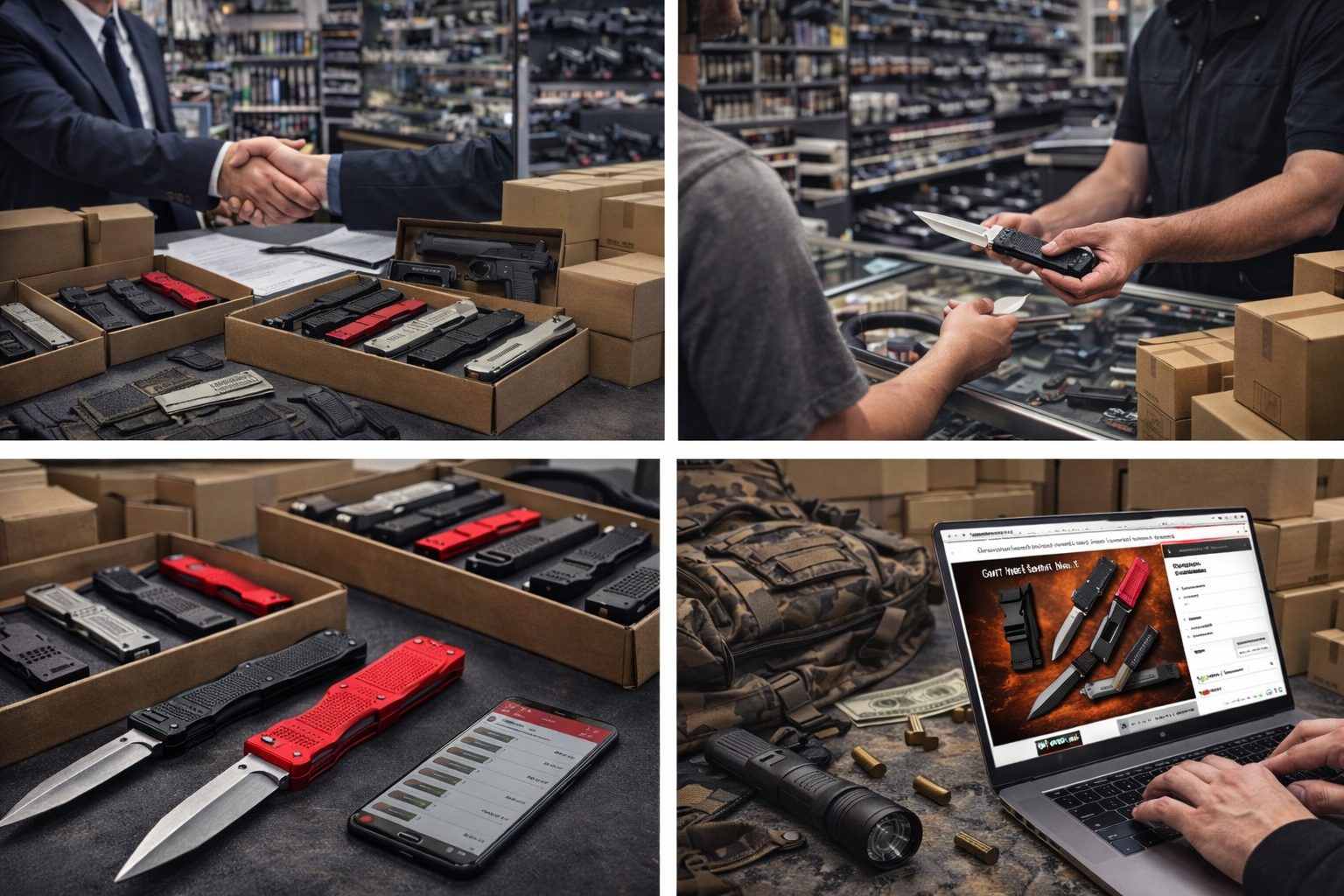
Yes, collectors like OTF knives because the out-the-front action gives them something many other knives do not: a mechanically distinctive opening system that is fun to operate, easy to compare across models, and compact to carry. For collectors, the appeal is not just speed. It is the combination of mechanism, tactile feel, design variation, and the fact that small differences in build are easy to notice and remember.
This page focuses on collector appeal rather than job-site use. The useful question is not whether an OTF is the best knife for every task, but why it keeps earning a place in collections even when the owner already has manuals, side-opening automatics, and fixed blades.
1) The mechanism is the first hook
Most collectors are drawn to OTF knives because the blade travels straight out the front instead of rotating from the side. That alone makes the category stand apart. The action is visible, audible, and repeatable in a way that invites comparison: thumb on the slider, spring tension building, blade firing, lock engaging, then the same process in reverse.
That sequence gives collectors more to evaluate than basic cutting ability. On an OTF, they notice details such as:
- Slider resistance: Is it smooth and deliberate, or stiff and fatiguing?
- Track feel: Does the action feel precise or slightly gritty?
- Lockup character: Does the blade feel solid for the category, or loose and rattly?
- Sound signature: Is the deployment a crisp snap, a sharp click, or a softer mechanical thud?
Those traits make OTFs unusually easy to compare side by side. Two knives can have nearly the same size, steel, and blade shape, yet feel completely different in operation. That comparison value is a big part of why collectors rarely stop at one.
Concrete example: a collector may own two similar single-edge OTFs in black aluminum handles. On paper they look close. In hand, one may have a shorter, heavier slider stroke with a dense, authoritative click, while the other feels lighter, faster, and slightly more springy. That difference is enough to make both interesting rather than redundant.
2) Collectors notice tactile differences that photos miss
OTF knives often look similar in pictures, but the category rewards handling more than many buyers expect. That is why collectors talk about “feel” so much. The best examples do not just deploy; they create a distinct hand experience.
Collectors tend to notice a few tactile details right away:
- Switch texture and traction: Fine jimping, aggressive ridges, or a broad low-profile slider all change thumb comfort.
- Handle machining: A flat body with sharp edges carries differently from one with chamfering, contouring, or milled panels.
- Balance in hand: Some OTFs feel neutral and easy to fidget with; others feel handle-heavy or more substantial.
- Blade profile effect: A dagger, tanto, spear point, or drop point changes not only appearance but the whole personality of the knife.
These details matter because OTF collecting is often about repeated handling, not just ownership on paper. A model that seemed exciting in product photos can feel ordinary if the slider is vague, the handle edges are harsh, or the action lacks consistency. The reverse also happens: a plain-looking model becomes a favorite because the switch feels perfect and the machining is cleaner than expected.
Concrete example: one collector may keep a compact OTF because it disappears in pocket carry and has a slider that feels controlled even after dozens of openings. Another may prefer a larger model with deeper handle milling and a broader thumb switch because it feels more secure and satisfying, even if it is less discreet in the pocket.
3) Why collectors choose OTFs over other knife categories
Collectors usually do not choose OTFs in isolation. They compare them with side-opening automatics, manual folders, and fixed blades. OTFs win attention for a different reason in each comparison.
Compared with side-opening automatics
Side-opening automatics offer their own appeal, but the experience is different. A side-opener emphasizes pivot action and scale design. An OTF emphasizes slider feel, internal mechanism, and straight-line deployment. For collectors, that means OTFs create a more standardized comparison field: when the format stays similar, small differences in resistance, lockup, machining, and blade profile become easier to isolate.
In simple terms, side-openers often feel like variations on a familiar automatic theme. OTFs feel like a separate mechanical category.
Compared with manual folders
Manual folders offer huge variety, but much of that variety comes from lock type, detent tuning, washer or bearing feel, and opening method. OTFs compress the format. Because the basic opening concept is shared, collectors can focus on finer distinctions between otherwise similar models. That makes OTF collecting especially appealing to people who enjoy close comparison rather than broad category shopping.
Another advantage is carry shape. Many OTFs have a slim, rectangular body that sits flat in pocket carry, which can make them feel more compact than a bulky manual folder with thick scales or a wide pivot area.
Compared with fixed blades
Fixed blades can be more straightforward for hard use, but they do not offer the same mechanical interaction. For a collector, a fixed blade is often about grind, handle material, sheath, and finish. An OTF adds a strong user-interface element. Every deployment reminds the owner why the knife is interesting.
That is why some collectors keep an OTF in rotation even if a fixed blade or manual folder handles rougher tasks better. The OTF earns its place through engagement, not just utility.
Best for: collectors who enjoy comparing mechanism feel, carry slim knives in a pocket, and notice differences in slider resistance, lockup, machining, and blade profile.
Worst for: buyers who only want one knife for gritty, dusty, neglect-heavy work and do not care about mechanical feel beyond basic cutting.
4) What separates a keeper from a novelty buy
Many people are impressed by an OTF the first time they fire one. Fewer keep loving the same knife after a month. The difference usually comes down to whether the knife offers lasting handling value rather than a one-time trick.
A keeper usually has a few qualities in common:
- Consistent slider feel. The switch should feel deliberate and repeatable, not random from one opening to the next.
- Clean machining. Edges, seams, and button texture should feel intentional, not rough or unfinished.
- A blade profile that suits the owner. A dramatic dagger may look great in a display; a single-edge profile may get handled more because it feels more practical for tape, cardboard, or cord.
- Distinct identity within the collection. If it feels too similar to what the collector already owns, interest fades fast.
- Pocket behavior the owner actually enjoys. Slim carry, clip placement, and how much lint the knife attracts all affect whether it gets revisited.
One thing collectors often misjudge is assuming that “faster” means “better.” Usually it does not. A very aggressive action can be exciting at first, but long-term satisfaction often comes from control, comfort, and precision. Another common mistake is buying on finish alone. Color and coating matter, but they rarely save a knife with mediocre switch feel or forgettable machining.
Concrete example: a limited-run colorway may attract immediate attention, but if it shares the same vague slider and generic handle feel as a standard model, it may not become a favorite. By contrast, a plain black model with better milling, better traction, and a more satisfying lockup often becomes the one a collector keeps reaching for.
If you are comparing models, a focused OTF knife collection is most useful when you look past finishes and ask what actually changes in the hand: switch geometry, handle profile, blade style, overall size, and carry format.
Quick checklist: will this OTF stay interesting?
- Does the slider feel controlled? Neither painfully stiff nor cheap and vague.
- Is the machining clean where your thumb and palm actually touch?
- Does the blade profile add something new to your collection?
- Will you enjoy carrying it in a pocket with normal lint and daily clutter?
- Can you name what makes it different from your other knives besides color?
FAQ
Do collectors like OTF knives mainly for speed?
No. Speed gets attention, but collectors usually stay interested because of mechanism feel, slider resistance, lockup character, sound, machining, and how easy the knives are to compare across similar models.
Why are OTF knives easy to compare in a collection?
Because many share a similar overall format. When the opening method stays consistent, small differences in switch feel, handle contour, blade profile, clip placement, and action quality become more obvious and more meaningful.
What do collectors often misjudge about OTF knives?
They often overvalue novelty and undervalue hand feel. A knife can look dramatic online and still feel forgettable if the slider is awkward, the edges are harsh, or the action lacks consistency. They also underestimate practical details like pocket lint and carry comfort.
Are limited runs important to OTF collectors?
Often, yes, but only when the underlying knife is good. Limited colors, special blade finishes, or small machining changes matter more when collectors already like the base model’s action and feel.
Why buy more than one OTF if they look similar?
Because similar-looking OTFs can deliver very different ownership experiences. A small change in slider shape, spring feel, handle milling, or blade geometry can make one model better for display, another better for pocket carry, and another simply more satisfying to operate.