




Can I Use an OTF Knife for Daily Package Opening?

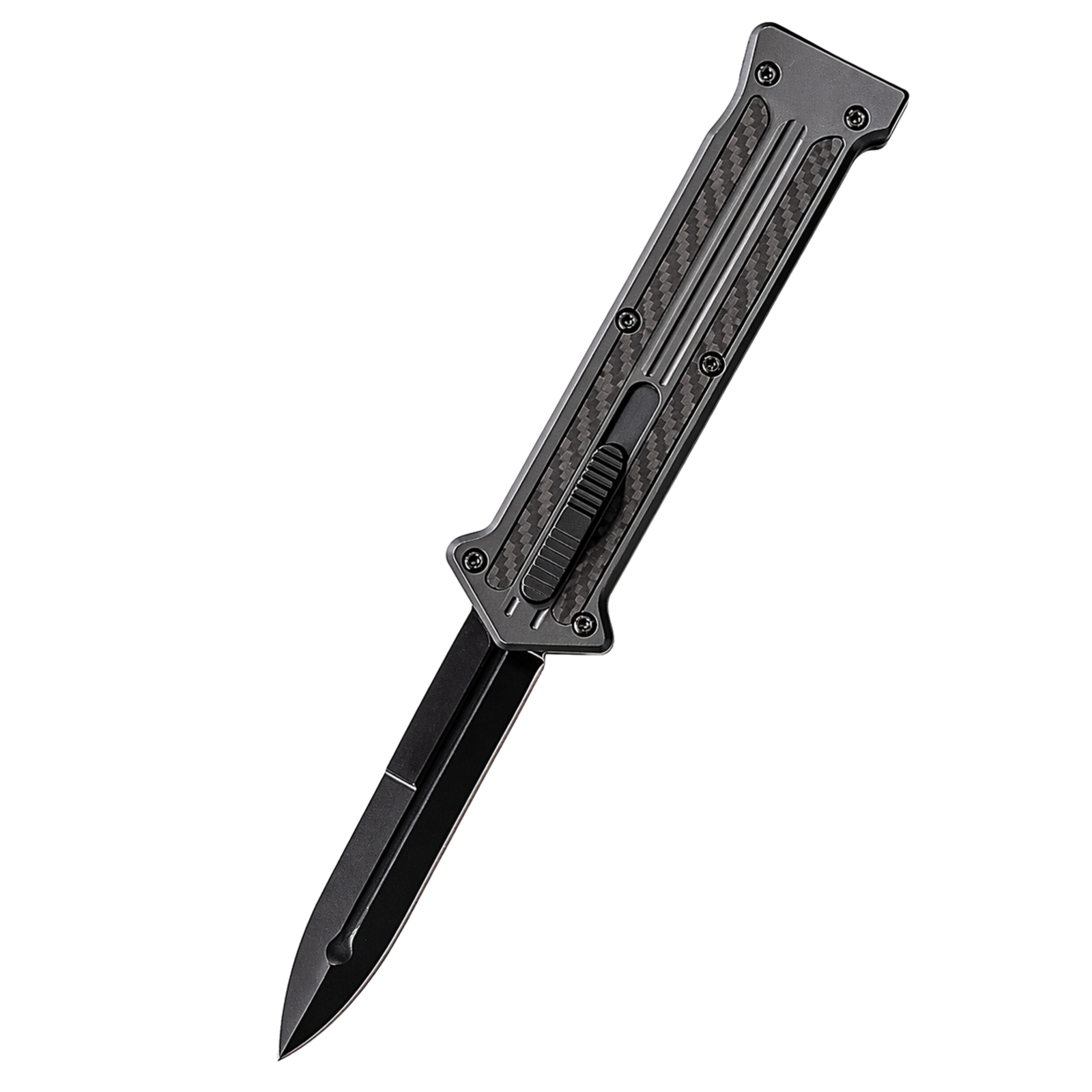
Yes, you can use an OTF knife for daily package opening, but it depends on the blade shape, edge thickness, and how much tape-and-cardboard work you actually do. For light daily use like cutting packing tape, slicing bubble mailers, and opening padded envelopes, an OTF can be practical. For heavy warehouse-level breakdown of thick cardboard all day, it is usually workable but not the best tool.
The short version is simple: an OTF knife is good for opening packages when the job is mostly tape, thin cardboard, and quick one-handed cuts. It becomes a weaker choice when you are pushing through double-wall boxes, cutting dirty material, or using the tip carelessly near the contents. That difference matters more than the marketing around the knife.
Where an OTF works well, and where it starts to struggle
Package opening sounds like one task, but it is really several different cuts. An OTF performs differently on each one.
- Normal: cutting packing tape, opening mailers, trimming shrink wrap, slicing plastic straps carefully, and making shallow entry cuts on standard cartons.
- Borderline: breaking down several medium boxes in a row, cutting reinforced tape, or working through thick corrugated cardboard every day.
- Problem: prying staples, twisting the tip in cardboard, punching deep into boxes without control, or using the knife as a rough warehouse demolition tool.
That distinction matters because most OTF knives are designed around fast deployment and convenient carry, not maximum cutting efficiency through dense material. The blade can absolutely open packages, but some models are better cutters than others.
If your daily routine is five to twenty packages, mostly tape and light cardboard, an OTF can feel very convenient. If your routine is a stockroom shift where you flatten dozens of heavy cartons, a manual utility knife or thin-blade folding knife will often cut faster and stay easier to maintain.
The three details that decide package-opening performance
For this task, the most important factors are easy to observe. You do not need a lab test. You need to look at the blade, the edge, and the action.
1. Blade shape
For package opening, a drop point or spear point with a usable belly is usually the safest all-around choice. It gives enough tip control to start a cut in tape, then enough edge length to slice cleanly.
A dagger-style double-edge OTF can open boxes, but it is often less practical for daily utility. One reason is simple: many users want one clearly defined working edge and a spine they can guide with a thumb. Another reason is control near the contents. A single-edge blade is usually easier for careful, shallow cuts.
Tanto blades can work, especially for piercing tape seams, but some thick tantos are less smooth through long slices of cardboard. Serrations help on fibrous material and stubborn straps, but a fully serrated edge is not ideal if most of your day is clean, controlled tape cuts.
2. Edge thickness behind the bevel
This is one of the biggest differences between an OTF that feels sharp and one that actually cuts well. A blade can have a sharp apex but still wedge badly in cardboard if it is too thick behind the edge.
- Better for packages: thin to medium edge geometry that enters tape and cardboard with little drag.
- Less ideal: very thick, overbuilt blades that split material instead of slicing it.
If a model looks designed more for visual impact than for slicing, expect more resistance in cardboard. For package work, thinner usually feels better.
3. Action reliability under light debris
OTF knives have moving internal parts, so daily tape-and-box use raises a practical issue: lint, dust, adhesive residue, and cardboard fibers. A good OTF should deploy and retract consistently in normal pocket and desk use, but package environments can add debris faster than casual carry does.
For this reason, the best OTF for package opening is not just sharp. It should also have consistent firing, a slider that does not feel gritty, and a blade channel that is easy to keep clean. If deployment starts feeling weak or inconsistent after a week of box work, that is not a small annoyance. It is a sign the knife may not fit the job well or needs more frequent maintenance than you want.
A quick pass/fail checklist before you make it your daily opener
Use this as a compact real-world test. If the knife fails two or more points, it is probably not the right daily package opener for you.
- Pass: Opens packing tape in one smooth draw without tearing the box surface badly.
- Pass: Makes a shallow 3 to 6 inch cut in single-wall cardboard without heavy force.
- Pass: Tip can start a seam cut without diving too deep toward the contents.
- Pass: Deploys and retracts normally after several package openings in one session.
- Pass: Edge still slices tape cleanly after a normal day, not just the first few boxes.
- Fail: Blade wedges hard in cardboard or needs sawing pressure for ordinary cartons.
- Fail: Slider becomes noticeably sticky after light debris exposure.
- Fail: Tip shape makes it easy to puncture the item inside the box.
This checklist is intentionally plain. If a knife cannot do these basic things, it may still be an interesting OTF, but it is not a strong daily package opener.
One realistic use case: online retail receiving desk
Imagine a small retail receiving desk that gets twelve to fifteen parcels a day. Most packages are taped corrugated cartons, padded mailers, and shrink-wrapped inner bundles. The user opens boxes, checks contents, and puts the knife away repeatedly with one hand while handling paperwork or a scanner with the other.
In that setting, an OTF can be a very practical tool. Fast one-handed deployment is genuinely useful. A single-edge blade with a fine tip can lift tape seams, make short controlled cuts, and retract quickly when the box is open. The convenience is real.
Now change the scenario. Instead of opening shipments carefully, the user spends an hour breaking down empty cartons for recycling. That same OTF may feel slower, thicker in cut, and more tiring than a thinner utility blade. So the answer is yes for opening packages, but only a qualified yes for processing lots of cardboard.
Mistakes people make when using an OTF on boxes
- Using a dagger blade for every package task. It can work, but many users are better served by a single-edge profile for safer guidance and cleaner utility cutting.
- Cutting too deep on entry. A fast-deploying knife still needs shallow cuts near product contents. The best package-opening habit is slicing along tape seams, not stabbing into the center of the box.
- Ignoring adhesive buildup. Tape glue and cardboard dust can affect action over time. Wipe the blade often and keep the mechanism cleaner than you would with a simple fixed blade.
- Choosing a thick “tactical” grind for a light utility job. If the blade stock and edge are too stout, opening boxes will feel harder than it should.
- Expecting one knife to cover both careful opening and heavy breakdown equally well. Those are different tasks. One tool can do both, but not always equally well.
How to choose if you are buying one knife or stocking several
If you are shopping for personal use, focus on a single-edge OTF with a practical point, plain edge, and slicey geometry. For people who open ordinary deliveries each day, that is usually the sweet spot.
If you are comparing multiple models, browse an OTF knife catalog and filter your thinking around use, not appearance alone. Ask these direct questions:
- Is the blade shape meant for slicing, or mostly for style?
- Can the tip start tape cuts without over-penetrating?
- Does the edge look thin enough for cardboard?
- Will the user be opening packages carefully, or breaking down boxes in volume?
For stores, distributors, or private-label buyers, package opening is one of the most common real-world use cases customers mention. That means the practical details above matter at the buying stage. A model that looks dramatic but cuts cardboard poorly may create more returns or complaints than a simpler, more useful design. If you are sourcing at volume and want to compare options for this kind of everyday utility demand, a direct wholesale inquiry is the fastest way to discuss blade profiles and order goals.
Bottom line
An OTF knife can absolutely be used for daily package opening. It is a good choice when your routine is mostly tape, mailers, and moderate carton work, and when the knife has a practical single-edge blade with decent slicing geometry. It is not the optimal choice for nonstop heavy cardboard breakdown, and it becomes a poor choice if the action clogs easily or the blade is too thick to cut efficiently.
For most users, the best judgment is this: OTF knives are workable to very good package openers, but only some are truly well-suited to that job. Choose for control and slicing, not just deployment speed.
Is a double-edge OTF good for opening Amazon-style boxes?
It can do the job, but a single-edge OTF is usually easier to control and safer around the contents. For routine package opening, single-edge tends to be the more practical format.
Will cardboard damage an OTF knife quickly?
Not quickly if use is moderate and the knife is maintained, but cardboard is abrasive. Expect edge dulling faster than with soft materials, and expect to clean out dust and adhesive more often than with casual carry use.
Is an OTF better than a utility knife for packages?
For light daily opening and one-handed convenience, sometimes yes. For heavy box breakdown, usually no. Utility knives still have an advantage in thin disposable blades and low-cost maintenance.
What is the best edge type for package opening?
A plain edge is usually best for tape, mailers, and clean cardboard cuts. Partial serrations can help with tougher fibrous material, but they are not the first choice for most everyday package work.