

What Degree to Sharpen a Pocket Knife


Short answer
Learn what degree to sharpen a pocket knife, how blade style affects the angle, common mistakes to avoid, and how buyers can choose durable, easy-to-maintain ed
In this article
- 01 The practical answer: what degree should a pocket knife be sharpened to?
- 02 Why the right angle depends on the knife
- 03 Blade thickness and grind
- 04 Steel hardness and toughness
- 05 Intended use
- 06 How to choose the angle for common pocket knife uses
- 07 Signs the edge angle is too narrow or too wide
- 08 When the angle is too narrow
- 09 When the angle is too wide
- 10 Common sharpening mistakes to avoid
- 11 What wholesale buyers should look for in pocket knives
- 12 How to maintain a pocket knife edge after sharpening
- 13 FAQ: pocket knife sharpening angle
- 14 Is 20 degrees per side good for a pocket knife?
- 15 Is 15 degrees per side too sharp for everyday carry?
- 16 Should I sharpen both sides evenly?
- 17 Do all pocket knives have the same factory angle?
- 18 What is the safest general choice if I do not know the knife’s exact purpose?
The best angle for sharpening a pocket knife is usually between 15 and 20 degrees per side, with many everyday folding knives performing well around 18 degrees per side. If you want a simple starting point, choose a slightly wider angle for tougher use and a slightly narrower angle for finer slicing. The right degree depends on the blade steel, blade thickness, and how the knife will actually be used.
For most shoppers, that means a pocket knife meant for daily carry, opening boxes, light food prep, or general utility work should not be sharpened like a heavy camp knife or a razor. A balanced edge gives you a good mix of sharpness, durability, and easy maintenance. If you buy knives for retail, resale, or wholesale distribution, that balance matters even more because customers usually want an edge that stays useful without requiring constant touch-ups.
The practical answer: what degree should a pocket knife be sharpened to?
Most pocket knives do best at 15 to 20 degrees per side. That equals a total edge angle of 30 to 40 degrees. Within that range:
- 15 degrees per side gives a very sharp, refined edge for slicing and careful cutting.
- 17 to 18 degrees per side is a strong all-around choice for everyday pocket knives.
- 20 degrees per side is a bit more durable and forgiving for harder use.
If you are unsure, 18 degrees per side is a practical middle ground. It is sharp enough for most tasks while still holding up well for everyday carry. A very thin edge can cut impressively at first, but it may roll or chip sooner if the knife is used on cardboard, rope, plastic strapping, or other common working materials.
Why the right angle depends on the knife
Not every pocket knife should be sharpened the same way. Blade geometry, steel type, and intended use all affect the best angle.
Blade thickness and grind
A thin, slicey folding knife can handle a slightly narrower edge angle because the blade behind the edge already moves through material easily. A thicker, sturdier blade often benefits from a slightly wider angle so the edge does not become too fragile. If the knife has a flat grind, hollow grind, or saber grind, the feel of the cut will change too, even at the same sharpening angle.
Steel hardness and toughness
Harder steels can often support a finer edge, but they may chip if taken too thin for the task. Tougher steels can tolerate a wider working edge and are often easier for users to maintain. For wholesale buyers, this is one reason it helps to source knives that match the needs of the end customer rather than choosing only by appearance.
Intended use
A pocket knife used mainly for package opening and light utility work can be sharpened more aggressively than a knife expected to see rough jobsite use. A buyer who wants a display piece, a collector item, or a premium everyday carry option may prefer a finer edge from the start, while a store serving contractors or outdoor users may want a more durable working angle.
How to choose the angle for common pocket knife uses
Here is a straightforward way to think about it:
- 15 degrees per side: best for fine slicing, food prep, and users who value maximum sharpness and are willing to maintain the edge more often.
- 17 to 18 degrees per side: ideal for general everyday carry, office use, and most retail customers.
- 20 degrees per side: better for harder work, less experienced users, and knives that need extra edge stability.
If the knife is used by someone who sharpens often and knows how to maintain a consistent angle, a narrower edge can be rewarding. If the knife will be used by a broad customer base, a slightly wider edge is usually safer from a performance and durability standpoint.
Signs the edge angle is too narrow or too wide
Sometimes the best angle becomes obvious from the way the knife behaves in use.
When the angle is too narrow
- The edge feels sharp at first but dulls quickly.
- The blade chips or rolls when cutting tougher materials.
- The knife struggles after only a short period of use.
When the angle is too wide
- The knife feels sturdy but does not slice cleanly.
- Cutting requires more force than expected.
- The edge seems durable but not very efficient.
The goal is not the thinnest edge possible. The goal is the best edge for the knife’s real job. For many pocket knives, that means finding the point where sharpness and durability meet in the middle.
Common sharpening mistakes to avoid
Even a good angle can fail if the sharpening process is inconsistent. A few common mistakes are easy to avoid.
- Changing angles mid-sharpen: This creates an uneven bevel and makes the edge less reliable.
- Removing too much metal: Over-sharpening shortens blade life and can ruin the original profile.
- Using the same angle for every knife: A small gentleman’s folder and a heavy-duty work knife often need different treatment.
- Ignoring the factory edge: Some knives are designed with a specific angle that should be preserved or adjusted only slightly.
- Skipping maintenance: Regular touch-ups are easier than waiting until the knife is very dull.
If you are sharpening for resale inventory, consistency matters. Customers notice when one knife cuts smoothly and the next one feels rough or uneven. A repeatable sharpening setup can improve customer satisfaction and reduce returns.
What wholesale buyers should look for in pocket knives
For retail stores, online sellers, and distributors, sharpening angle is only one part of the buying decision, but it is an important one. A knife that is easy to maintain can become a better long-term product than a knife that arrives extremely sharp but loses its edge quickly.
When sourcing pocket knives, consider:
- Blade steel: Choose steel that matches the customer base and expected use.
- Factory edge consistency: A uniform edge helps the product feel reliable out of the box.
- Blade shape: Drop point, clip point, and tanto-style blades each perform differently.
- Intended retail price: Buyers in different price tiers expect different edge performance and maintenance needs.
- Ease of resharpening: A knife that can be maintained at 17 to 20 degrees per side is often more user-friendly for general customers.
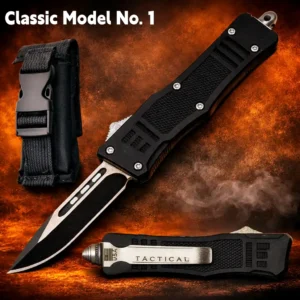
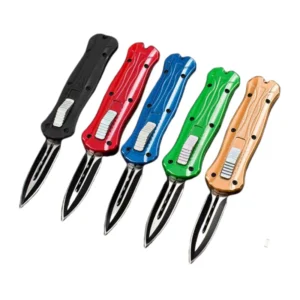
Wholesale buyers who want a broader folding knife selection can review the OTF and auto knife wholesale category to compare styles and product types that may suit different store audiences. If you are planning a larger order or want help matching products to your customers, you can also use the wholesale inquiry form to request more information.
How to maintain a pocket knife edge after sharpening
Once a knife has the right angle, maintenance becomes much easier. A few simple habits help preserve the edge.
- Wipe the blade clean after use, especially after cutting adhesive, tape, or food.
- Store the knife dry to reduce corrosion and edge damage.
- Use light touch-ups before the blade becomes severely dull.
- Match the touch-up angle to the original bevel as closely as possible.
For everyday users, a quick maintenance session at the same angle often works better than a full regrind. That keeps the blade geometry stable and extends the life of the knife.
FAQ: pocket knife sharpening angle
Is 20 degrees per side good for a pocket knife?
Yes. Twenty degrees per side is a very common and practical angle for pocket knives, especially if the knife will be used for general utility work or carried by someone who wants a durable edge.
Is 15 degrees per side too sharp for everyday carry?
Not necessarily, but it can be less durable than a wider angle. If the knife is used lightly and maintained regularly, 15 degrees can work well. For tougher daily tasks, many users prefer something a little wider.
Should I sharpen both sides evenly?
Yes, for most pocket knives a symmetrical edge is the easiest to maintain and the most predictable in use. Uneven sharpening can make the knife feel awkward and wear irregularly.
Do all pocket knives have the same factory angle?
No. Factory edges vary by brand, steel, price point, and intended use. Some arrive with a finer edge, while others are intentionally left a bit sturdier.
What is the safest general choice if I do not know the knife’s exact purpose?
About 18 degrees per side is a dependable starting point for most pocket knives. It gives a good balance of sharpness and edge life for everyday users.
In the end, the best degree to sharpen a pocket knife is the one that fits the blade and the buyer’s real use. For most people, 15 to 20 degrees per side is the right working range, with 18 degrees per side offering a strong all-purpose option. Choose a finer angle for slicing and careful cutting, and a wider angle for durability and easier maintenance. That simple approach helps shoppers, resellers, and wholesale buyers make better decisions and keeps pocket knives performing the way customers expect.