




Why OTF Knife Prices Vary So Much

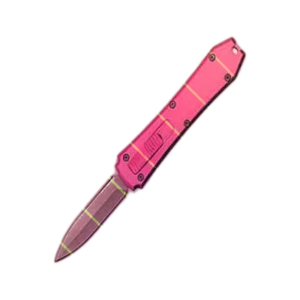
OTF knife prices vary so much because you are not buying one thing; you are buying a mechanism, a materials package, a QC standard, a supplier model, and a risk level. A workable decision standard is this: compare quotes by landed cost per sellable unit after defects, not by unit price alone.
That matters more with OTF knives than with many folding knives because the action is complex, tolerance-sensitive, and expensive to get right at scale. Two knives can look nearly identical in photos and still have very different spring life, lockup feel, switch force, finish consistency, packaging cost, and return rate. For wholesale buyers, the real question is not “Why is one quote lower?” but “What exactly has been removed from the quote to make it lower?”
What actually moves the price on an OTF knife
The largest price differences usually come from five areas: mechanism build, blade steel and heat treatment, handle materials and machining, QC depth, and order structure.
- Mechanism build: OTF knives depend on springs, tracks, sear surfaces, button fit, and internal tolerances. A low-cost build may function in a sample but fail after repeated cycling. Better-priced units often include tighter machining, more stable spring performance, and less variation from piece to piece.
- Blade steel and heat treatment: Steel names alone do not explain price. A D2 blade with controlled heat treatment and consistent grinding can outperform a poorly processed “premium” steel. Wholesale buyers should treat steel claims and heat treatment as separate variables.
- Handle and hardware: Zinc alloy, aluminum, G10 overlays, screws, clips, and surface finish all affect cost. CNC-machined aluminum handles generally price higher than simpler cast or lower-tolerance builds.
- QC and defect sorting: Some suppliers test each knife for deployment, retraction, lockup, blade centering, and cosmetic defects. Others do spot checks only. Full QC raises price, but it can lower returns and customer complaints.
- Order structure: MOQ, packaging, logo application, spare parts, replacement policy, and shipping terms can move the final number more than many buyers expect.
A useful comparison lens is price per reliable cycle window. That means asking how many cycles the knife is expected to handle before failure rates rise sharply in real batches, not just in one polished sample. This is not a perfect lab metric, but it is often more informative than comparing blade length or listed steel.
Why the same-looking knife can quote 30% to 80% apart
In OTF wholesale, visual similarity is a poor proxy for production quality. Many quotes are built from the same outer silhouette but with different internals, different sourcing chains, and different post-production handling.
Factory vs trader pricing
A factory may quote lower on a stable model if your MOQ fits its production line. A trader may quote higher, but can sometimes help with mixed models, lower MOQ, and easier consolidation. The cheaper quote is not automatically the better factory quote. In some cases, a trader is bundling inspection, packaging changes, and export handling that a factory quote leaves out.
For example, a factory may offer 500 units at a lower ex-works price, while a trader offers 150 mixed units with retail boxes and barcode labels. If your channel needs variety and shelf-ready packaging, the trader quote may produce lower landed cost per sellable unit even at a higher piece price.
Sample quality vs reorder quality
One of the biggest hidden reasons for price variation is whether the supplier is quoting a hand-selected sample standard or a true production standard. Some suppliers send their best sample, then fulfill the PO from a looser batch. Others build the sample from the same line and parts bin used for mass production.
This is where repeat order stability matters. A supplier with a slightly higher price but stable reorders is often cheaper over six months than a low initial quote with shifting springs, uneven anodizing, or changing switch tension.
What is included in the quote
A quote may or may not include logo laser marking, custom boxes, nylon sheaths, spare springs, drop-test packaging, export carton standards, or replacement allowance for dead-on-arrival units. If one supplier includes those and another does not, the gap can look dramatic while the underlying knife cost is closer than it appears.
What this does not tell you: even a detailed quote cannot fully predict long-term field returns without batch testing.
How wholesale buyers should compare OTF quotes
When reviewing OTF pricing, compare procurement facts in the same order every time. This avoids getting distracted by a low headline number.
- Define the order type: stock model, private label, or modified OEM. Pricing changes fast once packaging, logo placement, blade finish, or clip style changes.
- Confirm MOQ by configuration: ask whether MOQ applies per model, per color, per blade finish, or total order. A low MOQ headline can hide high minimums per variant.
- Check sample policy: paid sample, credited sample, lead time for sample, and whether the sample comes from production stock. This affects your confidence in reorder consistency.
- Review QC scope: 100% function test or AQL spot inspection only? Ask what defects are screened out before packing.
- Map lead time: stock lead time is not the same as production lead time. For private label OTF knives, include logo approval, packaging proof, assembly queue, and rework buffer.
- Calculate landed cost: include shipping mode, duties where applicable, packaging, defect allowance, and replacement handling. For OTF knives, returns and dead units can erase a cheap quote quickly.
- Ask about repeat order stability: can the supplier hold the same spring spec, finish, and packaging for the next PO? If not, your first order is only a trial, not a platform.
If you are comparing current options, a wholesale OTF knife catalog is useful only after you decide what level of mechanism quality, packaging, and MOQ fits your channel.
A practical approval scenario: approve, test more, or reject
Consider a distributor choosing between two 3.3-inch double-action OTF models for a private-label run.
- Quote A: lower unit price, 300-unit MOQ, plain box, 20-day lead time, no stated replacement allowance, sample feels strong but blade finish varies slightly.
- Quote B: 18% higher unit price, 500-unit MOQ, custom box included, 35-day lead time, 1% replacement allowance, batch function test stated, sample has cleaner switch feel and more even grind.
Now add channel reality. The distributor sells through dealers who dislike cosmetic inconsistency and expect retail-ready packaging. The lower quote saves money upfront, but requires separate packaging work and carries more uncertainty on returns.
Decision trigger:
- Approve Quote B if the supplier can prove the sample matches production, the MOQ is workable, and the landed cost still fits margin.
- Test more if Quote A is attractive but unclear on batch QC. Request a small pre-production batch, not another hand-picked sample.
- Reject either quote if the supplier cannot define defect handling, production lead time, or whether the sample was taken from actual stock.
A common failure case in OTF buying is approving on sample feel alone. One retailer ordered a low-cost batch that looked fine on arrival, but after a few weeks several units began misfiring because spring consistency varied across the lot. The replacement cost was not just parts; it was customer service time, dealer friction, and markdowns on the remaining inventory. That is why a quote with stronger QC language can be commercially safer even when it costs more.
Mistakes that make cheap OTF quotes expensive
- Comparing ex-works to delivered pricing: one quote may exclude freight, export packaging, and handling.
- Treating all D2 or 440 steel claims as equal: heat treatment and grind quality matter.
- Ignoring switch feel and lockup consistency across multiple samples: OTF action quality is batch-sensitive.
- Approving custom packaging too late: delays in box proofs can push the ship date more than blade production.
- Not defining acceptable defect rate before PO: if dead-on-arrival terms are vague, after-sales cost lands on you.
- Using a single sample as proof of reorder stability: ask whether key parts are kept consistent for future runs.
For buyers moving from initial comparison to an actual project, a direct OTF bulk inquiry form is most useful when you already know your target MOQ, packaging needs, and whether you need stock goods or private label.
FAQ: What should I ask first when an OTF quote is much lower?
Ask what is different in the mechanism, QC process, packaging, and replacement policy. Then ask whether the sample and production batch are built to the same standard.
FAQ: Is a higher MOQ always a sign of a factory price?
No. Higher MOQ can reflect factory line efficiency, but it can also come from packaging setup, anodizing minimums, or a supplier trying to avoid mixed-variant complexity.
FAQ: Should I pay more for 100% function testing?
Usually yes for OTF knives, especially if your resale channel has low tolerance for returns. The mechanism is sensitive enough that function testing often pays for itself.
FAQ: What is the best short rule for comparing OTF prices?
Compare landed cost per sellable unit, then judge repeat order stability. A low quote with unstable batches is not truly low.
In short, OTF knife prices vary because the visible product hides major differences in internals, QC, packaging, and supplier structure. Before approving a PO, decide whether the quote should be approved, tested more, or rejected based on landed cost, sample-to-batch confidence, and repeat order stability.