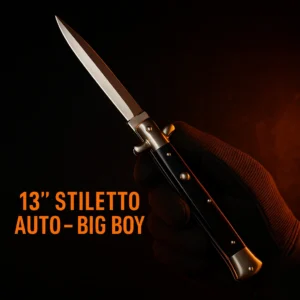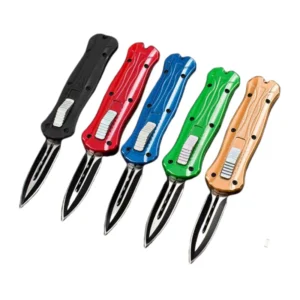


How Much Should a Wholesale OTF Knife Cost?

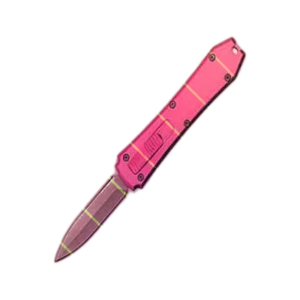
Short answer
A practical wholesale pricing guide for OTF knives, with realistic cost ranges, MOQ and sample considerations, QC triggers, landed-cost logic, and approval crit
Key Takeaways
- Knife rules can vary by state, city, blade style, opening mechanism, carry method, and intended use.
- Do not treat a product nickname as a legal category; check the actual features and local rule.
- Retailers should keep legal or safety language factual and avoid promising that one item is allowed everywhere.
Terms Used Here
- OTF
- Out-the-front; a knife design where the blade moves forward from the front of the handle.
- Automatic knife
- A knife that opens by a spring-driven mechanism after the user activates a button, switch, or slider.
In this article
- 01 What usually moves the wholesale price up or down
- 02 Quote price is not landed cost
- 03 Factory quote or trader quote: why the difference matters
- 04 How to judge whether a quoted wholesale OTF price is actually acceptable
- 05 Common pricing mistakes buyers make with OTF knives
- 06 FAQ: Is a very low OTF wholesale quote always a bad sign?
- 07 FAQ: What MOQ is normal for wholesale OTF knives?
- 08 FAQ: Should I pay more for better QC on OTF knives?
- 09 FAQ: How many samples should I test before placing a PO?
A wholesale OTF knife usually makes sense in a broad band of about $12 to $45 per unit ex-works for mainstream buying, while premium builds, branded packaging, or low-volume custom runs can push the number higher. A useful decision standard is this: approve a quote only when the price matches the knife’s materials, firing reliability, QC method, packaging scope, and reorder stability—not just the first sample in your hand.
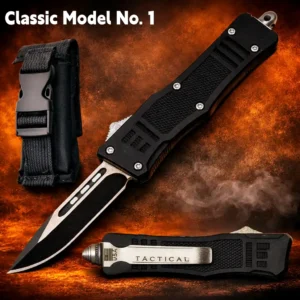
That range is wide because OTF pricing is driven less by blade length alone and more by mechanism quality, handle construction, finish tolerance, packaging, and order structure. A zinc-alloy handled budget model bought in volume is not priced on the same logic as a CNC aluminum private-label model with upgraded springs, tighter cosmetic standards, and retail-ready boxes. If you are comparing offers, start with a current wholesale OTF knife catalog and separate basic stock items from custom or semi-custom programs before you compare numbers.
What usually moves the wholesale price up or down
For OTF knives, the mechanism is the first cost driver. A knife that fires cleanly in a showroom sample but starts misfiring after repeated cycles is not a cheap success; it is an expensive return problem. Better spring quality, tighter internal tolerances, and cleaner track finishing cost more, but they also reduce warranty exposure and repacking labor.
The next major driver is construction. In practical buying terms, common price bands often look like this:
- Entry level: roughly $12 to $18 ex-works for simple stock models, usually larger MOQs, basic packaging, and limited customization.
- Mid-range wholesale: roughly $18 to $30 ex-works for improved handle materials, better surface finish, stronger action consistency, and more dependable batch quality.
- Upper mid-range to premium wholesale: roughly $30 to $45+ ex-works for CNC-machined handles, upgraded blade steel or finish work, tighter QC, stronger private-label support, and more stable repeat production.
These are not fixed market prices. They are working bands that help you spot when a quote is unusually high or suspiciously low. If one supplier is 20% below the market cluster, do not assume you found hidden efficiency. You may be seeing thinner springs, looser lockup, downgraded finish steps, or weaker final inspection.
Other cost levers include:
- MOQ: A higher minimum order quantity usually lowers unit cost, but only if the design is likely to reorder well.
- Blade finish: Stonewash, black coating, satin, and two-tone finishes have different reject rates and labor inputs.
- Handle material: Zinc alloy, aluminum, and more premium scales create distinct price jumps.
- Packaging: Plain sleeve, foam box, gift box, barcode label, and master carton specifications all change landed cost.
- Private label work: Laser logo, custom box art, instruction cards, and compliance labeling add setup and unit cost.
- QC depth: Random sample testing is cheaper than cycle testing every unit, but it carries more reorder risk.
Quote price is not landed cost
A common buying mistake is treating the quoted knife price as the real cost. For wholesale OTF programs, the more useful number is landed cost per sellable unit. That means the knife, packaging, freight, duty where applicable, inspection cost, payment fees, and expected defect allowance should all be considered together.
For example, Supplier A quotes $16.80 and Supplier B quotes $18.40. At first glance, A looks better. But if A packs loosely, causes more cosmetic rub marks, and has a 6% defect-and-rework burden versus B at 1.5%, the cheaper quote may actually cost more after inbound inspection, replacements, and retailer complaints. OTF knives are especially vulnerable to this mistake because action defects do not always show up in a static photo or one-time sample test.
Use this compact comparison lens: price per dependable cycle-ready unit. In other words, what does each usable, retailable knife really cost once you account for failures? This lens is more useful for OTF buying than simple piece price because the mechanism is the product.
When reviewing a quote, ask for these details in plain procurement terms:
- Unit price basis: ex-works, FOB, or delivered
- MOQ by SKU and by color or finish
- Sample charge and whether it is credited back on first PO
- Lead time for sample, first order, and repeat order
- QC method: AQL level, cycle test standard, cosmetic inspection standard
- Packaging included and packaging options priced separately
- Replacement or credit policy for confirmed defects
- Whether the same parts and finish standard will be held for repeat orders
What this does not tell you: a fair price range cannot confirm legal suitability for every market, so buyers still need to review local rules and channel restrictions separately.
Factory quote or trader quote: why the difference matters
Two suppliers can offer the same-looking OTF knife at noticeably different prices because one is quoting as a factory and the other as a trader. A trader is not automatically a bad option. Some traders are useful when you need mixed models, lower operational friction, or English-language coordination across several factories. But the buying decision changes.
If the quote is from a factory, you usually expect better control over customization, technical answers about mechanism changes, and stronger visibility into lead time. If the quote is from a trader, you may get easier communication and SKU consolidation, but you should watch more closely for hidden factory changes between orders.
The exact decision trigger is simple:
- Approve when the supplier can explain who controls production, confirm repeat-order specifications, and document QC and packaging standards clearly.
- Test more when the quote is attractive but the source of production, sample-to-batch match, or defect policy is still vague.
- Reject when the supplier cannot state MOQ, lead time, inspection method, or how they handle misfires and cosmetic claims.
A practical failure case: a reseller ordered a low-priced OTF run with custom logo boxes from a non-transparent middle layer. The sample looked fine, but the production batch came from a different workshop. The handle finish changed slightly, the firing force felt heavier, and 8% of units had inconsistent switch travel. The buyer had saved $1.70 per knife on paper and lost far more in returns, discounting, and damaged retailer confidence.
How to judge whether a quoted wholesale OTF price is actually acceptable
Do not approve an OTF quote by unit price alone. Use a short diagnostic built around the purchase order, not the sample photo.
- Check the build against the price band. If a quote claims premium materials and strong QC but sits in entry-level pricing, something is probably missing.
- Review the sample policy. A paid sample is normal. More important is whether the approved sample becomes the production standard and whether the fee is credited against the first order.
- Match MOQ to your sell-through reality. A lower unit cost is not useful if the MOQ forces slow inventory into your warehouse.
- Confirm lead time in two stages. First order and repeat order should not be treated as the same promise. Repeat-order stability matters more than a one-time rush build.
- Ask how QC is performed on the action. OTF knives need mechanism-focused inspection, not just cosmetic review.
- Price the packaging correctly. Retail box, barcode, warning insert, and master carton spec can change the true cost more than buyers expect.
- Test one reorder question. Ask whether the same spring, finish process, and packaging vendor will be used again. If the answer is loose, reorder risk is high.
One useful approval scenario: suppose you are choosing between a $19 stock model with MOQ 300 and a $24 private-label version with MOQ 500. If your channel is discount retail and packaging is secondary, the $19 option may be the right approve choice. If your channel is branded e-commerce and repeat appearance matters, the $24 option may be cheaper over two reorders because it reduces relisting work, mixed packaging, and return friction. Price should follow channel economics, not ego.
If you are comparing several offers and need to formalize the next step, use a short OTF bulk inquiry form and request the same details from each supplier so the quotes are comparable.
Common pricing mistakes buyers make with OTF knives
- Buying the sample, not the batch: one clean sample does not prove production consistency.
- Ignoring defect handling: replacement terms matter because OTF failures are expensive to process.
- Comparing unlike offers: stock packaging versus custom packaging is not the same quote.
- Overcommitting to MOQ: a lower unit price can still produce a weaker inventory position.
- Missing repeat-order drift: the first run may be stable while the second run changes parts or finish.
- Confusing trader convenience with factory control: both can work, but the risk profile is different.
In short, a reasonable wholesale OTF knife cost is the one that holds up after sample review, batch QC, packaging detail, and landed-cost math are all included. For many buyers, that means mid-teens for basic volume programs, low-to-mid twenties for stronger mainstream private-label buying, and above that for tighter specs or more premium builds. The practical next action is to compare quotes by dependable sellable unit, then approve, test more, or reject based on evidence tied to the PO.
FAQ: Is a very low OTF wholesale quote always a bad sign?
Not always, but it is a reason to inspect more closely. It may reflect old stock, simpler materials, or high MOQ efficiency. It may also signal weaker mechanism parts, looser finish standards, or missing packaging costs.
FAQ: What MOQ is normal for wholesale OTF knives?
It varies by model and customization level, but stock programs often start in the low hundreds per SKU, while private-label runs usually require higher MOQs because of packaging, logo setup, or dedicated production planning.
FAQ: Should I pay more for better QC on OTF knives?
Usually yes. OTF knives have a mechanism that can create returns if action quality is inconsistent. Paying slightly more for tighter inspection often saves money after the goods arrive.
FAQ: How many samples should I test before placing a PO?
For a stock model, one to three samples is common, especially if you want to compare finish or action consistency. For private-label or higher-volume orders, buyers often test a pre-production confirmation sample as well.