
Short answer
Dagger OTF knives are popular mainly with tactical and collector buyers, while single-edge OTFs usually have broader everyday appeal. Learn who buys them, why t
Key Takeaways
- Knife rules can vary by state, city, blade style, opening mechanism, carry method, and intended use.
- Do not treat a product nickname as a legal category; check the actual features and local rule.
- Retailers should keep legal or safety language factual and avoid promising that one item is allowed everywhere.
Terms Used Here
- OTF
- Out-the-front; a knife design where the blade moves forward from the front of the handle.
- Automatic knife
- A knife that opens by a spring-driven mechanism after the user activates a button, switch, or slider.
- EDC
- Everyday carry; gear intended for regular daily tasks.
In this article
- 01 In short
- 02 Who buys dagger OTF knives?
- 03 Collectors and OTF enthusiasts
- 04 Tactical-style buyers
- 05 Experienced knife shoppers
- 06 Gift and novelty buyers
- 07 Why they appeal
- 08 1. The classic OTF look
- 09 2. Strong visual impact in product photos
- 10 3. Collector interest
- 11 4. Perceived specialization
- 12 Why they are not universally popular
- 13 Everyday utility is not their strongest case
- 14 They create more pre-sale questions
- 15 Some shoppers simply prefer a tool over a statement piece
- 16 Dagger OTF vs. single-edge OTF
- 17 When the answer is no
- 18 Concrete checks a buyer or retailer can perform
- 19 Verify the edge format
- 20 Inspect grind symmetry
- 21 Check blade centering and lockup
- 22 Read the listing like a first-time buyer
- 23 Compare interest against actual sell-through
- 24 Short note for retailers and wholesale buyers
- 25 FAQ
- 26 Are they more popular than single-edge OTFs?
- 27 Are they good for everyday use?
- 28 Why do some buyers prefer dagger OTF knives?
- 29 Do dagger OTFs create more customer questions?
- 30 Should a retailer stock them?
Yes—dagger OTF knives are popular, but mostly with tactical-minded buyers and collectors rather than the full knife-buying public. For general everyday-carry shoppers, single-edge OTF knives usually have wider appeal because they look more practical, raise fewer questions, and fit routine cutting tasks better.
That distinction matters because “popular” depends on who is shopping. In enthusiast and tactical retail contexts, dagger OTFs get strong interest. In broader EDC and work-knife contexts, single-edge models are usually the safer, more mainstream choice.
In short
If you want the shortest accurate answer: dagger OTF knives are a strong niche favorite, not the default favorite. They tend to do well with buyers who care about blade symmetry, mechanical novelty, and a distinctly tactical look. They tend to do less well with buyers who want one knife for opening boxes, cutting cord, and handling ordinary daily tasks.
Three practical factors usually decide their real-world popularity:
- Buyer type: enthusiasts and collectors respond better than general utility buyers.
- Use case: display, collecting, and “specialized” ownership favor dagger blades; daily cutting favors single-edge blades.
- Friction: double-edge styling can create more questions about legality, carry comfort, and actual edge configuration.
Who buys dagger OTF knives?
Dagger OTFs usually attract a narrower but very interested audience. The most common buyer groups are fairly easy to identify.
Collectors and OTF enthusiasts
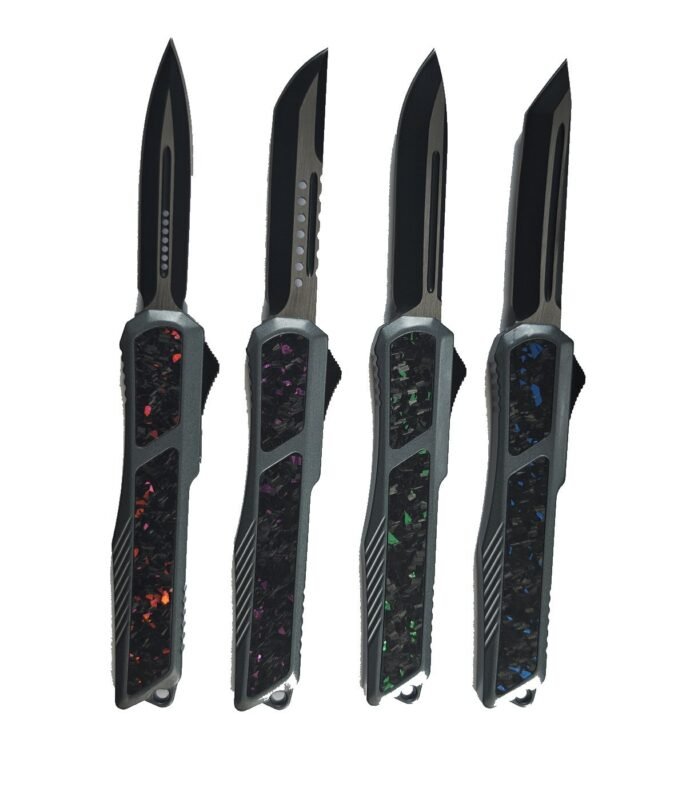
Many buyers are drawn to OTF knives because of the mechanism itself. Within that group, dagger blades often feel like the most “classic” or recognizable OTF format. The centered blade shape, symmetrical profile, and dramatic deployment make them appealing as collection pieces even when the knife is not intended for heavy daily use.
Tactical-style buyers
In tactical gear retail, dagger blades often get more attention than plain utility grinds. That does not automatically mean they outsell everything else, but they do tend to stand out faster in photos, display cases, and first impressions. Buyers who want a knife that looks purpose-built and distinctive often gravitate toward this style.
Experienced knife shoppers
First-time OTF buyers often ask practical questions: Is it easy to carry? Is it good for opening packages? Is it legal where I live? More experienced knife buyers are often more comfortable choosing a dagger profile because they already know what tradeoffs come with the shape.
Gift and novelty buyers
Some dagger OTF purchases are driven by visual impact. A symmetrical blade tends to feel more dramatic and more “special” than a plain single-edge model, which can make it attractive as a gift or conversation piece.
These are not hard market statistics, but they are consistent patterns seen across enthusiast-oriented knife retail: dagger OTFs draw attention strongly from specific audiences, while single-edge models usually cast a wider net.
Why they appeal
Dagger OTF popularity is not random. Buyers usually respond to a small set of specific traits.
1. The classic OTF look
For many shoppers, a dagger blade is the image that comes to mind when they think of an OTF automatic. The centered profile and double-edge appearance make the knife look more specialized than a work-focused blade shape.
2. Strong visual impact in product photos
Retailers often notice that dagger OTFs get attention quickly because the blade shape reads clearly in thumbnails and display photos. A single-edge utility blade may be more practical, but a dagger profile usually makes a stronger first impression.
3. Collector interest
Collectors often care about more than cutting performance. They may compare deployment feel, blade symmetry, finish quality, and how closely a knife matches the style they associate with premium OTF designs. Dagger blades fit that interest well.
4. Perceived specialization
A dagger OTF can feel more purpose-built and more premium simply because it looks less generic. That perception can be a selling point, especially in enthusiast-driven buying environments.
Why they are not universally popular
This is the part many articles skip: a knife can be popular in one segment and still be a poor fit for the broader market.
Everyday utility is not their strongest case
For common cutting jobs, many buyers prefer one clear working edge, a familiar blade shape, and a design that feels tool-like rather than specialized. Single-edge OTFs are usually easier to explain as everyday knives because the blade shape matches what most people already use.
They create more pre-sale questions
With dagger OTFs, buyers often want to know whether both edges are sharpened, whether one side is a false edge, and whether the knife is suitable for their local laws or store policies. That extra decision friction can reduce broad-market appeal even when interest is high.
Some shoppers simply prefer a tool over a statement piece
A lot of knife buyers want something straightforward. If the customer values box cutting, utility work, and low complication, the dagger profile may feel like the wrong match even if they admire the design.
Dagger OTF vs. single-edge OTF
| Factor | Dagger OTF | Single-edge OTF |
|---|---|---|
| Best audience | Collectors, enthusiasts, tactical-style buyers | General EDC and utility buyers |
| First impression | Striking, specialized, premium-looking | Practical, familiar, tool-oriented |
| Everyday cutting appeal | Usually narrower | Usually broader |
| Buyer questions | Often more questions about edges and legality | Usually easier to understand quickly |
| Retail role | Attention-grabbing niche seller | Broader baseline seller |
If you only need one takeaway from this comparison, it is this: dagger OTFs usually win on identity, while single-edge OTFs usually win on broad usability.
When the answer is no
The answer is no when the question really means, “Are dagger OTF knives the most popular OTF style overall?” In most general-use markets, they are not.
They are usually not the most popular option for:
- first-time automatic knife buyers
- customers shopping for one all-purpose EDC knife
- work-knife users who care more about utility than style
- retailers trying to minimize product questions and returns
In those situations, a single-edge OTF is often easier to sell because the use case is clearer. That does not make dagger models unpopular; it means their popularity is concentrated rather than universal.
Concrete checks a buyer or retailer can perform
If you are trying to judge whether a specific dagger OTF will be well received, avoid vague assumptions and check the product itself.
Verify the edge format
Do not assume “dagger” means two sharpened edges. Some models are dual-edge, some are partially sharpened, and some have one live edge with one false edge. Product descriptions should state this plainly.
Inspect grind symmetry
Symmetry is part of the appeal. Uneven bevels or visibly mismatched grinds stand out more on a dagger blade than on many single-edge shapes.
Check blade centering and lockup
On a centered dagger profile, alignment issues are easy to spot. Open several samples if possible and look for consistency in deployment, centering, and blade play.
Read the listing like a first-time buyer
If the product page does not clearly explain blade type, edge configuration, and intended use, expect more customer questions. For browsing examples of current styles, a general OTF knife collection can help show how different blade profiles are presented.
Compare interest against actual sell-through
A dagger OTF may get more clicks or more counter handling because it looks dramatic. That is useful, but it is not the same as completed sales. Retailers should compare attention, conversion, and return rates before deciding that a model is truly popular in their audience.
Short note for retailers and wholesale buyers
For B2B buyers, dagger OTFs usually work best as part of a balanced assortment rather than as the only OTF style offered. They can be strong performers in enthusiast, collector, and tactical-oriented channels, especially when the product photos are good and the edge description is precise.
Single-edge OTFs are still the safer anchor SKU for broad demand. Dagger models are often the better add-on when you want a more distinctive style that appeals to shoppers looking for something less ordinary.
In other words: stock dagger OTFs because your customer base wants that look and format—not because the style automatically represents the whole market.
FAQ
Are they more popular than single-edge OTFs?
Usually not across the full market. Dagger OTFs are often more popular with enthusiasts and tactical-style buyers, while single-edge OTFs usually appeal to a broader everyday audience.
Are they good for everyday use?
They can be carried and used, but they are not usually the first choice for general utility. Many buyers prefer single-edge OTFs for routine cutting tasks because the blade shape feels more practical.
Why do some buyers prefer dagger OTF knives?
Mostly for the look, blade symmetry, collector appeal, and the strong “classic OTF” identity the shape creates.
Do dagger OTFs create more customer questions?
Yes, often. Buyers commonly ask whether both edges are sharpened, whether the knife is legal in their area, and whether the blade is meant more for collecting or for utility use.
Should a retailer stock them?
Usually yes, if the store serves enthusiasts or tactical-style buyers. For a general audience, they are often best stocked alongside single-edge OTFs rather than instead of them.