

Are OTF Knives Ambidextrous? A Clear Safety Answer

Short answer
Usually yes—many OTF knives are ambidextrous because the slider is centered, but clip layout, handle shape, and slider traction can still favor one hand. Here’s
Key Takeaways
- Knife rules can vary by state, city, blade style, opening mechanism, carry method, and intended use.
- Do not treat a product nickname as a legal category; check the actual features and local rule.
- Retailers should keep legal or safety language factual and avoid promising that one item is allowed everywhere.
Terms Used Here
- OTF
- Out-the-front; a knife design where the blade moves forward from the front of the handle.
- Automatic knife
- A knife that opens by a spring-driven mechanism after the user activates a button, switch, or slider.
In this article
- 01 What makes an OTF truly ambidextrous
- 02 What can make an OTF effectively right- or left-biased
- 03 Fixed clip vs reversible clip
- 04 Deep finger grooves or one-sided milling
- 05 Sharp-edged or low-traction slider
- 06 Short slider travel
- 07 Clip tension and pocket rotation
- 08 4-point buyer checklist
- 09 Failure modes and warning signs
- 10 Verdict
- 11 FAQ
- 12 Are all OTF knives ambidextrous?
- 13 Does a centered slider mean an OTF is fully ambidextrous?
- 14 Are double-action OTF knives usually better for ambidextrous use?
- 15 What feature most often hurts left-handed use?
- 16 Is an ambidextrous OTF safe in any pocket?
Usually yes—many OTF knives are ambidextrous because the slider is centered, but not all are equally easy or safe to use with either hand. If you are trying to figure out whether an OTF will work the same for a left- or right-handed user, the answer depends less on the blade and more on how the slider, clip, and handle behave in actual carry and use.
- Centered slider reachable by both thumbs: both hands should be able to complete the full forward and backward stroke without shifting grip.
- Clip and carry orientation that do not favor one side: a reversible clip is usually more neutral than a fixed clip that sets the knife up for only one pocket position.
- Handle and slider traction that allow equal opening and closing control: texture, edges, and shape should feel usable from either hand, not comfortable on one side and awkward on the other.
That is the practical test. Unlike a side-opener or a manual folder, an OTF depends on a thumb-driven slider moving through a full track, so ambidextrous use is tied directly to actuator reach, stroke length, and pocket orientation.
What makes an OTF truly ambidextrous
An OTF is truly ambidextrous when it can be accessed, opened, and closed with similar control in either hand under normal carry conditions. A centered slider is the starting point, but it is not the whole answer.
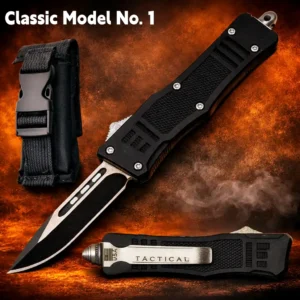
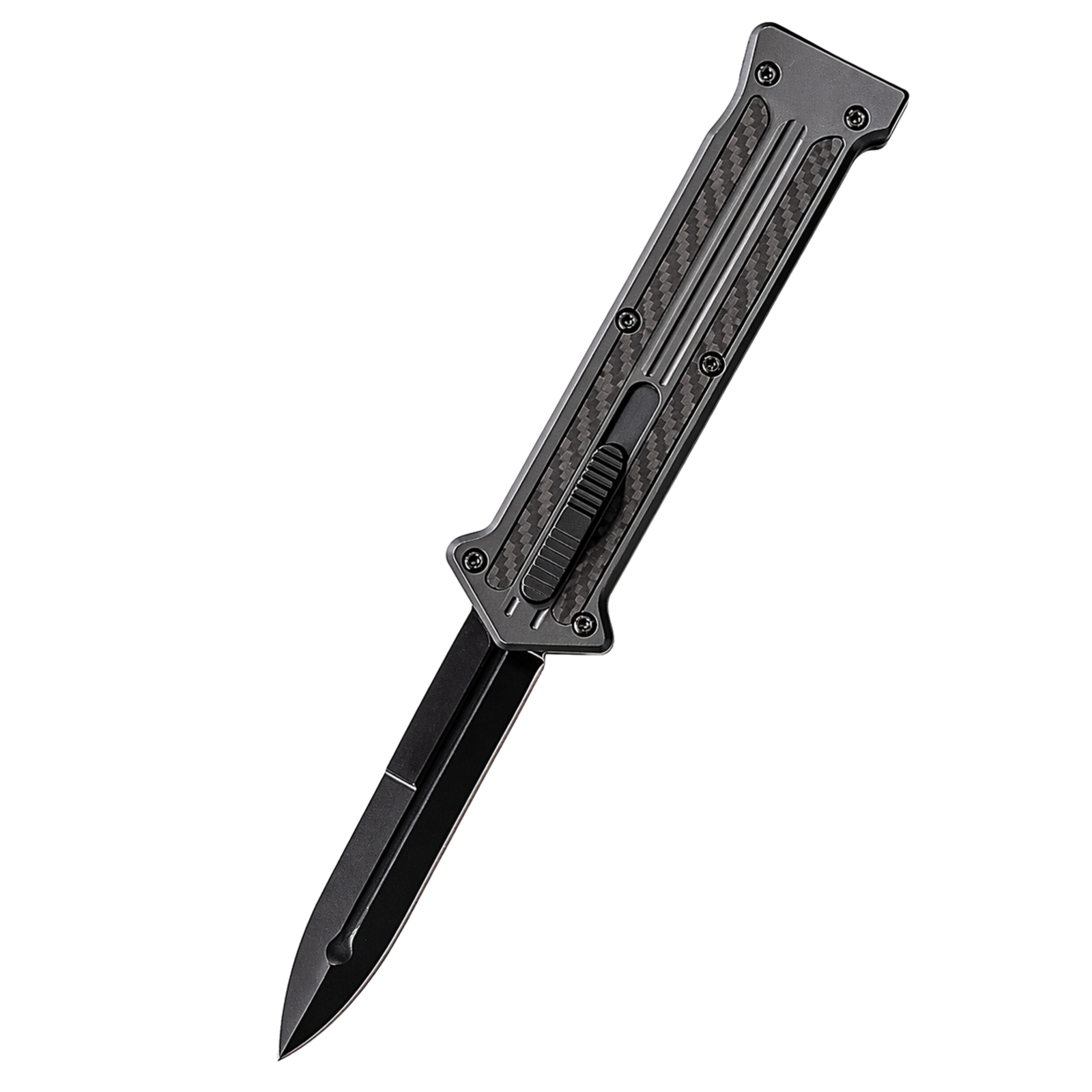
The first requirement is thumb access. If the slider sits on the centerline and has enough height and texture for both thumbs to engage it cleanly, the knife is usually more neutral. This is especially important on double-action OTFs, where the same slider must both deploy and retract the blade. A short, slick, or sharply edged slider may technically work for both hands but still feel harder to finish from one side.
The second requirement is neutral handle geometry. Flat or mildly contoured handles tend to be more ambidextrous than handles with deep finger grooves, one-sided palm swells, or heavy sculpting that naturally indexes one grip direction. Specific examples that usually help include:
- Reversible pocket clip: lets the user set the knife up for left or right pocket carry instead of forcing one orientation.
- Moderate slider texture: enough grip for wet or cold thumbs without becoming abrasive during repeated use.
- Long enough slider travel area: gives both thumbs room to complete the stroke without running out of leverage.
- Symmetrical handle milling: similar surface texture and contour on both sides reduces hand bias.
The third requirement is consistent control during retraction, not just deployment. Many people test only whether the blade fires. That is incomplete. A knife that opens cleanly from either hand but requires an awkward grip change to retract is not equally ambidextrous in real use.
For readers comparing models, browsing OTF knives is more useful when you evaluate these details instead of relying on the word “ambidextrous” alone.
What can make an OTF effectively right- or left-biased
Even with a centered slider, some OTFs end up favoring one hand in practice. The bias usually comes from carry setup or control surfaces rather than from the blade itself.
Fixed clip vs reversible clip
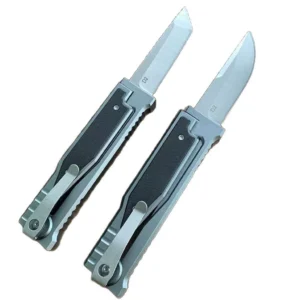
A fixed clip is one of the most common reasons an otherwise centered OTF feels biased. If the clip locks the knife into a right-side tip-down or tip-up position only, a left-handed user may still be able to run the slider once the knife is in hand, but access from the pocket becomes slower or less natural. A reversible clip is a concrete design feature that improves real ambidextrous carry.
Deep finger grooves or one-sided milling
Handles with deep finger grooves, strong thumb ramps, or one-sided milling can subtly push the hand into one preferred orientation. That may feel secure for one user and forced for another. A neutral slab-sided handle is often less dramatic, but it tends to work better across both hands.
Sharp-edged or low-traction slider
A sharp-edged slider can create discomfort during repeated use, especially on a stiff mechanism. A low-traction slider can cause the thumb to slip before the stroke finishes. Either problem can show up more clearly when the user switches hands, because thumb angle and pressure change. This is why “centered slider” by itself is not enough.
Short slider travel
Short slider travel can make the mechanism feel quick, but it can also reduce the margin for error. If one hand naturally gets a cleaner thumb path than the other, incomplete strokes become more likely. On OTFs, a short-stroke can interrupt deployment or retraction, which is a usability issue and a safety warning sign.
Clip tension and pocket rotation
A knife can also become effectively biased because of how it rides in the pocket. If the clip is weak, the handle may rotate so the slider becomes more exposed to fabric pressure or contact with other items. That does not mean accidental opening is guaranteed, but it does mean you should not assume a centered slider makes pocket carry risk-free.
4-point buyer checklist
Use these four checks before calling any OTF truly ambidextrous:
- Thumb-stroke check: Can both thumbs complete full deployment and full retraction without changing grip halfway through?
- Clip check: Is the clip reversible, or does a fixed clip force one carry position that clearly favors one hand?
- Traction check: Does the slider offer the same usable grip from both sides, without sharp edges, slipping, or hot spots?
- Handle-bias check: Do grooves, milling, or contouring make one hand feel naturally indexed while the other feels twisted or cramped?
If a knife passes all four, it is a strong ambidextrous candidate. If it fails one, it may still be usable by either hand. If it fails two or more, it is better described as centered in layout but biased in use.
Failure modes and warning signs
Ambidextrous performance can change over time as the knife wears, gets dirty, or develops carry-related issues. Watch for these signs:
- Slider suddenly feels lighter or mushier: reduced resistance can mean the actuator no longer feels as controlled as before.
- One hand starts getting more interrupted deployments: this can point to traction loss, thumb-path issues, or internal drag.
- Clip loosens and the knife rotates in pocket: more actuator exposure can make carry less predictable.
- Slider edges become polished and slick: less purchase can make short-stroking more likely.
If you notice repeated interrupted travel, inconsistent retraction, or unusual slider looseness, stop carrying the knife until it is inspected. On an OTF, reliable ambidextrous use depends on the mechanism staying consistent, not just on the original handle layout.
Verdict
Most OTF knives are more ambidextrous than many side-openers because their controls are often centered, but they are not automatically equal for left- and right-hand use. The best answer is: usually yes, if the slider is centered, the clip does not lock the knife into one biased carry position, and the handle and actuator give both hands the same control.
So if you are asking, “Can a left-handed or right-handed person use this OTF with similar safety and ease?” the honest answer is yes on many models, but only after checking clip layout, handle shape, slider traction, and stroke consistency.
FAQ
Are all OTF knives ambidextrous?
No. Many are designed to be ambidextrous, but fixed clips, biased handle shapes, or poor slider traction can still favor one hand.
Does a centered slider mean an OTF is fully ambidextrous?
No. A centered slider helps, but clip orientation, handle contour, and retraction control matter too.
Are double-action OTF knives usually better for ambidextrous use?
Often yes, because the control is usually centered and used the same way for opening and closing. But the knife can still be biased by the clip or handle design.
What feature most often hurts left-handed use?
A fixed pocket clip is one of the biggest practical problems because it can force a carry orientation that is natural for one hand and awkward for the other.
Is an ambidextrous OTF safe in any pocket?
No. OTF carry is not risk-free. Clip retention, actuator exposure, and contact with other items in the pocket still matter.