

Can Left-Handed Users Operate OTF Knives Easily?

Short answer
Left-handed users can often operate OTF knives well, but ease depends on slider shape, pocket clip setup, grip geometry, and safe carry conditions. Learn the ke
Key Takeaways
- Knife rules can vary by state, city, blade style, opening mechanism, carry method, and intended use.
- Do not treat a product nickname as a legal category; check the actual features and local rule.
- Retailers should keep legal or safety language factual and avoid promising that one item is allowed everywhere.
Terms Used Here
- OTF
- Out-the-front; a knife design where the blade moves forward from the front of the handle.
- Automatic knife
- A knife that opens by a spring-driven mechanism after the user activates a button, switch, or slider.
In this article
- 01 What makes an OTF truly left-hand friendly
- 02 Safety comparison: easy to fire is not the same as safe to carry
- 03 Common mistakes left-handed users make with OTF knives
- 04 A practical checklist for choosing a left-hand OTF
- 05 Failure modes and warning signs to watch for
- 06 Bottom line
- 07 Are double-action OTF knives usually better for left-handed users?
- 08 Can a pocket clip make an OTF worse for left-handed carry?
- 09 Is a lighter slider always better for left-handed operation?
- 10 Do left-handed users need a special OTF model?
Often yes, but not automatically. For a left-handed user deciding whether an OTF knife will feel natural in daily carry or retail use, the main conditions are the slider layout, handle symmetry, pocket clip position, and how much thumb force the mechanism requires.
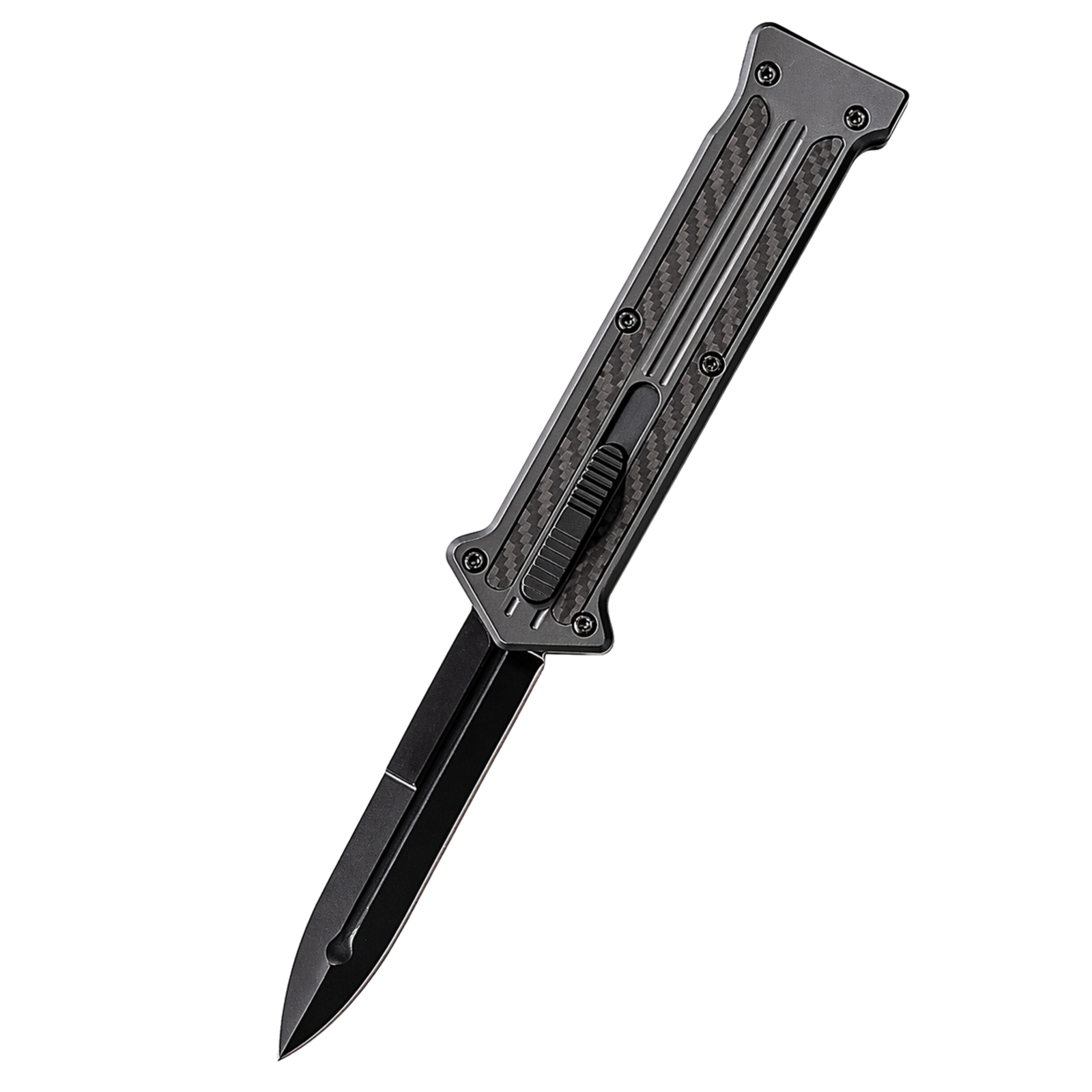
That matters because an OTF knife is not opened like a side-opener or manual folder. The blade travels straight out the front on a thumb slider, so left-hand ease depends less on a thumb stud location and more on actuator resistance, traction, and whether the handle stays secure when the left thumb drives the slider forward and back.
What makes an OTF truly left-hand friendly
Left-handed users usually do best with a double-action OTF that has a centered, ambidextrous handle shape and a slider that can be reached without shifting grip. On many models, the question is not “Can a left-handed person fire it?” but “Can they do it consistently without awkward hand repositioning?” That is the real safety issue.
Use these decision criteria when comparing OTF knives:
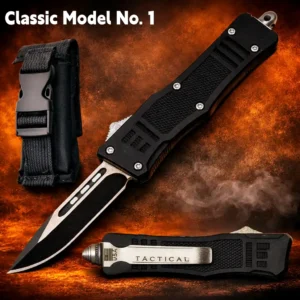
- Centered slider placement: A top-mounted slider on the spine side of the handle is often easier for both hands than an offset or heavily right-biased control.
- Symmetrical handle contours: Deep palm swells, single-side grooves, or clip-side hot spots can make the left hand less secure during deployment and retraction.
- Consistent slider resistance: The slider should require deliberate pressure, but not so much that the user twists the handle or breaks grip to complete the stroke.
- Usable pocket clip orientation: If the clip forces a left-handed user to draw the knife with the slider facing inward against the palm, operation becomes slower and less predictable.
- Adequate traction: Fine jimping or textured slider faces help the left thumb maintain contact, especially under light moisture, cold hands, or gloves.
A simple rule: a left-handed user can usually operate an OTF easily when the thumb can complete the full slider travel while the handle stays planted in the hand. If the hand must rotate, pinch, or re-grip to finish the stroke, that model is not truly easy for left-hand use.
Safety comparison: easy to fire is not the same as safe to carry
When people ask whether left-handed users can operate OTF knives easily, they often mean two different things: deployment comfort and carry safety. Those are related, but they are not identical.
For OTF safety, separate the issue into three specific questions:
- Accidental opening: Could the slider be pushed far enough during carry to start blade deployment?
- Deployment interruption: Could weak thumb purchase, pocket drag, or debris stop the blade before full lockup?
- Closed-position retention: Does the knife stay securely closed during normal carry, or does the actuator move too easily under pressure?
Left-handed users can be at a disadvantage when a knife was clearly set up around right-pocket draw. A clip mounted for right-hand tip-down style access, or a slider that sits exposed toward pocket contents, can increase the chance of partial actuator movement during insertion, removal, or pocket compression.
It is also important to describe slider safety correctly. The slider is resistance, not a true external safety lock. A firm actuator reduces unintended movement when carried properly, but it should not be treated as a guarantee against activation under pressure, impact, or interference from other objects.
In practical terms, a left-handed user should judge an OTF by how it behaves in actual carry conditions:
- Does the clip hold the knife high and stable, or does it shift and roll in the pocket?
- Is the actuator exposed where keys, coins, or a seam can press it?
- Can the user draw it without dragging the slider against the pocket edge?
- Does the knife remain comfortably controllable when retracting the blade with the left thumb?
These points matter for serious shoppers and resellers because a knife can feel fine in a tabletop demo and still produce complaints once customers carry it in jeans, work pants, or outerwear.
Common mistakes left-handed users make with OTF knives
Most left-hand problems are not caused by handedness alone. They come from choosing the wrong geometry or using carry setups that interfere with the actuator.
- Assuming all double-action OTFs are ambidextrous: Many are visually symmetrical, but the clip placement, handle chamfers, and slider texture may still favor the right hand.
- Testing only deployment, not retraction: Some users can extend the blade left-handed but struggle to retract it cleanly because the return stroke needs a different thumb angle and more stable grip.
- Ignoring pocket orientation: A knife may be mechanically usable in the left hand yet awkward when drawn from the left pocket if the clip leaves the slider rubbing against fabric or seams.
- Overvaluing a light slider: A very easy actuator can feel impressive at first, but if resistance is too low, the margin against unintended movement during carry may be reduced.
- Using crowded pockets: Keys, coins, earbuds, and compact tools can press on the actuator or interfere with draw. OTFs are more sensitive to this than many manual knives because the control surface is external and travel-dependent.
One quotable way to frame it: The best left-hand OTF is not the one that fires with the least effort; it is the one that fires with the same controlled effort every time.
A practical checklist for choosing a left-hand OTF
If you are evaluating samples, stocking for customers, or choosing a private-label pattern, this short checklist adds more value than simply asking whether the knife is “ambidextrous.”
- Thumb path check: Can a left thumb push the slider from start to finish without the palm sliding off the handle?
- Draw check: From the left pocket, does the knife come out with the actuator clear of the pocket seam and ready to use without rotation?
- Return-stroke check: Can the user retract the blade left-handed while maintaining the same secure grip used for deployment?
- Clip and exposure check: Does the clip keep the actuator shielded enough that normal pocket pressure is less likely to move it?
- Resistance consistency check: Does the slider feel even through the full stroke, without gritty spots, sudden drag, or a soft section near the end?
If a model fails two or more of those checks, it may still work for some users, but it should not be described as especially easy for left-handed operation.
Failure modes and warning signs to watch for
Even a well-designed OTF can become less predictable if the mechanism or carry setup works against the user. Left-handed operators should pay attention to warning signs that affect safe use rather than trying to thumb through them.
- Partial deployment or failure to lock out: The blade starts forward but does not complete travel. This can happen if thumb force is interrupted, if the slider drags, or if the mechanism meets resistance.
- Inconsistent retraction effort: If closing suddenly takes much more force than usual, the user may overcompensate and lose grip alignment.
- Actuator creep in pocket: The slider shows slight movement after carry, suggesting pressure from fabric, objects, or a poor clip position.
- Weak clip retention: A loose clip lets the knife rotate in pocket, making accidental slider contact more likely during sitting, bending, or draw.
- Noticeable grit or lint near the slider track: OTF mechanisms rely on a clear, repeatable control stroke. Debris around the actuator can change feel and consistency.
If those signs appear, the safe response is to stop treating the knife as normal until the cause is identified. Ease of use should never be judged only by one clean deployment on a counter.
For distributors or retailers comparing models, it is smart to handle more than one sample and test left-pocket draw, left-thumb extension, and left-thumb retraction under realistic conditions. If you need help sorting through available patterns or sourcing options, use the buyer support form.
Bottom line
Left-handed users can often operate OTF knives easily, provided the knife has a centered slider, balanced handle shape, workable clip setup, and consistent actuator resistance. The easiest left-hand OTF is one that remains controllable during draw, deployment, and retraction, not merely one that feels light or fast.
From a safety standpoint, the narrow question is not just handedness. It is whether the knife stays closed in carry, deploys without interruption, and lets the left hand complete the full slider stroke without shifting into an unstable grip. That is the standard worth using when choosing inventory or buying for personal use.
Are double-action OTF knives usually better for left-handed users?
Usually yes, because the same slider both deploys and retracts the blade, and many designs are visually more ambidextrous. Still, clip position and handle contour can make one model noticeably better than another for left-hand use.
Can a pocket clip make an OTF worse for left-handed carry?
Yes. A clip that forces an awkward draw angle or leaves the actuator exposed to seams and pocket pressure can reduce ease of use and may increase the chance of unintended slider movement.
Is a lighter slider always better for left-handed operation?
No. A lighter slider may feel easier at first, but too little resistance can be a drawback in carry. Consistent, deliberate resistance is generally more useful than the lowest possible effort.
Do left-handed users need a special OTF model?
Not always. Many OTFs can work well for either hand, but the best choice is a model that has been checked for left-pocket draw, full left-thumb travel, and stable retraction without re-gripping.