




Can I Use an OTF Knife for Outdoor Tasks?

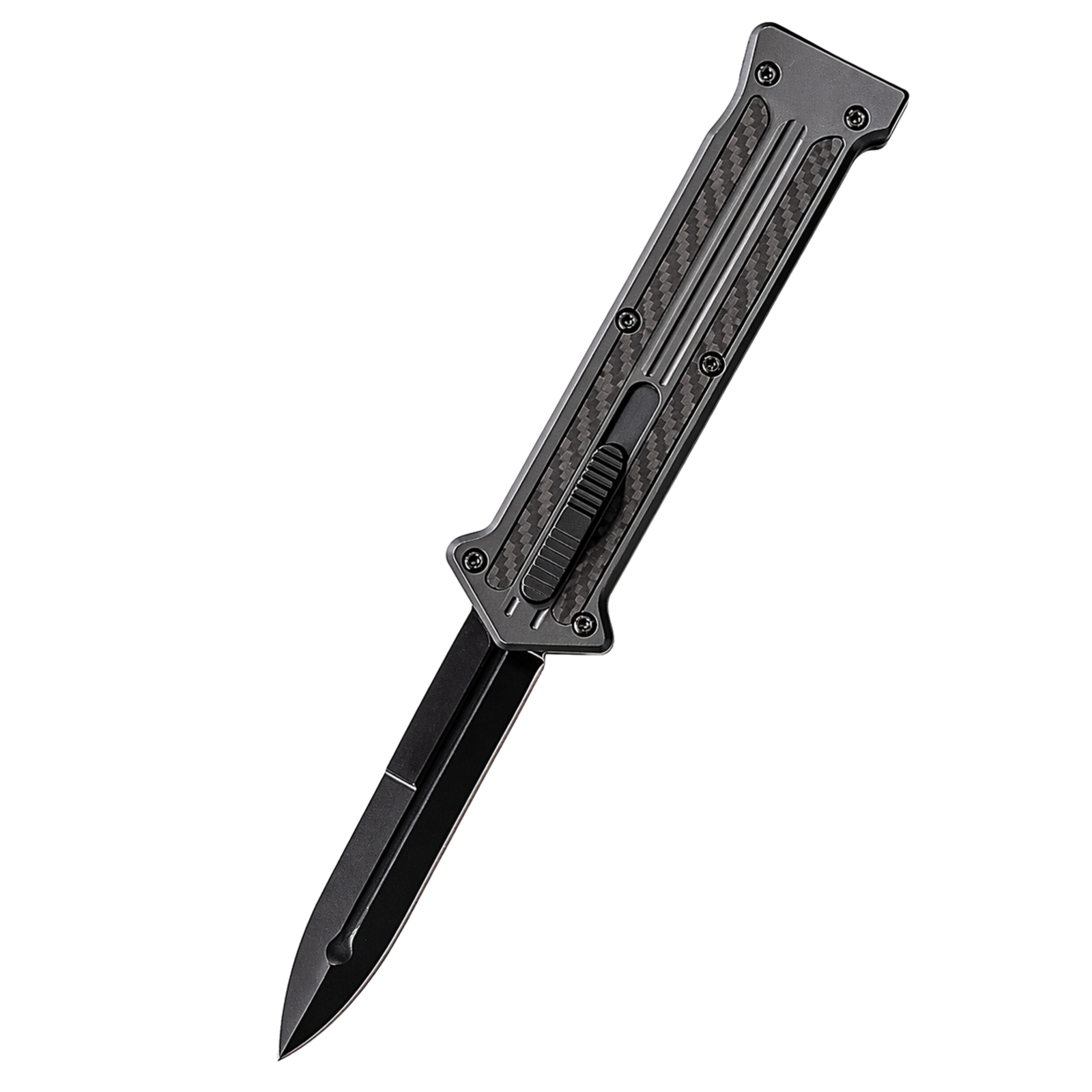
Yes, you can use an OTF knife for outdoor tasks, but only for the right kind of tasks. It works well for quick slicing jobs like cord, packaging, zip ties, bait bags, and light camp prep; it is not the right tool for prying, batoning, digging, heavy carving, or gritty abuse.
The practical answer is this: an OTF is useful outdoors as a secondary cutting tool. If you need one knife for wood, dirt, impact, and rough camp work, choose a fixed blade instead.
Legal note: laws and carry restrictions for OTF knives vary by location; check local rules before buying, carrying, or using one outdoors.
How this guidance was evaluated
This is not based on brochure language. The recommendations below are based on the kinds of field tasks that expose an OTF’s strengths and weaknesses: repeated rope cuts, cardboard and feed-bag slicing, wet-hand grip checks, light dust exposure, and comparison against a basic fixed blade and a standard folding utility knife.
Those simple tests reveal the pattern quickly. OTF knives are strong at fast access and controlled slicing. They become less convincing when the job adds side pressure, impact, mud, sand, or long cutting sessions that punish the mechanism and your grip.
Where an OTF knife works well outdoors
An OTF’s biggest outdoor advantage is one-handed deployment. That matters more than many people admit. When your other hand is holding a ridgeline, pack strap, fish line, branch, or bundle of cord, fast access is genuinely useful.
Good outdoor uses for an OTF:
- Cutting paracord, bank line, and nylon webbing
- Opening feed bags, bait bags, and camp food packaging
- Trimming tarp line and tent cord
- Cutting tape, plastic wrap, and zip ties around gear
- Light food prep such as cheese, sausage, fruit, or tortillas
- Small, careful tinder shaving from dry material
These are mostly straight cuts and short slices. They do not ask the blade to twist inside material or absorb shock.
Realistic field example: You are setting a tarp in light rain. One hand is keeping tension on the ridgeline while the other trims excess cord. That is a strong OTF use case: quick deployment, one clean cut, then back into the pocket. A fixed blade can still do the job, but an OTF is especially convenient there.
Borderline tasks vs. wrong-tool tasks
The mistake is not using an OTF outdoors. The mistake is expecting it to behave like a compact fixed blade. An OTF has more moving parts, tighter internal tolerances, and usually some blade movement even when new. That is normal. What matters is whether that movement stays minor during actual cutting.
Borderline tasks
These jobs may be possible, but results depend heavily on blade shape, edge thickness, handle grip, and how clean the mechanism stays.
- Whittling small sticks for kindling
- Repeatedly cutting thick, dirty rope
- Cleaning fish in wet, messy conditions
- Carving a tent stake from soft wood
- Long cutting sessions where hand fatigue matters
In these tasks, an OTF may work for a while, but it is easier to notice blade play, slippery handle surfaces, or action drag after moisture and debris get involved.
Wrong-tool tasks
- Prying open cans, crates, or nailed wood
- Batoning through branches
- Twisting the blade in hard material
- Digging in soil, bark, or gravel
- Chopping or striking the spine
- Using the tip like a screwdriver or scraper
These jobs create side load or impact. That is exactly where an OTF is least comfortable. A plain-English rule works well here: slice with it, do not lever with it.
What separates a useful outdoor OTF from a frustrating one
1. Blade shape and edge geometry
For camp utility, a single-edge blade is usually the better choice. It gives you more usable edge, easier sharpening, safer control during food prep, and a more natural cutting angle on rope and packaging.
Double-edge dagger styles can look dramatic, but they often give up practical edge length and control. For outdoor utility, that tradeoff rarely helps.
Observable sign: if the blade wedges badly in cardboard or crushes rope before cutting, it is too thick behind the edge for pleasant field use.
2. Debris resistance
Dust, pocket lint, sand, dried fish slime, moisture, and sap are harder on an OTF than on a fixed blade. A knife that feels perfect indoors can start dragging after a weekend in a tackle bag, truck console, or camp pocket.
Normal: action stays consistent with minor dirt and only needs routine cleaning.
Borderline: the action feels weaker after dust exposure or needs an occasional reset.
Problem: repeated misfires, failure to lock out, or obvious slowdown after light grit exposure.
3. Lock feel under cutting pressure
Most OTF knives have some front-to-back or side-to-side movement. The question is not whether there is any play. The question is whether it stays at a minor, predictable level while doing real work.
Normal: slight movement, but rope and cardboard cuts still feel controlled.
Borderline: noticeable rattle or vague feeling during precise cuts.
Problem: movement increases quickly, lockup feels uncertain, or the blade fails to stay extended during ordinary slicing.
4. Grip with wet or cold hands
Outdoor use exposes weak handle design fast. Smooth aluminum can become slippery in rain, fish slime, sunscreen, or sweat. Texture, jimping, and clip placement matter more outside than they do at a desk.
Observable sign: if you cannot hold the knife confidently with wet hands or light work gloves, it is not a strong outdoor option.
Compact pass/fail checklist before relying on an OTF outside
Use this checklist before a trip or before trusting a model for regular field use.
- Pass: Opens and retracts cleanly 20 times in a row without hesitation
- Pass: Cuts 1/2-inch rope or dense cardboard cleanly without skating or tearing badly
- Pass: Handle remains secure with wet hands or light gloves
- Pass: Blade play stays minor and does not worsen during testing
- Pass: Pocket clip stays secure in work pants, jacket pocket, or pack webbing
- Fail: Misfires after light dust exposure or after loose pocket carry
- Fail: Slider is too stiff to operate under stress or too loose to trust
- Fail: Tip is so delicate that routine utility cuts feel risky
- Fail: You keep wanting to pry because the blade shape is awkward for slicing
If it fails two or more points, it may still be fine as a light-use carry knife, but it is not a dependable outdoor worker.
Simple field testing that tells you more than marketing does
If you want a more specific answer for a particular OTF, run three short tests.
Rope test
Cut 10 to 20 sections of dry 1/2-inch rope or heavy cord. If the knife still feels controlled and the edge is not tearing fibers badly, that is a good sign for camp utility.
Dust test
Carry it for a day in a normal work pocket or dusty bag, then cycle it several times. You are not trying to abuse it; you are checking whether light real-world debris changes the action noticeably.
Wet-grip test
Wet your hands and make a few careful cuts through cardboard or cord. If the handle becomes sketchy, that weakness will be worse in rain or cold.
A fixed blade usually passes all three tests more easily. That does not make the OTF useless. It simply clarifies its lane.
Common mistakes outdoor users make
- Buying the most aggressive blade shape instead of the most useful one. Tactical styling does not automatically cut rope or food better.
- Ignoring cleaning and maintenance. OTFs usually need more attention than simple folders or fixed blades.
- Using the knife in sand or mud, then trusting the action without checking it. Even a good mechanism can slow down when contamination gets inside.
- Confusing edge retention with overall outdoor suitability. Steel matters, but grip, debris resistance, and blade geometry often matter more in real camp use.
- Trying to make one knife do every outdoor job. Most people are better served by an OTF for quick cuts and a fixed blade for rough work.
Bottom line: when to carry an OTF outdoors
If your outdoor cutting is mostly rope, packaging, line trimming, food wrappers, bait bags, and other quick slicing jobs, an OTF can be very useful. If your trip involves wood processing, digging, batoning, heavy carving, or lots of grit, it should not be your primary knife.
Recommendation matrix:
- Use an OTF as a secondary knife for: quick one-handed slicing, cord, packaging, zip ties, light camp prep, and general utility cuts
- Use a fixed blade for: wood, dirt, impact, heavy camp work, rough carving, prying, and any task with torque or shock
If you are comparing models, keep the focus on practical blade shape, reliable action, and secure grip rather than pure appearance. You can browse current options in the OTF knife catalog.
FAQ
Can an OTF knife cut rope and paracord outdoors?
Yes. That is one of the better outdoor uses for an OTF, especially with a sharp single-edge blade and a secure handle.
Is an OTF knife good for camping?
It can be good for light camping chores, but usually as a secondary knife rather than your only camp knife.
Will dirt and sand affect an OTF outdoors?
Yes. Dirt, lint, and sand can slow the action or cause misfires, so outdoor users should expect more cleaning than with a fixed blade.
Should I choose a double-edge OTF for outdoor use?
Usually no. A single-edge blade is generally more practical for slicing, sharpening, and controlled camp tasks.