




Can I Use an OTF Knife for Rescue Work?

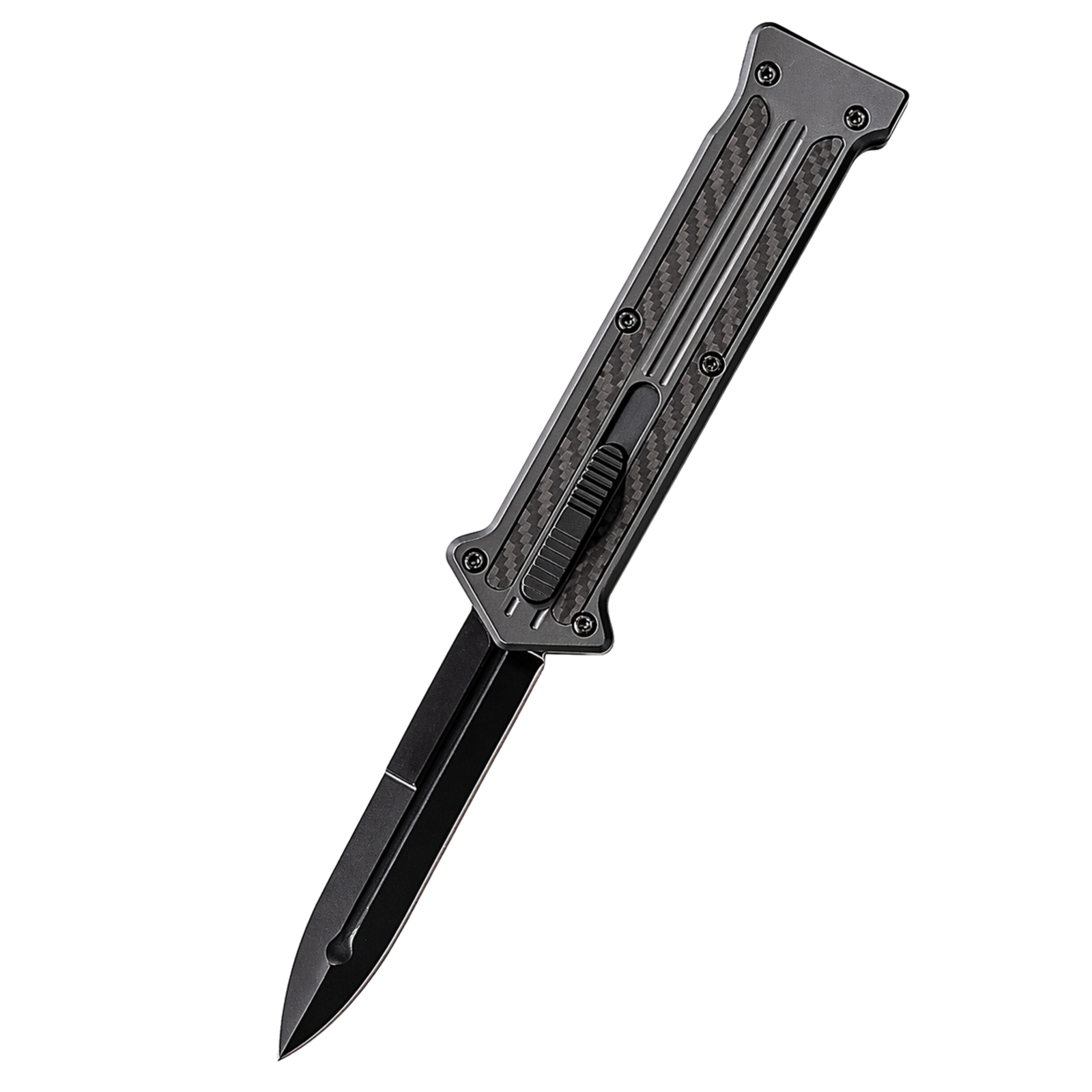
Yes, but only for limited support cutting; no, an OTF knife should not be your first choice for seatbelt-near-body cuts, patient-close clothing removal, or other rescue tasks where a guarded tool is safer. The right answer depends on three things: what material you need to cut, how close that cut is to a person, and whether the knife will still deploy reliably with gloves, moisture, or pocket debris in the mechanism.
That distinction matters because rescue work is not just about getting a blade open quickly. It is about controlling the cut, avoiding secondary injury, and using a tool that matches the space and the material in front of you.
Quick verdict
- Acceptable: light to medium support cutting around an incident, such as tape, cord, zip ties, food packs, or exposed webbing with clear separation from the person.
- Not recommended: cutting a loaded seatbelt across someone’s chest, cutting clothing directly off an injured person, or making blind cuts in a cramped vehicle interior.
- Better tool for close-contact rescue: trauma shears, a guarded strap cutter, or a blunt-tip rescue blade.
When an OTF knife is acceptable
An OTF can make sense when you need one-handed access to a cutting edge and the task is controlled, visible, and not right against skin. In those situations, the knife is acting as a support tool, not a primary rescue instrument.
- Opening a first-aid kit or supply pouch: cutting tape, shrink wrap, or sealed packaging quickly with one hand.
- Cutting cord or zip ties: removing restraints from gear, securing loose equipment, or freeing bundled supplies where you have clear cutting space.
- Trimming exposed webbing: shortening or removing loose webbing that is not under load and not against a person.
- Field support tasks: opening food packs, water pouches, blanket bundles, or other support items at an incident scene.
- Gloved-hand utility use: when one-handed deployment is genuinely helpful because the other hand is holding a flashlight, stabilizing yourself, or managing equipment.
In short, an OTF is most useful around rescue work, not deep inside the most sensitive part of it.
When you should use a different tool
This is the most important section for the original question. There are clear wrong-tool scenarios where an OTF knife is simply not the safest option.
- Seatbelt cutting near a person: even if the blade can cut webbing, a guarded strap cutter is usually much safer because it limits point exposure and controls depth.
- Clothing removal on a patient: trauma shears are better for cutting fabric off an injured person without risking puncture.
- Cramped vehicle interiors: a sharp exposed tip is harder to manage around skin, upholstery, airbags, wiring, and glass.
- Blind or low-visibility cuts: if you cannot clearly see the blade path, a guarded cutter or shears reduce the chance of cutting the wrong thing.
- Heavy extrication or prying: an OTF knife is not a breaching bar, pry tool, or dedicated glass tool unless it is specifically designed for those tasks.
If the job requires a protected edge, a blunt leading surface, or cutting directly next to a person, use a different tool.
What actually matters in an OTF for rescue-related use
1. Blade shape
For rescue-adjacent tasks, a single-edge blade is usually the best choice. It gives you a safer spine for thumb indexing and better control in awkward positions. A drop point or similarly practical single-edge profile is more useful than a dagger for slicing tape, cord, and webbing.
A double-edge dagger may look aggressive, but it is usually a poor fit for this role. It gives you less safe hand placement, less forgiving control, and more risk in tight spaces.
2. Edge geometry
A plain edge works well for tape, food packs, and clean utility cuts. A partially serrated edge is often the better all-around choice if you expect cord, webbing, or stubborn plastic straps, because serrations bite into slick, fibrous material faster.
Very thick edge geometry is less helpful than many buyers assume. Rescue support tasks are mostly slicing tasks, not chopping tasks. A blade that wedges or tears instead of slicing cleanly can slow you down and make you use more force than necessary.
3. Grip and deployment
If the handle gets slippery with sweat, rain, or gloves, the knife becomes much less useful. Texture, shape, and purchase matter more than flashy styling. One-handed deployment is a real advantage, but only if it is consistent and the handle remains secure in wet or gloved use.
4. Debris tolerance
This matters only when the carry environment makes it relevant. If the knife rides in a vehicle console, work pocket, roadside bag, or dusty field kit, lint and grit can affect the action. For a clean indoor environment, this is less important. For roadside or field support, it matters more because rescue-adjacent use often happens around dirt, glass dust, fabric lint, and general mess.
Realistic use case
Imagine a driver stopping at a minor roadside collision before first responders arrive. He is not performing medical extraction. He needs to open a first-aid pouch, cut tape for a temporary bandage, remove zip ties from an emergency blanket bundle, trim a loose cord in the cargo area, and open food packs and water pouches for shaken occupants waiting for help. In that situation, an OTF with a single-edge blade, secure grip, and partial serration can be a practical support cutter.
Now change one detail: a passenger is trapped by a loaded seatbelt across the chest in a cramped cabin, and the cut must be made close to clothing and skin. That is a non-recommended OTF scenario. A guarded strap cutter or trauma shears are safer because they reduce the risk of stabbing, scraping, or cutting too deep.
Pass/fail checklist
Use this quick checklist before relying on an OTF for rescue-related support tasks.
- Pass: single-edge blade with controllable shape.
- Pass: edge slices tape, cord, zip ties, and food packs without excessive force.
- Pass: handle remains secure with gloves or wet hands.
- Pass: deployment and retraction are consistent during repeated testing.
- Pass: your intended use is support cutting, not patient-close rescue cutting.
- Fail: double-edge dagger chosen for a utility-focused rescue role.
- Fail: action becomes unreliable with ordinary lint, grit, or field debris.
- Fail: you plan to use it as your primary seatbelt or clothing-removal tool.
- Fail: handle is slick or too small for gloved control.
- Fail: you are counting on it for prying, breaching, or heavy extrication.
Common mistakes to avoid
- Confusing fast deployment with rescue safety. Fast access helps only after you have chosen the right tool.
- Assuming any sharp blade is fine for seatbelts. Cutting ability is not the same as safe cutting near a person.
- Choosing a dagger because it looks tactical. For practical rescue-adjacent use, a controllable single-edge blade is usually the better answer.
- Ignoring maintenance. A dull blade forces extra pressure on tape, cord, zip ties, and webbing.
- Ignoring carry environment. If the knife lives in a dusty vehicle or work pocket, test whether debris affects reliability.
What to look for if you are shopping
If you are browsing an OTF knife collection for utility use, prioritize practical blade shape, secure grip, and reliable action over tactical styling. If your broader kit also includes emergency or protective tools, related utility and self-defense products may help round out a setup, but for true rescue cutting near a person, purpose-built shears or guarded cutters remain the safer choice.
FAQ
Can an OTF knife cut a seatbelt?
Often yes, especially with a sharp edge or partial serration. But the better question is whether it is the safest tool to cut a seatbelt near a person. In most cases, a guarded strap cutter is the safer option.
What blade style is best for rescue-related OTF use?
A single-edge blade, often a drop point or another controllable utility shape, is usually best. Partial serration helps with fibrous material like webbing and cord.
Are double-edge OTF knives good for rescue work?
Usually no for this use case. They are less forgiving, harder to control in tight spaces, and generally less practical for support cutting.
Is it legal to carry an OTF knife for emergency use?
Laws and workplace policies vary by location and organization. Check your local rules and any employer or agency policy before carrying or using an automatic knife.
So, can I use an OTF knife for rescue work?
Yes, for limited support cutting around an incident. No, not as your primary tool for patient-close rescue cutting, loaded seatbelts, or other tasks where a guarded cutter or shears are clearly safer.