




Do OTF Knives Have Blade Play?

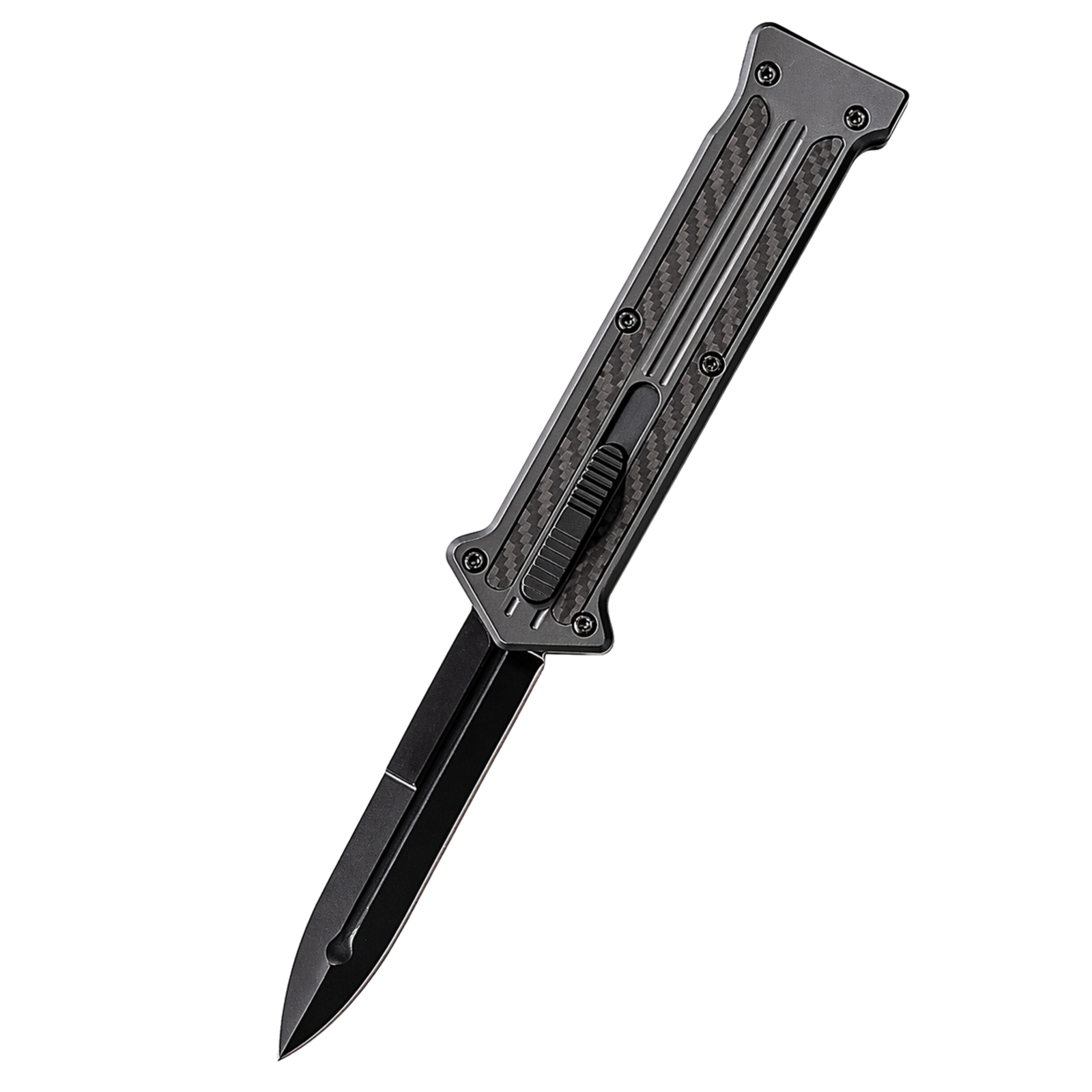
Yes. Most OTF knives have some blade play by design; slight movement is normal, pronounced wobble or misfires are not.
That short answer surprises first-time buyers, especially people used to manual folders with very tight lockup. An out-the-front knife uses a sliding blade, internal tracks, and a lock that needs a little clearance to deploy and retract reliably. The real question is not whether an OTF has any play, but whether the movement is minor and consistent or loose enough to suggest poor fit, weak lockup, or reliability problems.
Why OTF knives have blade play
OTF knives work differently from side-opening automatics and manual folders. Instead of rotating on a pivot, the blade rides forward and back on internal guide surfaces, then locks at the end of travel. Because the mechanism must move under spring tension, it cannot usually be fitted with zero clearance.
A small amount of movement is common because OTF blades ride on tracks and lock with clearance needed for reliable deployment. If tolerances are too tight, the knife may feel impressive when handled lightly but become more likely to drag, fail to lock, or misfire when dirt, lint, or normal wear enters the mechanism.
On most production OTFs, you may notice:
- Side-to-side play: the tip shifts slightly left or right.
- Vertical play: the tip moves up and down a little when open.
- Rotational wiggle: a slight twist feel at the tip caused by lock clearance.
That does not automatically mean the knife is defective. In this category, a little movement is often part of the design tradeoff for fast, repeatable action.
What is normal vs excessive blade play?
| What you notice | Usually normal | Usually a problem |
|---|---|---|
| Tip movement | Small wiggle you can feel with light pressure | Obvious wobble you can see easily without much pressure |
| Sound | No major noise beyond normal mechanism sound | Rattle in the open position during light handling |
| Lockup feel | Consistent from cycle to cycle | Soft, vague, or changing lockup after repeated use |
| Deployment | Blade extends and retracts reliably | Misfires, incomplete lockup, or frequent reset needed |
| Blade path | No visible rub during travel | Blade touches frame or track, leaving marks |
| Across multiple units | Similar feel from one knife to the next | One sample tight, another noticeably loose |
A practical rule: if you have to look for the movement, it is often within normal OTF range. If the blade feels distracting, visibly loose, noisy, or inconsistent, that is more likely excessive.
A simple hand-check most buyers can use
- Open the knife fully and confirm it locks.
- Hold the handle firmly and gently test the tip, not just the base.
- Check side-to-side and vertical movement separately.
- Listen for rattle while lightly moving the knife, not shaking it aggressively.
- Cycle the knife several times and see whether the lockup feels the same each time.
This matters because many people overjudge OTF play from one quick touch. Tip feel is what users notice most, and consistency matters more than chasing a single unusually tight sample.
How OTF blade play compares with other knife types
| Knife type | Typical lock feel | Blade play expectation |
|---|---|---|
| Manual folder | Pivot-based lock, often tighter in hand | Usually less noticeable if well fitted |
| Side-opening automatic | Similar to folder lockup, but spring-assisted opening | Often less play than an OTF |
| OTF automatic | Sliding mechanism with track and lock clearance | Some play is common and expected |
| Fixed blade | No folding or sliding lockup | Essentially no lock-related blade play |
This is why comparing an OTF to a fixed blade or a premium manual folder is usually not helpful. The mechanism category is different, so the acceptable standard is different too.
Buyer checklist: how to inspect an OTF for blade play
Whether you are buying one knife or evaluating inventory, use a repeatable process instead of relying on first impressions.
- Cycle the knife 10 to 20 times before judging it. Some issues appear only after repeated deployment.
- Test the open position first. Most concerns about play are about lockup when extended.
- Check the tip gently. Tip movement is more revealing than pressure near the handle.
- Separate feel from function. Slight movement with reliable action is different from loose movement plus misfires.
- Look for rub marks. Fresh wear on the blade finish can suggest poor tracking.
- Listen for open-position rattle. A little internal mechanism sound is normal; obvious blade rattle is less acceptable.
- Compare more than one unit if possible. Consistency is a strong quality signal.
Do not twist, pry, or torque the blade to “test” strength. That can damage the mechanism and does not reflect normal use.
When blade play should concern you
Blade play becomes more than a minor fit issue when it appears together with other warning signs. Return, reject, or inspect more closely if you notice any of the following:
- The blade visibly shifts with very little pressure.
- The knife rattles while open.
- Lockup changes noticeably after a short break-in period.
- The blade scrapes the inside of the handle.
- The knife fails to deploy or retract reliably.
- One knife feels acceptable but another from the same batch feels much looser.
In other words, movement alone is not the whole story. A reliable OTF with slight play is common. A loose-feeling OTF with misfires or inconsistent lockup is a quality problem.
Does price level change what is acceptable?
Yes, usually. Buyers tend to accept different levels of play depending on the knife’s price tier, finish quality, and how it is described.
- Budget OTFs: modest play is often tolerated if the action is dependable.
- Mid-range OTFs: buyers usually expect cleaner lockup and better consistency.
- Premium OTFs: even small increases in play may stand out because expectations are higher.
Blade shape also affects perception. A longer dagger or spear-point often makes tip movement easier to feel than a shorter blade, even when the internal tolerances are similar.
Common mistakes when judging OTF blade play
1. Expecting fixed-blade rigidity
An OTF is a sliding automatic mechanism, not a fixed blade. Some movement is part of the category.
2. Treating all play as a defect
A slight, repeatable wiggle is common. The better test is whether the knife still deploys and locks consistently.
3. Ignoring variation between samples
One tight sample does not prove a model is well controlled. Consistency across units matters more.
4. Focusing only on feel, not performance
A knife with very little play but frequent misfires is not better than one with slight play and reliable action.
Notes for bulk buyers and resellers
If you are reviewing OTFs for stock or private-label use, keep this part simple: inspect multiple units from the same SKU, record lockup consistency, and separate blade play from deployment failures. For this category, predictable tolerances are often more important than the single tightest sample.
If you need to compare models or identify likely differences by size, blade shape, and price tier, the OTF knife catalog can help narrow what to inspect. For batch questions or sample-review standards, use the OTF support inquiry page.
FAQ
Do all OTF knives have blade play?
Not all feel the same, but most production OTF knives have at least a small amount of movement when open.
Is slight blade play dangerous?
Usually not by itself. Slight play is common in OTFs. Concern rises when it comes with weak lockup, rattle, blade rub, or misfires.
Can blade play be fixed?
Sometimes, depending on the design and the cause. If the movement seems excessive out of the box, a return or warranty review is usually better than home adjustment.
When should you return an OTF knife?
Return it if the blade wobble is pronounced, the knife rattles while open, the blade contacts the handle, or the action fails to deploy and lock consistently.
Are tighter OTF knives always better?
No. Extremely tight tolerances can reduce reliability if the mechanism encounters lint, debris, or normal production variation.