




Is Blade Play Normal on an OTF Auto Knife?

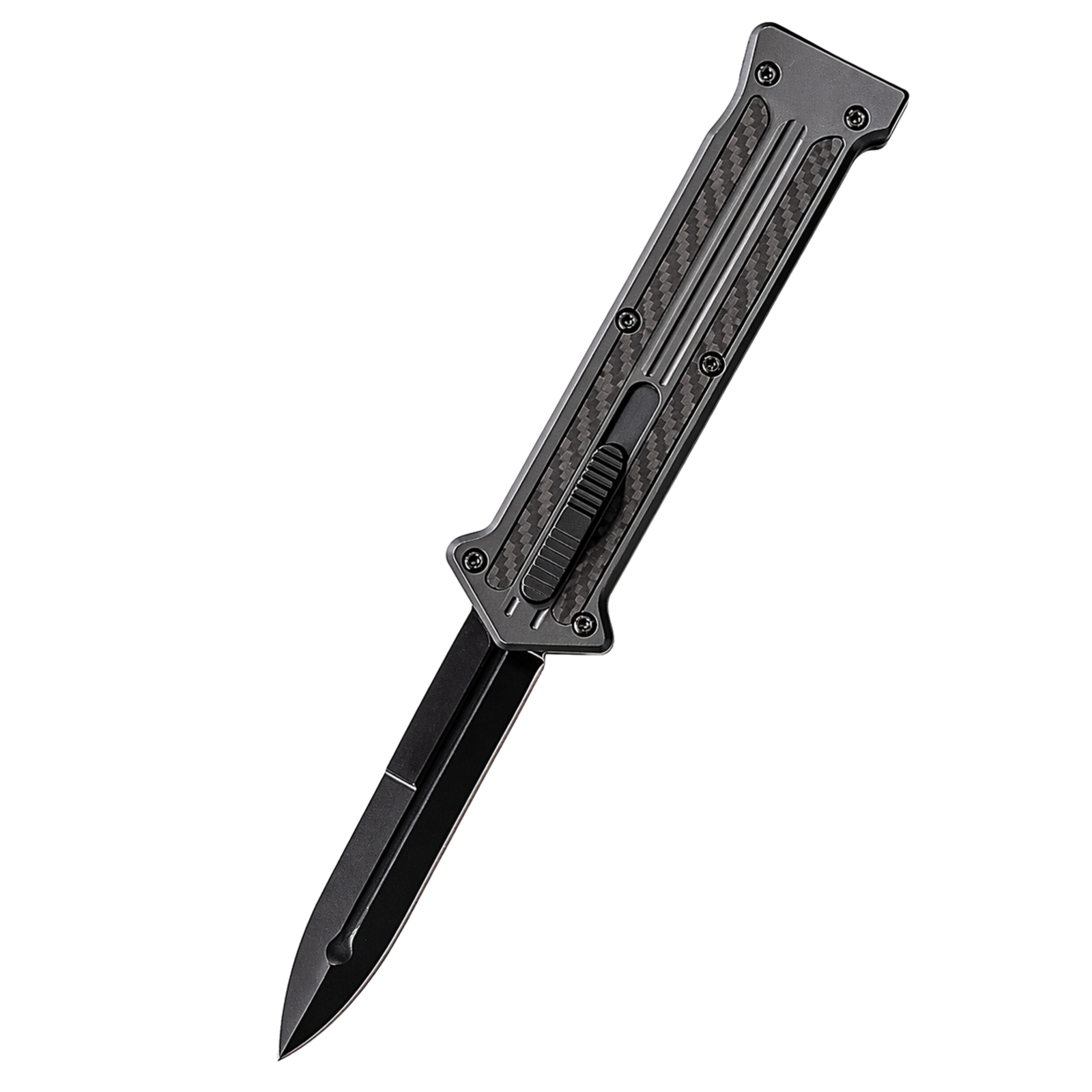
Yes, some blade play is normal on most OTF auto knives, because the blade must travel on internal rails with enough clearance to deploy and retract; the real question is whether the movement is slight and consistent, or excessive enough to suggest poor fit, wear, or a reliability issue.
That distinction matters in wholesale buying. OTF knives are not fixed blades, and they do not lock up like many side-opening autos. A small amount of front-to-back or side-to-side movement at full extension is common even on decent production models. What buyers should judge is not whether there is any play at all, but whether the amount of play matches the price tier, blade size, intended use, and consistency across the lot.
For distributors, private-label buyers, and serious retail shoppers, the most useful standard is simple: minor play that does not affect deployment, retraction, edge alignment, or user confidence is usually acceptable; large or uneven play is not. If one sample feels tight enough and the next five rattle, bind, or show visible blade cant, that is a quality-control problem, not a normal OTF trait.
Why OTF knives usually have some blade play
An OTF auto knife works by driving the blade forward and back through a channel using springs and a carrier system. To fire reliably, the blade needs running clearance inside the handle. If tolerances were completely rigid, dirt, pocket lint, minor burrs, coating thickness, or thermal expansion could stop the knife from deploying or retracting.
That is why many OTFs have a little movement at lockout. The mechanism is balancing two competing needs:
- Enough clearance for fast travel under spring force.
- Enough support to keep the extended blade stable in normal cutting tasks.
In practical terms, blade play is more noticeable on OTF knives because the lockup system is different from a liner lock, frame lock, or fixed blade tang. Buyers who are new to OTFs sometimes reject acceptable samples simply because they are comparing them to the wrong category.
That said, “normal” does not mean “anything goes.” Excessive movement can point to worn or undersized stop surfaces, inconsistent blade stock, poor rail fit, weak internal engagement, or uneven machining inside the handle. Those issues can reduce user confidence and may contribute to premature wear or deployment problems over time.
How much blade play is acceptable on an OTF?
A useful buying rule is this: acceptable OTF blade play should be slight, repeatable, and non-disruptive. You may feel a little movement when you deliberately test the tip and spine, but the knife should still deploy cleanly, sit centered in the opening, and retract without scraping or hesitation.
Here is a practical comparison for evaluating samples:
- Normal and acceptable: light movement detectable by hand pressure, no visible blade lean during normal handling, no change in firing reliability, no unusual noise beyond typical OTF mechanical sound.
- Borderline: movement is easy to feel without much pressure, slight audible tick at lockout, but deployment remains consistent and the blade stays visually centered.
- Not acceptable for most wholesale programs: visible side cant, rattling when gently shaken, inconsistent lockup from one firing to the next, scraping marks inside the opening, or movement that makes the edge contact the frame path.
Blade length and grind matter too. Longer blades often feel looser than shorter ones because leverage amplifies small internal clearances. A thin double-edge dagger profile may also feel different from a wider tanto or drop-point style. That is why wholesale inspection should compare like with like: same model, same blade style, same finish, same production batch.
If you are reviewing multiple SKUs, it helps to compare samples from an OTF knife catalog by size class and intended use rather than expecting every model to have identical lockup feel.
A wholesale inspection checklist for OTF blade play
For OTF buying, a quick “wiggle test” is not enough. Use this lot-review checklist so you do not confuse normal mechanical clearance with a true defect.
- Fire and retract each sample at least 10 times. Blade play should remain consistent. If lockup changes noticeably after repeated cycling, inspect further.
- Check movement in two directions. Test side-to-side and front-to-back separately. Excessive front-to-back movement can indicate stop-surface issues; side-to-side often points to rail or channel fit.
- Look for visible blade cant. At full extension, the blade should appear centered in the opening, not leaning toward one side.
- Listen for abnormal sounds. A normal OTF has mechanical noise. A loose rattle or irregular click can signal uneven engagement or internal looseness.
- Inspect the blade opening for rub marks. Fresh scraping on one side may mean the blade is tracking off-center.
- Test under light hand pressure only. Do not torque the blade aggressively. OTF knives are not designed for pry-force testing, and overloading the mechanism can create the problem you are trying to detect.
- Compare multiple units from the same batch. One slightly looser sample may be tolerable; wide variation across the lot is the bigger commercial risk.
- Check switch feel together with lockup. A rough, sticky, or unusually light switch can correlate with inconsistent internal fit.
This checklist is especially important for private-label programs. End customers may accept a small amount of play if the knife fires reliably and feels well made. They are much less forgiving of inconsistency from one unit to another.
What blade play can tell you about reliability and return risk
Blade play by itself does not prove an OTF is unreliable. Many OTF knives with slight movement perform normally in routine cutting tasks. The stronger warning signs are combined symptoms: excessive play plus failed deployment, off-track retraction, switch drag, or blade rub.
For wholesale decision-making, focus on these failure patterns:
- Loose lockup plus misfire history: higher return risk.
- Loose lockup plus visible off-centering: likely fit issue, not just normal clearance.
- Play that increases quickly during sample testing: possible wear or weak engagement geometry.
- Different play levels across identical units: quality-control inconsistency.
A common buyer mistake is approving a lot because the mechanism feels strong on the first few firings. Spring force can mask poor fit at first. Another mistake is rejecting an entire model because one evaluator expects fixed-blade rigidity from an OTF. The right standard is controlled, repeatable performance within the design limits of this mechanism.
Safe handling habits matter here as well. Even a well-made OTF should be used for cutting tasks it was designed for, not twisting, prying, or impact use. Hard lateral stress can accelerate wear and increase blade movement over time. Users should also keep the blade path reasonably clean, because debris in the track can affect both lockup feel and deployment consistency.
Mistakes buyers should avoid when judging OTF lockup
- Do not judge by one dramatic hand-flex test. Deliberate over-torquing can exaggerate movement and does not reflect normal use.
- Do not compare unlike mechanisms. An OTF should not be expected to feel identical to a manual folder or fixed blade.
- Do not ignore lot consistency. Small normal play is less important than whether every unit feels similar.
- Do not separate play from deployment performance. A little movement with reliable firing is different from a loose knife that also misfires.
- Do not overlook blade geometry. Long, narrow blades often feel different from shorter, broader profiles.
When in doubt, ask for a defined inspection standard before placing a larger order. A short support conversation about acceptable lockup feel, sample variance, and QC checks can prevent avoidable disputes later. If you need model-specific clarification, use the OTF support inquiry page and describe the exact handle size, blade style, and batch concern.
FAQ
Does blade play mean an OTF knife is defective?
No. Slight blade play is common on OTF knives. It becomes a defect concern when the movement is excessive, inconsistent, or paired with misfires, rubbing, or visible off-center lockup.
Is side-to-side play worse than front-to-back play?
Not always, but each can suggest a different issue. Side-to-side movement often relates to rail or channel fit, while front-to-back movement can point to stop-surface or engagement wear. Either can be acceptable in small amounts.
Should a premium OTF have zero blade play?
No. Higher-end models may have tighter, more refined lockup, but zero play is not a realistic standard for most OTF mechanisms. Consistency and reliable function matter more than chasing absolute rigidity.
What is the best quick screen for wholesale samples?
Cycle each knife repeatedly, check both directions of movement, confirm the blade stays centered, and compare several units from the same batch. Consistency across the lot is one of the clearest signs of acceptable production quality.