

Do OTF Knives Have Safety Locks?

Short answer
Do OTF knives have safety locks? Yes and no. Most use internal safety systems and blade retention, but not all have a separate manual lock. Learn what buyers sh
In this article
- 01 What counts as a safety lock on an OTF knife?
- 02 Why the OTF mechanism helps, and where it can fail
- 03 When a separate safety lock matters most
- 04 Wrong tool: when an OTF is not the right answer
- 05 What wholesale buyers should verify before ordering
- 06 Short answers buyers can use with customers
- 07 Do all OTF knives have safety locks?
- 08 Is an OTF without a manual safety unsafe?
- 09 Can an OTF knife open by accident in a pocket?
- 10 What should a wholesale buyer prioritize first?
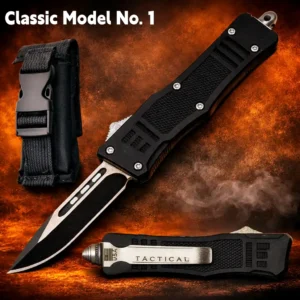
Yes, some OTF knives have safety locks, but many do not use a separate manual lock. The deciding condition is the design: most out-the-front knives rely on an internal firing mechanism, blade retention, and a safety reset feature rather than a visible lock switch. For wholesale buyers, that means the right question is not just “does it lock,” but “what kind of safety system does it use, how does it fail, and is that acceptable for the buyer’s market?”
On an OTF knife, “safety” can mean several different things. It may refer to a manual safety that blocks the slider, a mechanism that resists accidental firing in a pocket, or a system that stops the blade if it meets resistance during deployment. Those are not the same feature. A distributor buying for everyday carry retailers, private-label programs, or value-driven online shops should ask for exact mechanism details, not assume that every automatic OTF works the same way.
What counts as a safety lock on an OTF knife?
In practical buying terms, OTF knives fall into three broad groups:
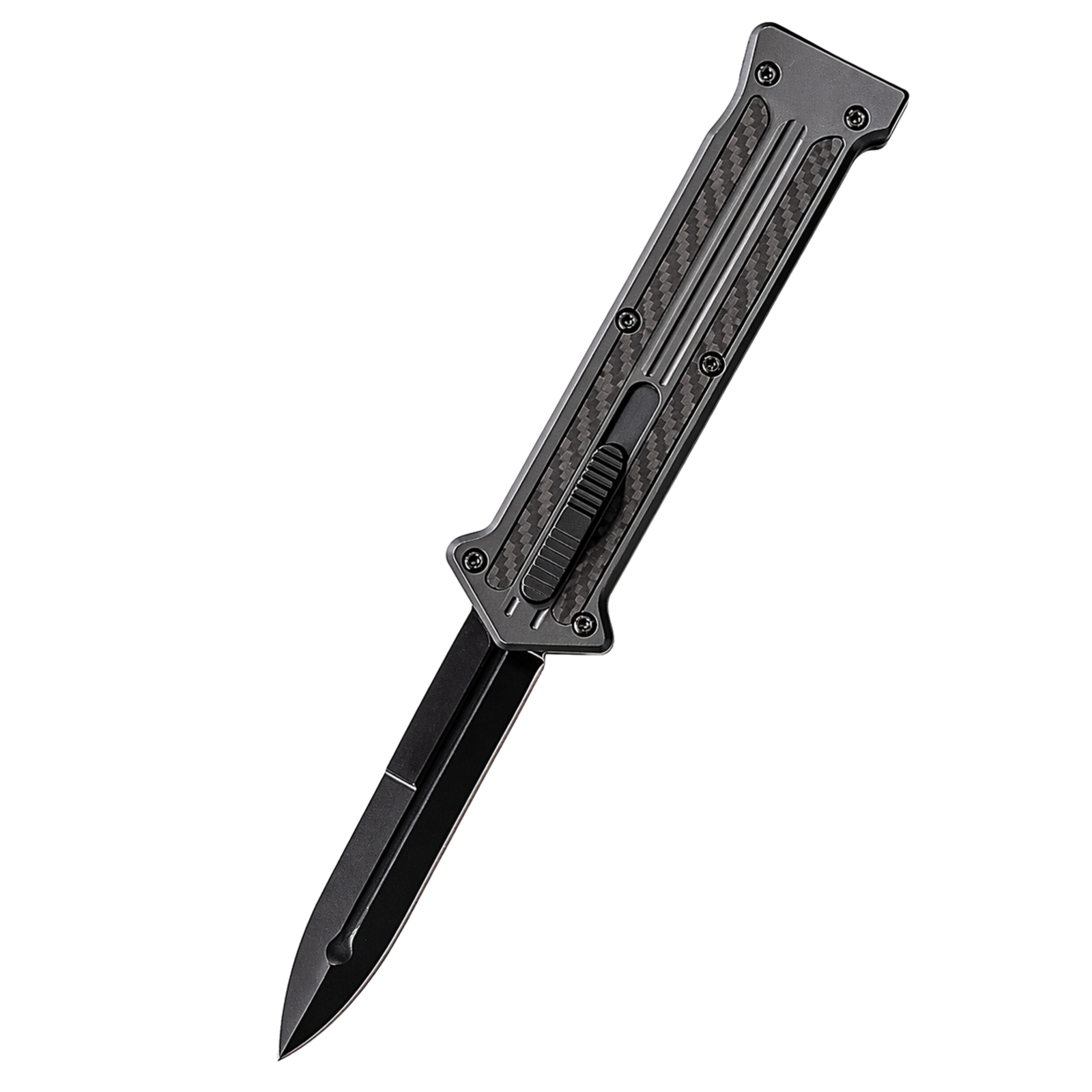
- OTF models with a separate manual safety: These include an extra switch, button block, or lockout that helps prevent the actuator from moving.
- OTF models without a separate safety but with internal retention: This is common. The blade is held by the mechanism, and the firing slider requires deliberate travel and pressure.
- OTF models with a safety interruption feature: If the blade hits an object during deployment, the mechanism may disengage rather than force the blade forward. The user then resets the knife by pulling the blade or cycling the switch.
That third feature is often misunderstood. It is a safety feature, but it is not a lock. It helps reduce the chance of the knife driving through resistance under spring force. It does not replace careful handling, and it does not guarantee that the knife cannot open, shift, or malfunction.
For buyers reviewing OTF knives, the product sheet should clearly separate these terms: manual safety, blade lockup, switch resistance, and misfire or interruption behavior. If a supplier cannot explain the difference, that is a warning sign.
Why the OTF mechanism helps, and where it can fail
The OTF mechanism helps in one specific way: the blade can be deployed and retracted without changing grip much, which can be useful when opening cartons, cutting wrap, or doing repetitive stockroom tasks with one hand available. For some users, that controlled thumb-slide motion feels more contained than opening a manual folder.
But the same mechanism creates its own failure points. OTF knives have more moving parts than a simple fixed blade and usually more internal complexity than a basic manual folder. Safety depends on spring tension, actuator fit, internal track geometry, and clean lockup surfaces. When one of those variables is off, the knife may misfire, fail to fully deploy, or feel inconsistent.
Concrete failure points buyers should ask about:
- Pocket lint and grit: Debris inside the handle can slow the blade or interfere with lockup.
- Weak or inconsistent spring action: Lower-grade internals may produce partial deployment.
- Loose tolerances in the slider: A switch that is too light may be easier to activate unintentionally.
- Contamination from moisture or salt air: Corrosion can affect internal parts over time.
- False assumptions about “double action”: Double-action means deploy and retract by the switch; it does not automatically mean extra safety.
For wholesale channels, three task examples matter here. A warehouse buyer may want OTF knives for cutting tape and shrink wrap during receiving. A farm-and-ranch retailer may stock them for glove-on use in the field. A private-label brand may want a model that feels secure in the pocket for everyday carry customers. Each case needs different answers about switch stiffness, accidental activation resistance, and tolerance for debris.
When a separate safety lock matters most
A separate manual safety is not mandatory for every OTF buyer, but it matters more in certain sales environments. If your customers are likely to carry the knife loose in a pocket with keys, climb in and out of vehicles all day, or store the knife in packed gear, a lockout feature may be worth prioritizing. It gives the user one more barrier against unintentional switch movement.
However, a manual safety also adds another control that can break, loosen, or confuse end users. On lower-cost imports, a poorly fitted safety switch can create a false sense of security. Buyers should verify whether the safety positively blocks the actuator or only adds friction. Those are very different outcomes.
Mistakes to avoid when evaluating safety locks:
- Confusing blade lockup with a manual safety. A blade that locks open is not the same as a knife that cannot be fired accidentally.
- Assuming all OTFs have the same reset behavior. Some are easy to reset after interruption; some are not.
- Ignoring switch pressure. If the slider is extremely light, the absence of a manual safety matters more.
- Buying on appearance alone. A large thumb slider may look secure but still have poor retention or inconsistent internals.
- Skipping market-specific legal review. In some jurisdictions, automatic knives face restrictions regardless of safety features.
Wrong tool: when an OTF is not the right answer
Even with a safety lock or strong internal retention, an OTF knife is the wrong tool in some scenarios:
- Heavy prying or twisting tasks. The mechanism is designed for cutting, not leverage abuse.
- Dirty environments with constant sand, metal dust, or concrete grit. Repeated contamination can reduce reliability.
- Use where a fixed blade is required by policy or task risk. Processing, rescue, or industrial work may call for a simpler platform.
- Buyers who need zero learning curve. If the customer base will not understand reset behavior, a basic manual utility knife may be safer to sell.
This matters commercially. Returns often come from mismatch, not defect. A buyer who places OTF knives into hard-use construction bins without explaining maintenance and intended use may see more complaints than a buyer who positions them for controlled cutting tasks.
What wholesale buyers should verify before ordering
For OTF knife safety, a short comparison checklist is more useful than marketing language. Ask the supplier these exact questions before placing volume orders:
- Is there a separate manual safety, yes or no?
- If no manual safety, what prevents accidental deployment? Ask for switch force and retention details.
- What happens if the blade meets resistance during firing? Ask whether the knife interrupts and how it resets.
- How much side-to-side and front-to-back blade play is normal? Small movement may be normal on many OTF designs, but excessive play can affect buyer confidence.
- What maintenance is recommended for dust, pocket lint, or moisture exposure?
- Are spare parts, warranty terms, or service instructions available for dealer support?
A useful maintenance note for this category: if the knives may be sold into coastal, hunting, or dirty work environments, ask how the mechanism should be cleaned after exposure to salt, blood, or grit. OTF internals can become sluggish when contaminated, and flushing or light lubrication practices vary by model. Over-lubrication can also attract debris, so “more oil” is not always better.
For distributors and resellers, the safest buying posture is conservative: request a sample, test repeated deployment, test pocket carry resistance, and check reset behavior after intentional interruption. If you need help comparing configurations or planning a private-label order, use the buyer support form.
Short answers buyers can use with customers
Do all OTF knives have safety locks?
No. Many OTF knives do not have a separate manual safety lock. They often rely on internal retention, actuator resistance, and interruption features instead.
Is an OTF without a manual safety unsafe?
Not automatically. It depends on switch design, internal quality, carry method, maintenance, and user habits. A manual safety is only one part of the overall safety picture.
Can an OTF knife open by accident in a pocket?
It can happen on some designs or under some conditions. Stronger switch resistance and a true lockout feature may reduce that risk, but no mechanism should be treated as foolproof.
What should a wholesale buyer prioritize first?
Prioritize clear mechanism disclosure: manual safety presence, switch resistance, interruption behavior, and maintenance requirements. Those details matter more than generic claims like “secure” or “tactical.”