

How Safe Is the Slider on an OTF Knife?

Short answer
An OTF knife slider is reasonably safe for deliberate one-handed utility use if it resists casual pocket pressure, completes full travel reliably, and stays con
In this article
- 01 1) Slider-specific safety factors
- 02 Deliberate actuation resistance
- 03 Good traction on the switch face
- 04 Full, even travel
- 05 Closed-position retention
- 06 Consistency after carry
- 07 Double-action vs other OTF designs
- 08 2) Real warning signs the slider is becoming less safe
- 09 3) A quick evaluation test before you trust an OTF slider
- 10 1. Pocket-pressure check
- 11 2. Ten-cycle consistency check
- 12 3. Traction check in realistic conditions
- 13 4. Closed-retention check
- 14 5. Post-carry recheck
- 15 4) When to avoid relying on the slider
- 16 Use-case maintenance note: boxes, wrap, and pocket lint
- 17 Short FAQ
- 18 Can an OTF slider fire in a pocket?
- 19 Is a harder-to-push slider always safer?
- 20 What is the plain answer?
It depends. An OTF knife slider is reasonably safe for deliberate one-handed utility use if it resists casual pocket pressure, completes full travel reliably, and stays consistent after normal carry, but it is not a true safety lock and should not be trusted in dirty, loose-pocket, or high-debris conditions.
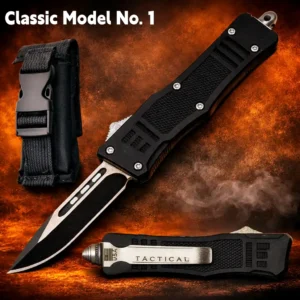
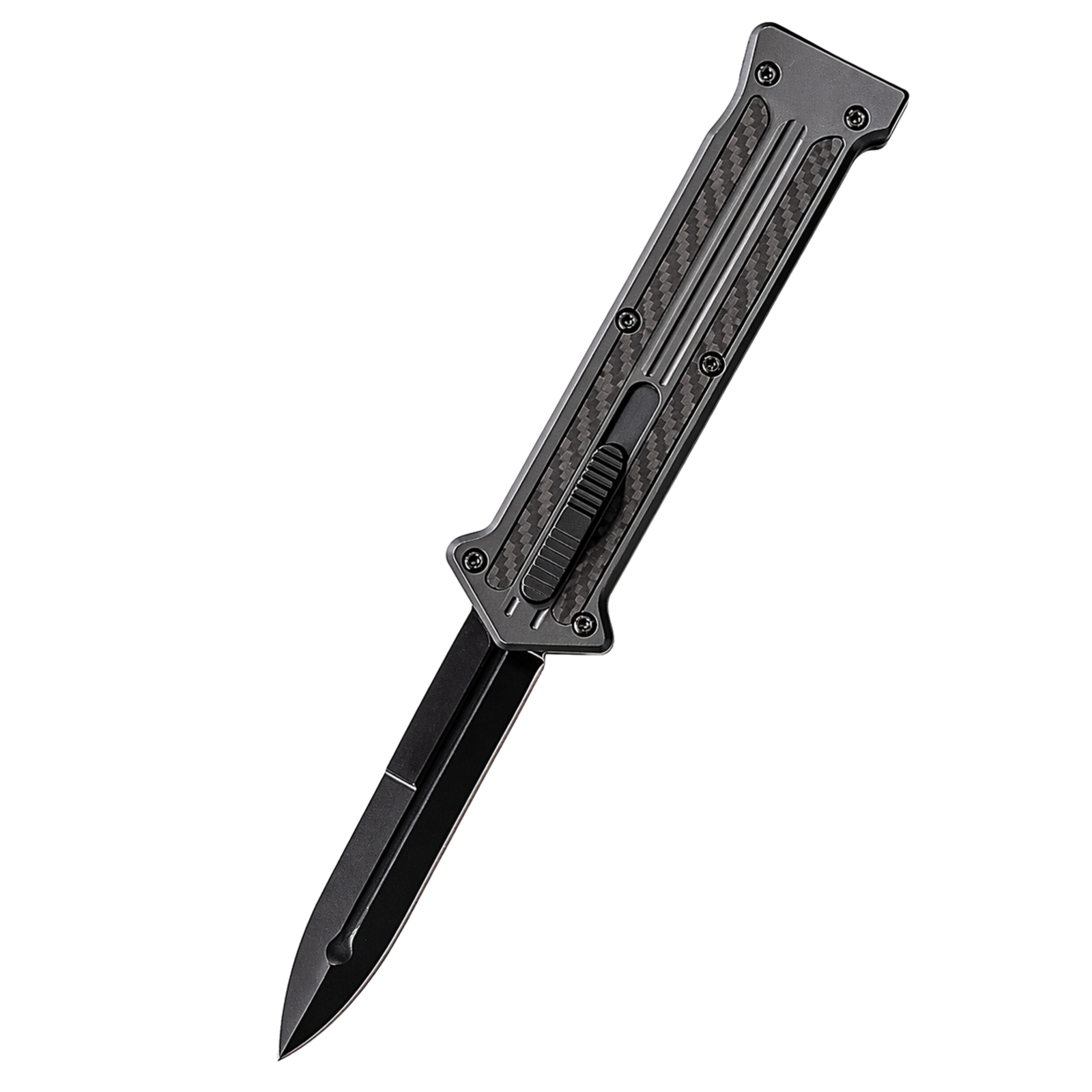
That distinction matters because the question is about the slider itself, not whether every OTF is generally safe. On a double-action OTF, the slider is the user control that tensions and releases the internal mechanism for both deployment and retraction. If the slider is too easy to bump, too slick to control, too inconsistent across its travel, or too sensitive to lint and grit, safety drops even if the blade steel and handle look fine.
This guidance is based on common maker instructions for automatic OTFs: keep the mechanism clean, use light lubrication only as directed, and stop using the knife if deployment becomes inconsistent. Across major OTF brands, owner manuals and care notes generally warn that pocket lint, sand, adhesive residue, and over-oiling can interfere with reliable action. In wholesale inspection, the same practical checks matter most: repeatable switch travel, consistent closed retention, and no sudden change after carry or box-cutting use.
1) Slider-specific safety factors
A safe OTF slider is not simply “stiff.” It should be deliberate, predictable, and repeatable. These are the features that matter most.
Deliberate actuation resistance
The slider should require intentional thumb pressure, not feather-light contact. There is no universal force standard across brands, and reputable makers rarely publish exact actuation numbers, so the realistic buying standard is comparative: the switch should resist casual rubbing from pocket fabric, seam pressure, or light contact from other items. If a slider moves easily when you brush it sideways or press it at a shallow angle, it is too easy for carry use.
Good traction on the switch face
Texture matters. A low-profile polished button can feel premium but become slippery with sweaty hands, cold fingers, or light work gloves. A safer slider usually has enough texture, contour, or edge definition to let the thumb stay planted through the full stroke. This matters during real tasks such as opening shipping cartons with one hand, cutting pallet wrap while the other hand holds the bundle, or trimming plastic mailers at a packing bench.
Full, even travel
The safest sliders reward one smooth motion from start to finish. Warning signs include a light first half and a heavy second half, a dead spot near the end, or a gritty patch in the track. Those issues increase short-stroking risk. On a double-action OTF, a short stroke can leave the blade out of battery rather than fully open or fully closed.
Closed-position retention
The slider does not act alone; it is part of a system. A good OTF should stay confidently closed until the switch completes its stroke. If the blade starts to creep, rattles oddly, or feels less positively retained when closed, do not treat that as a minor cosmetic issue. Closed retention is one of the clearest safety markers because it affects pocket carry directly.
Consistency after carry
Many low-quality or poorly fitted OTFs feel acceptable for the first few cycles on a clean table. The real test is after being clipped in a pocket for a day or after routine utility work. Fine lint, cardboard dust, tape adhesive, and grit tend to expose weak tolerances quickly. A slider that becomes noticeably easier, rougher, or less decisive after normal carry is not one to rely on.
Double-action vs other OTF designs
This question usually concerns double-action OTFs, where the same slider opens and closes the blade. That design is convenient for one-handed utility use because the blade stays enclosed until deliberate actuation and can be retracted quickly after the cut. Single-action OTFs are a different category: they usually fire automatically but require a separate method to reset the blade, so the slider or button safety question is not exactly the same. For double-action models, switch quality is central because every cycle depends on it.
2) Real warning signs the slider is becoming less safe
Unsafe OTF sliders usually do not fail dramatically first. They become less trustworthy in small, repeatable ways.
- It starts moving from shallow side pressure. That can point to poor fit, wear in the switch path, or a button shape that is too exposed.
- The stroke changes from cycle to cycle. One smooth deployment and one rough deployment are not “normal variation.” They are a warning.
- You need to adjust your grip mid-stroke. If the thumb slips or has to hunt for traction, the control surface is wrong for actual use.
- The blade deploys, but lock feel changes. Minor blade play can be normal on many OTFs; inconsistent open or closed engagement is not.
- Retraction becomes weaker than deployment. That often signals drag, contamination, or internal wear affecting the return cycle.
- Behavior changes quickly after cardboard or dusty work. OTFs are often more contamination-sensitive than manual folders because the action depends on a clean internal track and adequate spring energy.
Manufacturer care guidance across the category generally supports this caution: when the knife becomes sluggish, misfires, or feels gritty, clean it according to the maker’s instructions before further use. Forcing a dirty slider is not a test of toughness; it usually makes reliability worse.
3) A quick evaluation test before you trust an OTF slider
You do not need lab equipment to separate a decent slider from a questionable one. This five-part check is more useful than judging by brand claims alone.
1. Pocket-pressure check
With the blade closed, press the slider from the side and at shallow angles that mimic pocket contact. Do not deliberately actuate it; the point is to see whether casual pressure starts movement. A carry-safe slider should resist incidental pressure.
2. Ten-cycle consistency check
Open and close the knife ten times in a row with the same grip. The switch should feel substantially the same on cycle 10 as on cycle 1. If friction builds quickly, if one cycle feels softer, or if the return stroke changes character, note it.
3. Traction check in realistic conditions
Try the slider with dry hands, slightly sweaty hands, and light gloves if that matches your work. A switch that is controllable only with perfect dry skin is not ideal for warehouse, shipping, or outdoor utility use.
4. Closed-retention check
After each retraction, confirm that the blade is fully seated and the mechanism feels positively closed. Do not rely on sound alone. If closed engagement feels vague or changes from one cycle to the next, stop there.
5. Post-carry recheck
Carry the knife clipped for a day, then repeat the test. This is where many weak sliders show themselves. If ordinary pocket lint already changes the feel, the slider may be acceptable as a novelty but not as a dependable daily-use control.
For wholesale buyers or repeat purchasers, this kind of incoming inspection is more meaningful than broad claims like “strong action” or “smooth switch.” If you are comparing available OTF knives, focus on switch behavior after repeated cycling and after realistic carry, not just first-touch impressions.
4) When to avoid relying on the slider
Some situations make even a decent OTF slider the wrong choice.
- Loose pocket carry with keys, coins, or tools: objects can press the switch or introduce debris into the track.
- Sand, grinding dust, drywall dust, or heavy cardboard debris: fine contamination can quickly reduce travel consistency.
- Very light athletic shorts or unstable pocket carry: the knife shifts more, and pocket pressure is less predictable.
- Any use where you expect the slider to function as a lockout safety: it is an actuator, not a dedicated safety device.
The OTF mechanism helps when one-handed opening and one-handed closing are genuinely useful, especially around packaging tasks. It can fail in the same use case because the internal action is less tolerant of contamination than many simple manual folders. That is why the slider can be safe enough for controlled utility work yet still be the wrong tool for dirty or careless carry.
Use-case maintenance note: boxes, wrap, and pocket lint
If your real use is opening cartons, cutting tape, slicing stretch wrap, or carrying the knife in a pocket all day, debris is the maintenance issue to watch. Cardboard dust and adhesive residue are common OTF troublemakers because they change switch feel before they cause a complete failure. Most maker guidance for automatic OTFs advises light cleaning and minimal lubricant; too much oil can attract more lint and make the track dirtier faster. If the slider suddenly feels gritty, sticky, or uneven after packaging work, clean it per the manufacturer instructions before trusting it again.
Short FAQ
Can an OTF slider fire in a pocket?
Yes, it can. The risk is lower with a well-designed, deliberate switch and clipped carry, but it is not zero, especially in loose or crowded pockets.
Is a harder-to-push slider always safer?
No. Excessive stiffness can cause thumb slip and incomplete strokes. The safer setup is controlled resistance plus reliable full travel.
What is the plain answer?
An OTF slider is reasonably safe when it requires intentional pressure, has good traction, completes a clean full stroke, and stays consistent after actual carry. It is not a lock, and it should not be trusted blindly in gritty environments or casual loose-pocket carry.
If you need model-specific buying help or want to ask about inspection standards for wholesale orders, use the buyer support form.