

How Does an Out the Front Knife Work?

Short answer
Learn how an out the front knife works, what makes the mechanism different, what buyers should look for, and how to choose reliable OTF knives for retail or who
In this article
- 01 What makes an OTF knife different
- 02 The basic parts inside the mechanism
- 03 How the opening and closing cycle works
- 04 Single-action versus double-action
- 05 Why some OTF knives feel smoother than others
- 06 What buyers should look for before choosing inventory
- 07 Common mistakes people make with OTF knives
- 08 Safe handling and basic care
- 09 FAQ about how an out the front knife works
- 10 Is an OTF knife the same as an automatic knife?
- 11 Why does the blade sometimes feel stiff?
- 12 Are double-action OTF knives better than single-action models?
- 13 What should I check when buying for wholesale?
- 14 Can an OTF knife be carried everywhere?
- 15 The short answer for shoppers and buyers
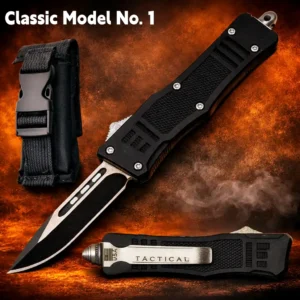
An out the front knife works by using an internal spring, track, and locking system to move the blade straight out of the front of the handle, rather than folding from the side like a traditional pocket knife. In a double-action model, one switch both deploys and retracts the blade; in a single-action model, the blade usually deploys automatically and is retracted manually. That simple idea is backed by a surprisingly precise mechanism, which is why OTF knives feel fast, compact, and mechanically distinctive.
What makes an OTF knife different
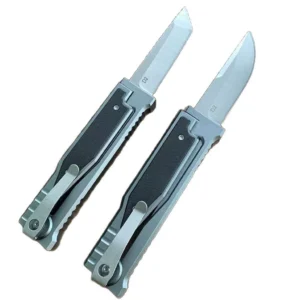
Most folding knives pivot at a hinge. An OTF knife stores the blade inside the handle and sends it forward along a guided channel. When the user activates the thumb slide or switch, the blade rides on an internal carrier and locks into position at the front. This design keeps the blade protected while closed and makes the knife easy to carry in a slim profile.
For shoppers, the biggest difference is not just speed. It is the way the knife opens and closes in a straight line. That can make the knife feel intuitive, especially for people who value one-handed operation, compact carry, and a clean mechanical action. For retail buyers and distributors, it also gives the product a strong point of distinction on the shelf.
The basic parts inside the mechanism
Although designs vary by manufacturer, most OTF knives share a few core components:
- Blade carrier: The internal piece that holds and moves the blade.
- Track or channel: The guided path inside the handle that keeps movement straight and controlled.
- Spring system: Provides the force for deployment and, in double-action models, retraction.
- Locking mechanism: Secures the blade in the open or closed position.
- Thumb slide or actuator: The control the user moves to trigger the action.
When the knife is closed, the blade sits inside the handle with the edge protected. When the actuator is moved, the blade carrier is released and driven forward. Once fully extended, the blade locks so it stays stable during use. In double-action versions, moving the switch in the opposite direction releases the lock and pulls the blade back into the handle.
How the opening and closing cycle works
The action is usually easier to understand if you think of it as a controlled slide rather than a folding motion. The internal carrier is held under tension. When the switch is engaged, that tension is released in a directed path, sending the blade forward. The blade stops at a fixed position and locks. In retracting models, the same control reverses the process.
Because the blade travels inside the handle, fit and finish matter a lot. A well-made OTF knife should feel smooth, consistent, and positive in both directions. A cheaper knife may feel gritty, slow, or inconsistent if the internal tolerances are poor or the spring system is weak.
Single-action versus double-action
Single-action OTF knives deploy automatically, but the blade is often retracted manually using a separate mechanism or by resetting the internal system. These models can be appreciated for their simple feel and sometimes stronger deployment force.
Double-action OTF knives are the most recognizable style for many buyers because the same control both extends and retracts the blade. That convenience is a major reason they are popular in retail and wholesale markets. They are also the style most shoppers expect when they ask how an out the front knife works.
For wholesale buyers, both styles can have a place in a lineup. Single-action models may appeal to enthusiasts who want a more mechanical experience, while double-action models often sell well to everyday knife customers who want quick operation and easy handling.
Why some OTF knives feel smoother than others
Not all OTF knives perform the same way. A smooth knife usually reflects better machining, better spring calibration, and tighter quality control. The blade should travel without excessive wobble, the button should move with clear resistance, and the lockup should feel secure.
Important factors include:
- Blade alignment: If the blade rides straight, the action is cleaner and wear is reduced.
- Internal tolerances: Tight but not overly restrictive fit helps the knife run consistently.
- Material quality: Better steels and stronger handle materials improve durability.
- Spring consistency: Reliable tension affects both deployment and retraction.
- Maintenance: Dirt and pocket lint can affect performance over time.
Buyers sourcing for stores or resale should pay attention to these details, because the customer experience is heavily tied to how the knife feels in hand. A visually appealing OTF knife that binds or misfires will create returns and complaints, while a dependable model can become a repeat seller.
What buyers should look for before choosing inventory
If you are buying OTF knives for a retail counter, online shop, or distribution program, focus on practical quality indicators rather than just appearance. Customers often judge these knives quickly, so the action needs to be convincing.
Good buyer criteria include:
- Consistent deployment: The blade should fire cleanly every time.
- Secure lockup: Open and closed positions should both feel stable.
- Comfortable actuator: The switch should be easy to reach without feeling loose.
- Appropriate size and weight: Larger models may feel premium, but smaller models can be easier to carry and sell broadly.
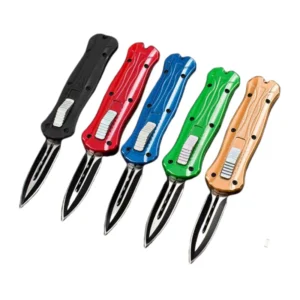
- Finish options: Neutral finishes often appeal to wider audiences, while bold colors can help with display and impulse sales.
- Reliable packaging and presentation: Important for retail buyers and gift-oriented customers.
Wholesale purchasers should also consider whether the models are suited to the intended market. A rugged everyday-carry style may perform differently from a collectible-style knife with decorative hardware. If you are building assortment depth, a mix of practical and premium-looking options can help reach more customers.
For a broader selection of styles and inventory options, many buyers review the OTF and automatic knife wholesale category to compare features and pricing tiers.
Common mistakes people make with OTF knives
One common mistake is assuming all OTF knives are built the same. In reality, small differences in construction can have a big effect on reliability. Another mistake is choosing a model only because it looks aggressive or flashy. If the action is inconsistent, the knife may disappoint the end customer.
Other mistakes to avoid:
- Forcing the blade: If the mechanism resists, do not overpower it.
- Ignoring maintenance: Pocket debris and grime can build up in the channel.
- Buying only on appearance: Looks matter, but action and durability matter more.
- Skipping local rule checks: Knife laws vary, so customers should verify their local regulations before purchase or carry.
- Overstocking one style: Different customers prefer different sizes, finishes, and action types.
For retailers, the best way to reduce returns is to source knives that have been evaluated for consistency, not just listed at an attractive price. That is especially important in wholesale, where a small quality issue can affect many units at once.
Safe handling and basic care
OTF knives should be treated as precision tools. Keep them away from children, store them securely, and only use them in accordance with local laws and intended lawful purposes. Before carrying or selling them, it is wise to remind customers that rules can differ by city, county, and state, and they should verify local requirements themselves.
Simple care steps can help the mechanism last longer:
- Keep the blade and channel clean.
- Use only light maintenance products recommended for knives.
- Avoid dropping the knife, which can affect alignment.
- Store it dry to help prevent corrosion.
- Test the action periodically so problems are caught early.
A well-maintained OTF knife should remain smooth and dependable for a long time, especially when it is built with solid materials and assembled with care.
FAQ about how an out the front knife works
Is an OTF knife the same as an automatic knife?
Not exactly. Many OTF knives are automatic in the sense that a spring drives the blade, but “automatic knife” can also refer to side-opening switchblades. OTF is a specific style where the blade travels straight out of the front.
Why does the blade sometimes feel stiff?
Stiffness can come from factory tension, dirt in the channel, poor alignment, or wear. On a quality knife, the action should feel firm but controlled, not jammed or loose.
Are double-action OTF knives better than single-action models?
Neither is universally better. Double-action models offer convenience, while single-action models may appeal to buyers who want a different mechanical feel. The best choice depends on the customer and intended use.
What should I check when buying for wholesale?
Look for consistent action, solid construction, dependable lockup, and a style that matches your customer base. If possible, sample a few units before placing a larger order.
Can an OTF knife be carried everywhere?
No. Carry rules vary widely. Buyers and end users should verify local laws and workplace policies before carrying any knife.
The short answer for shoppers and buyers
An out the front knife works by using an internal spring-driven system that sends the blade straight out of the handle and locks it in place, with many models also retracting the blade through the same control. The appeal is in the combination of compact carry, fast one-handed operation, and a distinctive mechanical action. For customers, the best knives feel smooth and secure. For retail and wholesale buyers, the best inventory is the kind that balances reliable function, appealing presentation, and broad market demand.