

How to Clean a Knife: A Practical Guide for Everyday Users and Wholesale Buyers


Short answer
Learn how to clean a knife safely and properly, including step-by-step care for folding and OTF knives, what to avoid, and how to keep blades in good working co
In this article
- 01 Why knife cleaning matters more than most people think
- 02 The basic cleaning routine that works for most knives
- 03 Simple supplies to keep on hand
- 04 How to clean a folding knife without damaging the action
- 05 Common folding knife mistakes to avoid
- 06 Cleaning an OTF knife the right way
- 07 What to clean based on blade and handle materials
- 08 Material-specific care tips
- 09 How often should a knife be cleaned?
- 10 When a deeper clean makes sense
- 11 Safe storage after cleaning
- 12 Practical FAQ
- 13 Can I use alcohol to clean a knife?
- 14 Should I put my knife in the dishwasher?
- 15 How do I clean rust spots?
- 16 What if the knife still feels gritty after cleaning?
- 17 Do wholesale buyers need different care standards?
The safest way to clean a knife is to remove dirt, moisture, and residue right away with a soft cloth, mild soap, and warm water, then dry every part completely before storing it. For folding knives and OTF models, regular cleaning also means clearing lint and grit from the pivot or internal track, since buildup can affect smooth opening, closing, and long-term performance.
Why knife cleaning matters more than most people think
A clean knife is easier to handle, looks better in a retail case, and usually lasts longer. Even stainless steel can show spots or corrosion if it stays wet, and pocket lint, tape adhesive, food residue, or dust can collect in moving parts. For buyers and resellers, a well-maintained knife also presents better to customers and reduces complaints about stiffness, grime, or dull-looking finishes.
If you carry knives for work, outdoor use, or everyday tasks, cleaning is not just about appearance. It helps preserve the action, keeps the edge in better condition, and makes inspection easier. That matters whether you are maintaining personal inventory, stocking a store shelf, or managing wholesale orders for customers who expect reliable products.
The basic cleaning routine that works for most knives
For most pocket knives and utility knives, start with a simple routine after use. Wipe the blade with a dry cloth to remove loose debris. If there is sticky residue or grime, use a cloth dampened with warm water and a small amount of mild dish soap. Clean the handle, the spine, and any exposed hardware. Then dry everything thoroughly.
If the knife has moving parts, open and close it carefully while wiping away visible dirt around the pivot, lock area, or blade channel. A cotton swab can help with tight spaces, but avoid forcing anything into the mechanism. Once the knife is dry, apply a very light amount of lubricant only where appropriate for the knife design, then wipe away any excess.
Simple supplies to keep on hand
- Soft microfiber cloths or lint-free rags
- Mild dish soap and warm water
- Cotton swabs or soft brushes
- Non-abrasive lubricant made for knife mechanisms
- A dry towel for final drying
How to clean a folding knife without damaging the action
Folding knives need a little more attention because dirt can collect in the pivot and lock area. First, make sure the knife is fully closed and handled safely. Wipe the blade clean, then inspect the handle scales, screws, and pivot area. If the knife is lightly soiled, a damp cloth is usually enough. For more buildup, use a soft brush or swab to loosen debris around the pivot and liner.
Do not soak the knife unless the manufacturer specifically says it is safe to do so. Water can carry grit deeper into the mechanism, and excessive moisture can affect springs, washers, or bearings. After cleaning, dry the knife completely, work the blade open and closed a few times, and check that the lock engages normally. If the action feels rough, the knife may need a more careful inspection rather than more oil.
Common folding knife mistakes to avoid
- Using harsh chemicals that can damage finishes or handle materials
- Leaving moisture in the pivot or lock area
- Over-oiling, which can attract dust and lint
- Using metal tools to scrape residue from the blade or handle
- Ignoring loose screws or a gritty action
Cleaning an OTF knife the right way
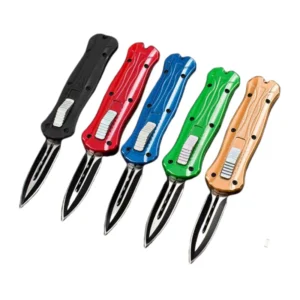
OTF knives have internal moving parts that benefit from careful, regular maintenance. If you are stocking or buying from an OTF and auto knife wholesale category, it helps to understand that these knives often need cleaner handling than a standard folding knife because debris can affect the internal track and firing mechanism. The goal is to keep the blade channel free of dust, lint, and residue without forcing anything apart.
Start by wiping the blade clean while it is safely extended or retracted, depending on the model and your comfort level. Use a dry cloth first, then a lightly dampened cloth if needed. Keep liquid away from the internal mechanism as much as possible. A soft brush or air blower can help remove lint from the opening and channel. If the knife has visible residue near the track, use a cotton swab with a small amount of cleaner on the swab itself rather than spraying directly into the knife.
After cleaning, dry the knife completely and cycle it only as recommended by the manufacturer. Too much lubricant or cleaner inside an OTF can trap debris and make the action feel sluggish. If a knife begins to misfire, drag, or feel inconsistent, the issue may be more than surface dirt. In that case, a careful service check is better than repeated forcing.
What to clean based on blade and handle materials
Different materials need different care. Stainless steel is forgiving, but it is not maintenance-free. Carbon steel needs faster drying and more attention to prevent discoloration. Coated blades should be cleaned gently so the finish does not wear prematurely. Handle materials like aluminum, G10, micarta, wood, or polymer all respond differently to water and chemicals.
For example, natural wood handles should never be left wet, and abrasive pads can dull the look of anodized aluminum or coated hardware. Textured handles can trap grime in the grooves, so a soft brush works better than a rough scrubber. If you are buying knives for retail or distribution, these material differences matter because they affect how customers should care for the product after purchase.
Material-specific care tips
- Stainless steel: Wipe dry after cleaning to prevent spotting.
- Carbon steel: Dry immediately and store in a low-moisture environment.
- Coated blades: Use gentle cloths to protect the finish.
- Wood handles: Use minimal moisture and dry right away.
- Textured synthetics: Brush out dirt from grooves and edges.
How often should a knife be cleaned?
The answer depends on use. A knife used for food prep, outdoor tasks, or dusty work should be cleaned after each use. A carry knife that only sees light daily use may need a quick wipe-down every few days and a deeper cleaning when the action starts to feel gritty. Store inventory should also be checked regularly, especially if knives are displayed in cases where dust can settle on the blade or around the hardware.
For wholesale buyers and retailers, building a simple maintenance habit helps protect product quality. Knives that sit in storage for long periods should be inspected for moisture, finish issues, or residue from packaging. If you source in volume, it is smart to ask suppliers about packaging quality, corrosion resistance, and recommended care so your team can present the product accurately to customers.
When a deeper clean makes sense
Sometimes a surface wipe is not enough. A deeper clean may be needed if the knife has been exposed to sand, saltwater, adhesive, food oils, or heavy pocket lint. You may also need a more careful cleaning if the blade action changes, the lock feels sticky, or residue is visible in the pivot or channel. In those cases, follow the manufacturer’s guidance before attempting disassembly.
For many buyers, especially resellers and distributors, it is useful to know which models are easier to maintain. Knives with accessible hardware, durable finishes, and reliable mechanisms tend to be easier to keep in good condition. If you are evaluating inventory for customers, that practical maintenance factor can be just as important as appearance or blade style. For sourcing support or product selection questions, the wholesale inquiry form is a straightforward place to start.
Safe storage after cleaning
A knife should always be fully dry before storage. Even a small amount of trapped moisture can cause problems over time, especially in humid environments. Store knives in a dry place, away from direct heat and away from anything that can trap condensation. If a knife comes with a case, sleeve, or box, make sure the knife itself is dry before placing it inside.
For retail and wholesale inventory, avoid stacking knives in a way that rubs finishes or bends packaging. Keep records of models that need more frequent inspection, and check sample units before shipping or display. Good storage habits reduce returns and help maintain the condition customers expect when they open the package.
Practical FAQ
Can I use alcohol to clean a knife?
Sometimes, yes, but use it carefully and sparingly. A small amount on a cloth or swab can help remove oily residue, but stronger chemicals may affect coatings, handle materials, or lubricants. If you are unsure, mild soap and water are usually the safer starting point.
Should I put my knife in the dishwasher?
No. High heat, harsh detergents, and prolonged moisture can damage the blade, handle, adhesives, and moving parts. Hand cleaning is the better choice for almost every knife.
How do I clean rust spots?
Light rust may sometimes be removed carefully with a non-abrasive cloth or a product designed for knife care, but avoid aggressive scrubbing that can scratch the finish. If rust is severe or spreading, check the manufacturer’s guidance or have the knife inspected.
What if the knife still feels gritty after cleaning?
That usually means debris is still inside the mechanism or the knife needs a more thorough service. Do not force the action. Recheck for trapped lint, dried residue, or loose hardware, and follow the maker’s instructions.
Do wholesale buyers need different care standards?
The care itself is similar, but the process matters more at scale. Retailers and distributors should inspect incoming stock, store products in dry conditions, and share basic maintenance guidance with customers so the knives stay in good condition after sale.
Cleaning a knife does not have to be complicated. A steady routine, careful drying, and attention to the moving parts will keep most knives performing well and looking presentable. Whether you are caring for one everyday carry knife or managing inventory for a storefront, the same principle applies: clean gently, dry completely, and handle the mechanism with respect.