

How to Close a Switchblade Knife Safely and Correctly

Short answer
Learn how to close a switchblade knife safely, avoid common mistakes, and choose reliable automatic knives for retail or wholesale needs.
In this article
- 01 Start with the knife type you actually have
- 02 Side-opening automatic knives
- 03 OTF automatic knives
- 04 How to close a switchblade knife safely
- 05 Common mistakes people make when closing automatic knives
- 06 What a good closing action feels like
- 07 Storage and handling after closing
- 08 How wholesale buyers can evaluate closing quality
- 09 Practical FAQ
- 10 How do you close a switchblade knife without damaging it?
- 11 Why won’t my automatic knife close smoothly?
- 12 Is the closing motion the same on every switchblade?
- 13 Can I teach customers or staff the closing process?
- 14 What should wholesale buyers ask before placing an order?
- 15 The bottom line
If you are asking how to close a switchblade knife, the short answer is: make sure the blade is clear of the cutting path, press or slide the release mechanism as your model requires, then guide the blade back into the handle until it locks shut. The exact motion depends on whether you have a side-opening automatic knife or an OTF model, so the first step is always to identify the knife type and follow the maker’s design.
That simple answer matters because automatic knives are not all built the same. Some close with a button and a controlled fold into the handle. Others retract straight back into the body. A buyer who understands the closing mechanism is less likely to force the knife, damage the spring system, or pinch a finger. For retail shoppers, store buyers, and wholesale customers alike, knowing the correct closing method also helps with product education, returns, and customer confidence.
Start with the knife type you actually have
Before you close any automatic knife, check whether it is a side-opening switchblade or an OTF knife. The term “switchblade” is often used broadly, but the closing action is different depending on the construction.
Side-opening automatic knives
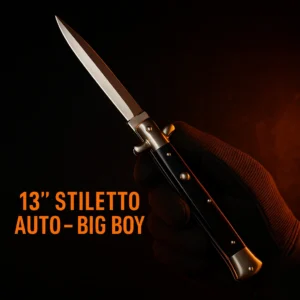
These open from the handle and usually close by pressing the release, then folding the blade back into the handle. The blade may have a locking system that keeps it open until the button or lever is disengaged. If the knife feels stiff, do not force it. A quality knife should close cleanly when the mechanism is used correctly.
OTF automatic knives
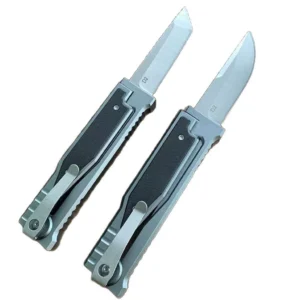
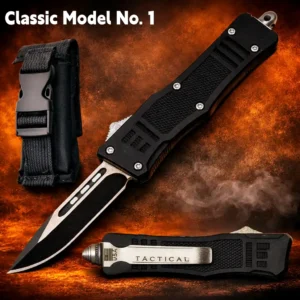
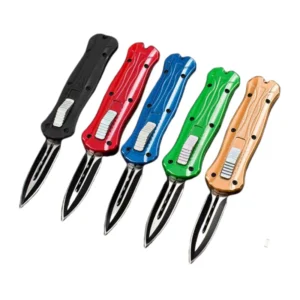
OTF stands for “out the front.” Instead of folding, the blade moves straight out and straight back into the handle. To close an OTF knife, the user typically activates the same switch or slider used to deploy the blade, but in the retract direction. Because the internal mechanism is more specialized, it is especially important to keep the blade and track clean and to avoid side pressure.
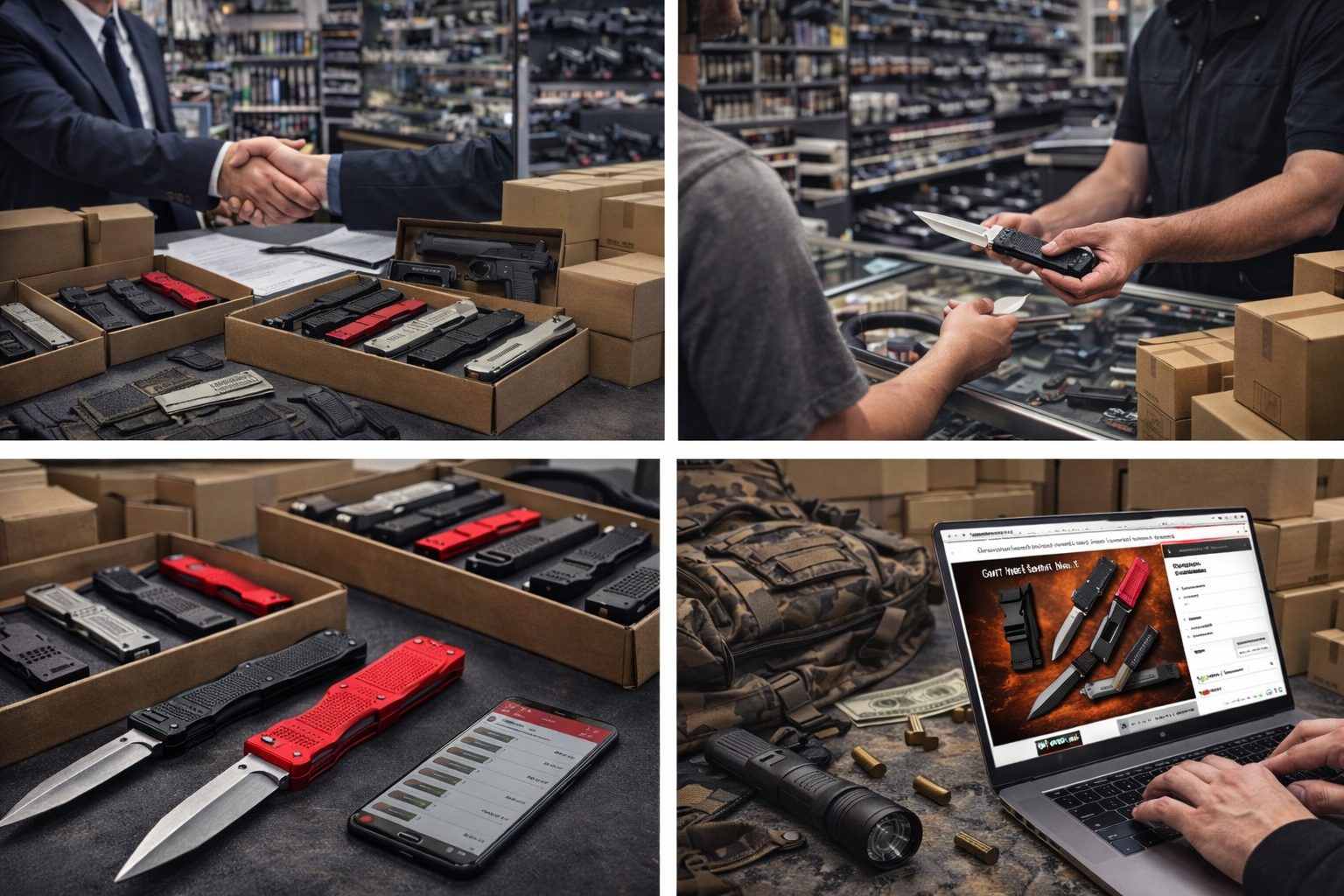
If you are stocking products for a storefront or online catalog, it helps to describe these differences clearly. Buyers often search for one general term, but they need accurate product details to reduce confusion and returns. A well-labeled OTF knife wholesale category can make that easier for resellers and distributors.
How to close a switchblade knife safely
Use a calm, controlled motion and keep your fingers away from the blade path. The safest approach is to treat the closing action as a deliberate one-step process, not something to rush.
- Point the blade away from your body and away from other people.
- Check that the blade and handle are dry and free of debris.
- Press, slide, or release the locking control according to the knife’s design.
- Guide the blade into the handle or retract it fully without snapping it shut.
- Confirm that the knife is locked closed before storing it.
If the blade resists, stop and inspect the knife. Dirt, pocket lint, small metal shavings, or light corrosion can interfere with the mechanism. A quick wipe-down and proper lubrication, if recommended by the manufacturer, can restore smooth operation.
Common mistakes people make when closing automatic knives
Many closing problems come from trying to treat every automatic knife like the same tool. Avoid these common errors:
- Forcing the blade when the lock has not fully disengaged.
- Placing fingers in the blade path to “help” the blade close.
- Snapping the knife shut, which can stress the mechanism and the handle.
- Ignoring debris in the track, pivot, or internal channel.
- Using the wrong motion for an OTF versus a side-opening model.
For wholesale buyers, these issues matter because they affect customer satisfaction and product lifespan. A knife that closes smoothly is easier to sell, easier to demonstrate, and less likely to come back with avoidable wear. When evaluating inventory, look for consistent action, solid lockup, and a mechanism that feels precise rather than loose or gritty.
What a good closing action feels like
A properly functioning automatic knife should close with controlled resistance and a secure final lock. You should not need to wrestle the blade into place. Instead, the action should feel deliberate, repeatable, and aligned with the knife’s build quality.
Buyers often notice the closing feel before anything else. Retail customers may describe it as smooth, crisp, or firm. Store owners and distributors should pay attention to the same qualities because they often signal better manufacturing consistency. In a wholesale setting, that can be the difference between a product line that earns repeat business and one that creates service headaches.
When comparing models, consider the following:
- Mechanism consistency: Does the knife close the same way each time?
- Button or slider feel: Is the control positive without being overly stiff?
- Blade alignment: Does the blade center properly when closed?
- Finish and fit: Are there rough edges, wobble, or rubbing inside the handle?
- Maintenance access: Can the knife be cleaned and maintained easily?
Storage and handling after closing
Once the knife is closed, store it in a way that protects both the blade and the mechanism. A closed automatic knife should not be tossed loosely into a drawer with keys, coins, or other metal objects. That can nick the finish, dull the edge, or press dirt into the opening channel.
For home users, a sheath, case, or dedicated storage slot is ideal. For retail shops and wholesale operations, organized storage helps prevent damage during handling, packing, and display. If you sell to customers who collect or carry knives, basic care tips can reduce complaints and improve perceived quality.
It is also smart to remind buyers to verify local rules before carrying or using any automatic knife. Laws and restrictions vary by location, and responsible ownership includes checking current regulations where the knife will be possessed, sold, or carried.
How wholesale buyers can evaluate closing quality
If you are sourcing inventory for a shop, marketplace, or distribution channel, the closing action is one of the easiest ways to judge overall build quality. A product that opens and closes consistently usually reflects stronger assembly standards.
Look for samples that pass these practical checks:
- The knife closes without sticking or grinding.
- The blade seats securely in the handle.
- The mechanism does not feel loose after repeated use.
- The finish stays clean after normal handling.
- The product packaging and product descriptions match the actual design.
For many buyers, automatic knives are part of a broader assortment that includes everyday carry items, display pieces, and utility tools. Choosing a reliable supplier with clear product categories can make restocking simpler. If your business focuses on automatic and OTF models, browsing a dedicated selection of auto and OTF knives can help you compare options more efficiently.
Practical FAQ
How do you close a switchblade knife without damaging it?
Use the intended release mechanism, keep the blade path clear, and avoid forcing the blade. If the knife feels stiff or gritty, clean it before trying again.
Why won’t my automatic knife close smoothly?
Dirt, wear, misalignment, or a weak mechanism can cause resistance. Check for debris and inspect the knife for visible issues. If the problem continues, it may need service or replacement.
Is the closing motion the same on every switchblade?
No. Side-opening automatics and OTF knives close differently. Always identify the model first and follow the manufacturer’s design.
Can I teach customers or staff the closing process?
Yes, and it is a good idea. A short demonstration focused on safe handling, correct closure, and storage can reduce mistakes and returns.
What should wholesale buyers ask before placing an order?
Ask about mechanism type, material quality, lock reliability, packaging, and consistency across the batch. It also helps to confirm how the knives are described so customers understand the closing style before purchase.
The bottom line
Learning how to close a switchblade knife is mainly about matching the action to the knife design and using a controlled, safe motion. Whether you own one for personal use or buy knives for resale, the closing mechanism tells you a lot about the product’s quality. A smooth close, solid lockup, and clean fit usually point to a well-made knife that will be easier to use, store, and sell. When in doubt, check the manufacturer’s instructions and verify local laws before carrying or handling automatic knives in your area.