

How to Wear a Pocket Knife Safely and Comfortably

Short answer
Learn how to wear a pocket knife comfortably, safely, and in a way that fits daily use, retail expectations, and wholesale buying decisions.
Key Takeaways
- Knife rules can vary by state, city, blade style, opening mechanism, carry method, and intended use.
- Do not treat a product nickname as a legal category; check the actual features and local rule.
- Retailers should keep legal or safety language factual and avoid promising that one item is allowed everywhere.
Terms Used Here
- Pocket knife
- A compact knife intended for pocket carry, often with a folding blade.
- Folding knife
- A knife with a blade that pivots into the handle for storage.
- Fixed blade
- A knife with a blade that does not fold or retract into the handle.
- Sheath
- A protective cover used to store or carry a knife safely.
In this article
- 01 What it means to wear a pocket knife
- 02 Common ways to carry a pocket knife
- 03 Clip carry in a front pocket
- 04 Inside-pocket carry without a clip
- 05 Sheath carry on a belt or in a bag
- 06 How to choose the right carry position
- 07 What to look for in a knife if you plan to wear it daily
- 08 Comfort and safety habits that matter every day
- 09 Common mistakes people make when carrying a pocket knife
- 10 Buying considerations for retailers and wholesale customers
- 11 Frequently asked questions
- 12 Where should I wear a pocket knife?
- 13 Is it better to clip a knife or carry it loose?
- 14 Can I wear a pocket knife every day?
- 15 What makes a pocket knife comfortable to wear?
- 16 Final thoughts
The simplest way to wear a pocket knife is clipped securely in a pocket, carried in a sheath, or stored in a bag compartment that keeps the blade protected and easy to reach. The right method depends on the knife size, your clothing, your daily routine, and local rules. A good carry setup should keep the knife stable, prevent accidental openings, and let you access it without fumbling.
For shoppers, store buyers, and resellers, the best carry style is usually the one that balances comfort, concealment, and safety. If you are choosing inventory for customers, it also helps to think about clip strength, handle shape, blade length, and whether the knife feels natural in everyday clothing. A practical starting point is to review common folding models in the folding knife wholesale category and compare how different designs are meant to be carried.
What it means to wear a pocket knife
People often say “wear” when they really mean carry. With a pocket knife, that usually means keeping it on your person in a way that is secure, discreet, and comfortable through normal daily movement. A knife should not swing loosely, press painfully into your side, or catch on fabric when you sit, bend, or reach.
In practical terms, wearing a pocket knife is about placement and retention. Some users prefer a deep pocket carry with the clip just visible. Others like a sheath inside a pocket or on a belt. The best option depends on the knife’s size and opening style, as well as the user’s job, commute, and clothing choices.
Common ways to carry a pocket knife
Clip carry in a front pocket
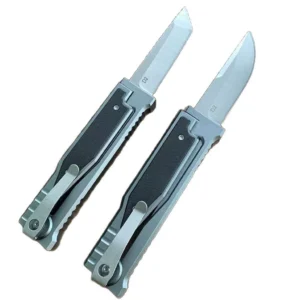
This is the most familiar method for folding knives. The pocket clip holds the knife near the pocket opening so it stays upright and is easy to grab. Front pocket carry is popular because it keeps the knife accessible while reducing the chance of sitting on it. It also works well for everyday users who want a simple, low-maintenance setup.
For buyers, look for a clip that has enough tension to hold the knife firmly, but not so much that it damages fabric or becomes hard to use. Deep-carry clips are often more discreet, while standard clips give a slightly faster draw.
Inside-pocket carry without a clip
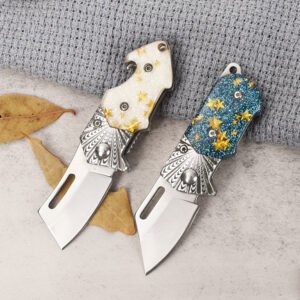
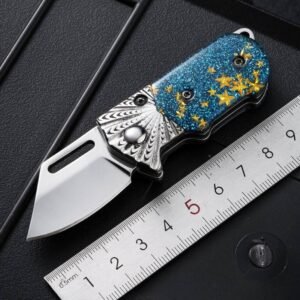
Some smaller knives are carried loose in a pocket or inside a dedicated pocket organizer. This can be comfortable, but it only works well if the knife has a secure lock and cannot open accidentally. Without a clip, the knife may shift around more, which can make it slower to find and easier to forget in laundry or bags.
This style can be useful for customers who want a cleaner look or who carry smaller folders with rounded edges. It is less ideal for people who move a lot during the day or need quick access.
Sheath carry on a belt or in a bag
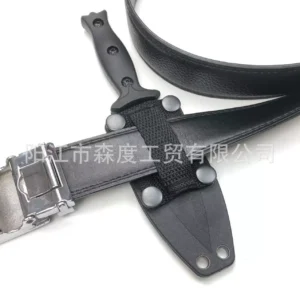
Sheath carry is more common with larger folding knives, multitools, or compact fixed blades, but some folders are sold with sheaths for extra protection. A sheath can keep the knife from rubbing against keys, coins, or other gear. It can also be a better choice for work environments where a pocket clip might snag.
For wholesale buyers, sheath options can be a selling point for outdoor, work, or preparedness customers. A sheath adds perceived value and can make the product easier to merchandise as a complete carry solution.
How to choose the right carry position
The best position is the one that fits your routine without creating discomfort or risk. Most people choose front pocket, back pocket, or belt-adjacent carry. Front pocket is usually the easiest to live with because it is accessible and less likely to be sat on. Back pocket carry is less common for folding knives because it can be less comfortable and may increase wear on the knife and pocket.
Consider these factors before deciding where to wear it:
- Comfort: A knife should not dig into your thigh, hip, or waist when seated.
- Retention: The knife should stay put during walking, bending, and lifting.
- Access: You should be able to retrieve it smoothly with one hand if needed.
- Concealment: Many users prefer a low-profile carry that does not print heavily through clothing.
- Clothing type: Jeans, work pants, tactical pants, and dress slacks all affect what carry method feels natural.
What to look for in a knife if you plan to wear it daily
Not every pocket knife is equally comfortable to carry. A knife designed for daily wear usually has a balanced weight, a pocket-friendly clip, and a handle that does not create sharp pressure points. Smooth handle contours matter more than many first-time buyers expect.
When evaluating models for your store or wholesale order, pay attention to these details:
- Clip style: Deep-carry clips and reversible clips appeal to different users.
- Handle thickness: Slim knives ride better in pockets and are easier to forget you are carrying.
- Blade length: Smaller blades are often easier to carry discreetly, though preferences vary by market.
- Opening mechanism: Thumb studs, flippers, and nail nicks each create a different user experience.
- Lock type: A secure, reliable lock adds confidence for everyday carry.
- Finish and material: Corrosion-resistant materials can be attractive for customers in humid or outdoor environments.
For wholesale sourcing, these features matter because they influence returns, repeat purchases, and customer satisfaction. A knife that carries well is often easier to sell than one that only looks good in photos.
Comfort and safety habits that matter every day
Wearing a pocket knife safely starts with making sure the blade is closed before it goes into your pocket. That sounds obvious, but it is worth checking every time, especially after use. Keep the knife clipped or stored so the opening mechanism is not pressed accidentally by coins, keys, or other items.
A few simple habits make a big difference:
- Inspect the lock and clip regularly for wear or looseness.
- Keep the knife clean so dirt does not affect opening and closing.
- Do not carry a knife loose with sharp tools or metal objects that can damage the edge or snag the blade.
- Use a pocket that is dedicated to the knife when possible.
- Store the knife safely when traveling through places with different rules or restrictions.
Local laws and workplace policies can vary, so it is wise to verify what is allowed in your area before carrying a knife daily. That is especially important for online resellers and distributors who may ship to multiple regions with different expectations.
Common mistakes people make when carrying a pocket knife
One of the biggest mistakes is choosing a knife that is too large for everyday use. A bulky folder may feel impressive in hand, but it can become annoying in a pocket. Another common issue is using a weak clip that lets the knife move around too much.
Other mistakes include:
- Carrying the knife in a pocket with loose change or keys
- Choosing a handle that is too slick or too squared off for comfortable carry
- Ignoring how the knife feels when sitting in a car, at a desk, or on a job site
- Forgetting that a knife may be subject to local restrictions
- Buying only for appearance and not for practical carry
For retailers, these are useful talking points because customers often ask why one knife feels better than another. The answer is usually not just blade size; it is the whole carry experience.
Buying considerations for retailers and wholesale customers
If you are stocking pocket knives for resale, think beyond blade steel and finish. Customers often decide based on how easy the knife is to wear all day. A product that carries comfortably is more likely to become a repeat seller.
Strong wholesale selections usually include a mix of:
- Compact folders for everyday pocket carry
- Models with deep-carry clips for discreet use
- Knives with textured but comfortable handles
- Options suited for work, outdoor, and general-purpose buyers
- Price points that make sense for impulse purchases and bulk orders
It can also help to offer a range of carry-friendly styles in your assortment so customers can choose what fits their clothing and routine. A well-rounded catalog gives your team more flexibility when advising first-time buyers and repeat customers alike.
Frequently asked questions
Where should I wear a pocket knife?
Most people wear a pocket knife in a front pocket because it is comfortable and easy to reach. Some prefer a sheath or bag carry. The best place depends on the knife and your daily routine.
Is it better to clip a knife or carry it loose?
Clipping is usually more secure and convenient for daily use. Loose carry can work for smaller knives, but it may be less stable and harder to retrieve quickly.
Can I wear a pocket knife every day?
Many people do, as long as the knife is comfortable, legal in their area, and carried responsibly. Always verify local rules and workplace policies before making it part of your daily routine.
What makes a pocket knife comfortable to wear?
A comfortable knife is usually slim, light enough for all-day carry, and fitted with a clip that holds it securely without creating pressure points. Handle shape matters a lot too.
Final thoughts
Wearing a pocket knife well is really about choosing a carry method that fits your life. The best setup is secure, comfortable, and easy to use without being in the way. For buyers and wholesale customers, the most practical products are the ones that people actually enjoy carrying every day. If you focus on clip quality, size, comfort, and responsible use, you will end up with knives that are easier to sell and better to own.