
Short answer
What is the difference between mini OTF knives and full size OTF knives? Compare blade length, handle size, grip, weight, pocketability, tasks, and tradeoffs in
Key Takeaways
- Knife rules can vary by state, city, blade style, opening mechanism, carry method, and intended use.
- Do not treat a product nickname as a legal category; check the actual features and local rule.
- Retailers should keep legal or safety language factual and avoid promising that one item is allowed everywhere.
Terms Used Here
- OTF
- Out-the-front; a knife design where the blade moves forward from the front of the handle.
- Automatic knife
- A knife that opens by a spring-driven mechanism after the user activates a button, switch, or slider.
In this article
- 01 What actually changes between mini and full size OTF knives
- 02 Grip and hand fit
- 03 Who notices the grip difference most?
- 04 Blade length and cutting tasks
- 05 Carry comfort and pocketability
- 06 Deployment feel
- 07 A realistic use example
- 08 Concrete examples with dimensions
- 09 Not the best choice when…
- 10 How to choose between them
- 11 FAQ
- 12 Which is better for everyday carry?
- 13 Which size suits large hands better?
- 14 Does mini mean weaker?
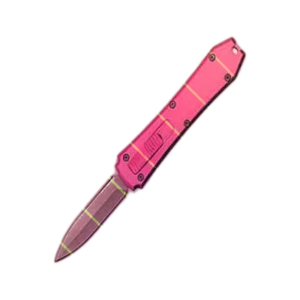
Direct answer: mini OTF knives are smaller, lighter, and easier to carry, while full size OTF knives offer a longer blade, a fuller grip, and better control for tougher or repeated cutting. In most cases, a mini is better for low-bulk everyday carry, and a full size is better when hand fit, reach, and cutting comfort matter more.
This is true when you compare the measurable factors that actually change in use: blade length, handle length, hand fit, task type, and carry context. Why this answer: it is based on common OTF product dimensions, basic ergonomics, and the practical differences users notice when carrying and cutting with smaller versus larger handles.
One important note near the top: “mini” and “full size” are informal categories, not fixed standards. One brand’s mini may be close to another brand’s compact regular model, so dimensions matter more than the label.
| Feature | Mini OTF knife | Full size OTF knife |
|---|---|---|
| Typical blade length | About 1.9 to 2.5 inches | About 3.0 to 3.75 inches |
| Typical handle length | About 3.5 to 4.25 inches closed | About 4.75 to 5.5 inches closed |
| Grip | Often 2 to 3 fingers for many adults | Usually a full 4-finger grip |
| Weight | Lighter, less noticeable in pocket | Heavier, more substantial in hand |
| Pocketability | Better for slim pockets and light clothing | Better in jeans, work pants, jackets |
| Best tasks | Opening packages, tape, light daily utility | Cardboard, thicker material, repeated cutting |
| Main limitation | Shorter grip and less leverage | More bulk and more pocket presence |
What actually changes between mini and full size OTF knives
The biggest difference is not just blade length. It is the combination of cutting reach plus handle control.
A mini OTF usually disappears in the pocket and feels easy to carry all day. The tradeoff is that the shorter handle gives you less room for your fingers and less leverage during cuts. A full size OTF gives you more edge length and a more secure hold, but it takes up more space and feels more noticeable in daily carry.
That means the size choice is really about balance:
- Mini OTF: easier to carry, less grip, lighter-duty feel
- Full size OTF: easier to control, more reach, more pocket bulk
For many users, that is the simplest way to answer the question.
Grip and hand fit
If you want to know whether a mini or full size OTF will feel better in use, look at handle length first.
On many mini OTF knives, the handle is short enough that adults with medium to large hands may only get a partial grip. That can be perfectly fine for quick, light jobs, but it may feel cramped if you cut for more than a few seconds at a time. Thumb placement can also feel tighter because the firing switch and the available grip area are packed into a smaller frame.
Full size OTF knives usually give more room for all four fingers. That fuller grip improves control, especially when cutting thicker material or when your hands are larger. It can also make the knife feel steadier during deployment and retraction because the handle gives you more to hold onto.
In simple terms: mini OTFs fit the pocket better, while full size OTFs often fit the hand better.
Who notices the grip difference most?
- Users with large hands
- People wearing work gloves
- Anyone doing repeated cuts instead of occasional quick cuts
Blade length and cutting tasks
Blade length changes how much edge you can use and how easily the knife reaches through material.
A mini OTF is usually enough for opening mail, slicing tape, trimming loose material, or handling small package tasks. For those jobs, the smaller blade is often all you need. The advantage is that you carry less knife than a full size model.
A full size OTF is more comfortable when the task gets larger or more repetitive. More blade length means more usable edge, and the longer handle usually helps you guide the cut with better control. If you are breaking down boxes, cutting thicker cardboard, or doing repeated utility cuts, the larger format generally feels less cramped and less fussy.
This does not mean mini OTF knives are weak by definition. It means they are sized for lighter or shorter-duration tasks. A well-made mini can still be useful; it just has less reach and less leverage than a full size model.
Carry comfort and pocketability
Carry comfort is where mini OTF knives usually win.
Because they are shorter and lighter, minis tend to work better in dress pants, athletic shorts, smaller pockets, or lightweight summer clothing. They print less, swing less in the pocket, and generally feel easier to forget about during the day.
Full size OTF knives are more noticeable. That is not always a problem. In jeans, cargo pants, jackets, or workwear, the extra size may feel completely normal. But if your priority is discreet carry and low weight, a mini usually has the advantage.
This is why two people can look at the same pair of knives and make different choices. One values cutting comfort; the other values carry comfort.
Deployment feel
Mini and full size OTF knives can also feel different when you fire the blade.
On a mini, the shorter body can make the action feel quick and compact. But because the handle is smaller, users with larger thumbs or hands may find the switch area less forgiving. The knife may work fine mechanically, yet still feel less comfortable to operate because there is less room to anchor your grip.
On a full size OTF, the larger handle usually gives better purchase during deployment. Many users find this easier to control. The tradeoff is that the knife may feel more substantial in hand, and the switch travel can feel more deliberate simply because the overall body is larger.
So if someone says a mini feels “snappy” and another person says a full size feels “more secure,” both can be right.
A realistic use example
Imagine two users with different daily routines.
User A carries in office clothes and mostly opens padded mailers, tape, and small boxes. A mini OTF with a 2.1-inch blade and a 3.8-inch handle makes sense because it stays unobtrusive and handles those light tasks well. The main constraint is grip: if that user has large hands, the handle may feel tight.
User B wears jeans or work pants and regularly breaks down shipping boxes. A full size OTF with a 3.3-inch blade and a 5.0-inch handle is usually the better fit because it offers more edge length and a fuller grip for repeated cuts. The main constraint is pocket bulk: it will feel more noticeable all day.
That example shows the real difference better than the labels alone. Mini is not just smaller; it changes how the knife carries and how it behaves in the hand.
Concrete examples with dimensions
Here are a few quick comparisons that show the tradeoffs clearly:
- Mini example: 2.0-inch blade, 3.7-inch handle. Good for envelope cuts, tape, and very light daily tasks. Limitation: many adults will not get a full grip.
- Mini example: 2.4-inch blade, 4.1-inch handle. Better edge length than very small minis, but still aimed at compact carry. Limitation: less comfortable for repetitive cardboard work.
- Full size example: 3.2-inch blade, 4.9-inch handle. Good balance of daily carry and real utility cutting. Limitation: more visible in slim clothing.
- Full size example: 3.75-inch blade, 5.3-inch handle. Better for larger hands and bigger cutting tasks. Limitation: may feel too large for users who want minimal pocket footprint.
Not the best choice when…
A mini OTF is not the best choice when you have large hands, wear gloves, want a full four-finger grip, or expect to cut thicker material often. It is also less ideal if you dislike cramped controls or need more leverage.
A full size OTF is not the best choice when your main priority is discreet carry, low weight, or comfort in small pockets and light clothing. It can also feel like more knife than you need for simple package-opening tasks.
How to choose between them
If you are deciding between mini and full size, use these five checks:
- Blade length: Do you need just enough edge for light utility, or more reach for bigger cuts?
- Handle length: Will your hand fit the grip comfortably?
- Task type: Occasional package opening or repeated cutting work?
- Carry context: Dress pants and light pockets, or jeans and workwear?
- Hand size: Small and medium hands often tolerate compact handles better than large hands do.
If you want to compare current sizes visually, an OTF automatic knife catalog is most useful when you sort by blade length and closed length rather than by photos alone.
FAQ
Which is better for everyday carry?
For light-duty everyday carry, a mini OTF is often better because it is lighter and easier to pocket. For users who cut more often or want a fuller grip, a full size OTF may be the better everyday carry choice.
Which size suits large hands better?
Full size OTF knives usually suit large hands better because they provide more handle length and a more secure grip.
Does mini mean weaker?
No. Mini usually means smaller and less suited to hard or repeated cutting, not automatically weaker in quality. The main difference is reduced leverage, shorter edge length, and less grip area.