

What Steel Is Commonly Used in OTF Knives? A Wholesale Buyer’s Guide

Short answer
Learn which steels are commonly used in OTF knives, how blade steel differs from handle and internal hardware materials, and what wholesale buyers should inspec
In this article
- 01 Which steels show up most often in OTF knife blades?
- 02 Why steel choice works differently on an OTF than on other knives
- 03 What matters most when choosing steel for wholesale OTF orders
- 04 How to inspect steel claims on an OTF before you buy in volume
- 05 Common mistakes buyers make when evaluating OTF knife steel
- 06 Is D2 common in OTF knives?
- 07 Is 440C still a good choice for OTF knives?
- 08 What is the best steel for an OTF knife?
- 09 Do OTF knives need different material evaluation than folding knives?
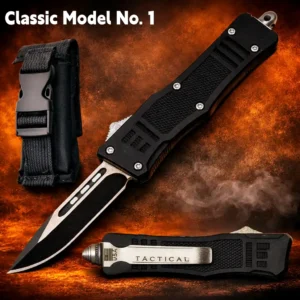
The steel most commonly used in OTF knives is stainless blade steel, especially D2, 440C, AUS-8, and mid-range powder steels in better-spec models. For wholesale buyers, the right choice depends less on the steel name alone and more on how that steel performs in an OTF’s fast-moving, narrow-tolerance mechanism.
That distinction matters because an OTF knife is not evaluated like a simple fixed blade or even a side-opening automatic. Buyers need to judge blade steel, handle material, and internal hardware separately. A blade can have a marketable steel name, but if the grind is rough, the heat treatment is inconsistent, or the mechanism drags under debris, the knife will still generate returns.
When you compare OTF knife models, the most common steel mix in the market usually looks like this: stainless or semi-stainless tool steel for the blade, aluminum alloy for the handle, and stainless steel or hardened steel for springs, rails, and lock-related components. In other words, the blade steel gets the label, but the whole knife lives or dies by the interaction between materials.
Which steels show up most often in OTF knife blades?
In today’s OTF market, four blade steel groups appear again and again.
- D2: Very common in value-focused and mid-range OTF knives. Buyers choose it because it offers strong wear resistance and edge retention at a workable cost. The tradeoff is lower corrosion resistance than true stainless steels, so it needs better finishing and more careful storage.
- 440C: A long-running stainless choice for production automatics. It is easier to maintain than D2, familiar to many retail buyers, and usually a safer choice for humid climates or general-use inventory.
- AUS-8 or similar stainless steels: Common in price-sensitive programs where easy sharpening and corrosion resistance matter more than long edge life. This can be acceptable for entry-level OTFs if the action is reliable and the finish is clean.
- Powder metallurgy steels such as CPM S35VN or similar upgrades: More common in premium OTFs. These steels help justify higher retail pricing, but only when the rest of the knife matches the claim with tighter fit, better machining, and cleaner firing action.
For most wholesale programs, D2 and 440C are the practical center of the market. They are common because they balance cost, recognizability, and workable field performance. Premium steels can help a private-label line stand out, but they are not automatically the best choice for every OTF SKU.
A useful wholesale rule is this: on an OTF, a well-executed 440C or D2 knife often sells better and returns less than a poorly built knife with a more impressive steel stamp.
Why steel choice works differently on an OTF than on other knives
OTF knives place different stresses on the blade and internal parts than manual folders or fixed blades. The blade repeatedly fires and retracts through a track. That means buyers should care about surface finish, lockup behavior, and friction points in a way that is less critical on many ordinary knives.
On a manual folding knife, buyers may focus heavily on edge retention and lock strength. On an OTF, they also need to inspect whether the blade cycles smoothly, whether the finish resists drag in the channel, and whether the blade tip and tang geometry stay consistent after repeated use. Even a good steel can feel cheap if the blade rubs, misfires, or develops excessive play.
This is why OTF material decisions should be split into roles:
- Blade steel: Determines corrosion resistance, edge retention, toughness, and sharpening behavior.
- Handle material: Usually aluminum alloy in production OTFs, because it keeps weight down and machines well for the internal track.
- Internal hardware: Springs, rails, screws, and lock-contact surfaces need durability and consistency more than marketing appeal.
One common buying mistake is to ask only, “What blade steel is it?” and not, “What are the rails, spring setup, and handle tolerances like?” In OTF knives, those questions belong together.
What matters most when choosing steel for wholesale OTF orders
The best steel choice depends on the customer segment and the intended retail price. Here is a practical decision flow.
- If the line is value-driven: AUS-8 or 440C can make sense when corrosion resistance, easy maintenance, and lower landed cost matter more than maximum edge retention.
- If the line targets enthusiasts at a mid-range price: D2 is common because it sounds stronger to many buyers and usually holds an edge longer in ordinary cutting tasks.
- If the line needs premium shelf appeal: A powder steel can support the position, but only if the action, finish, and machining are visibly better when customers fire and retract the knife.
For OTF buying, the steel should match the use case:
- Warehouse, utility, and general EDC sales: 440C and D2 are often the most commercially sensible.
- Humid-region or marine-adjacent retail: A more corrosion-resistant stainless option is usually the safer bet than D2.
- Gift, collector, or premium display channels: Upgraded steel helps, but visible machining quality and crisp actuation matter just as much.
A concrete example: a distributor may compare two similar OTFs, one in D2 and one in 440C. If the D2 model has a rough stonewash, slight drag marks after cycling, and inconsistent lockup, while the 440C model fires cleanly and shows better finish consistency, the 440C knife is usually the better wholesale buy. The end user notices action problems before they notice metallurgical nuance.
Normal vs warning sign:
- Normal: Slight blade wiggle that stays consistent, clean firing sound, no scraping feel when you cycle the action.
- Warning sign: Increasing side play, visible rub lines after limited cycling, failed retraction, or a gritty switch that changes from sample to sample.
How to inspect steel claims on an OTF before you buy in volume
Wholesale buyers do not need a lab to make better material decisions, but they do need a disciplined sample inspection routine. For OTFs, inspect the knife as a system, not just as a blade blank.
- Fire and retract the knife repeatedly: Listen for consistency. A clean, repeatable action tells you more than a steel label alone.
- Inspect the blade finish: Look for uneven grinds, overheated edge discoloration, rough plunge lines, or drag marks forming in the same contact area.
- Wiggle the blade in open position: Some movement is normal on many OTFs, but compare samples. Variation between units is a bigger concern than the existence of slight play.
- Compare edge behavior after light cutting: Cut cardboard, strap, or common packing material. Then inspect for rolling, chipping, or fast dulling. This gives a practical read on heat treatment quality.
- Inspect screw fit and handle machining: Poorly machined handles can create alignment issues that customers may wrongly blame on the blade steel.
- Cycle multiple samples, not one hero sample: OTF quality problems often show up in consistency gaps across a batch.
A common failure mode in lower-grade OTFs is not dramatic blade breakage. It is more often a combination of rough action, finish wear inside the track, and inconsistent lock engagement. Buyers sometimes misread this as a “bad steel” issue when it is really a materials-and-tolerance issue.
If you need to verify what materials are actually being used in a program, it is smart to send a direct material and MOQ inquiry and ask for blade steel, handle alloy, and internal hardware details in one request. That keeps the conversation tied to the actual build, not just the blade marking.
Common mistakes buyers make when evaluating OTF knife steel
- Overbuying premium steel for a basic retail channel: If the customer mainly wants a dependable automatic utility knife, the extra steel cost may not improve sell-through.
- Treating D2 as stainless: It is popular and useful, but it is less forgiving around moisture and fingerprints than true stainless options.
- Ignoring internal materials: A blade steel upgrade does not fix weak springs, poor rails, or sloppy handle machining.
- Judging by etching alone: A marked steel name is not proof of good heat treatment or reliable production consistency.
- Testing only edge sharpness out of the box: A very sharp sample can still become a return problem if the knife misfires after routine cycling.
The strongest buying thesis is simple: the most common and commercially useful steels in OTF knives are D2 and stainless grades like 440C, but the best wholesale choice is the one that stays consistent through repeated firing, retracting, and everyday cutting.
Is D2 common in OTF knives?
Yes. D2 is one of the most common steels in value and mid-range OTF knives because it offers good wear resistance and a strong marketable spec at a manageable cost.
Is 440C still a good choice for OTF knives?
Yes. 440C remains a practical OTF blade steel because it is stainless, familiar to buyers, and often easier for end users to maintain than D2.
What is the best steel for an OTF knife?
There is no single best steel for every OTF. For wholesale buying, the best choice is the steel that matches the price point, intended environment, and mechanism quality of the knife.
Do OTF knives need different material evaluation than folding knives?
Yes. Because the blade travels through an internal track, buyers should inspect cycling, finish wear, lockup consistency, and internal hardware quality more closely than they would on many standard folders.