

Which OTF Knife Style Is Easiest to Sell in Local Markets?

Short answer
The easiest OTF knife style to sell in local markets is usually a medium-size double-action drop point with a plain edge and neutral handle. Learn the buying cr
Key Takeaways
- Knife rules can vary by state, city, blade style, opening mechanism, carry method, and intended use.
- Do not treat a product nickname as a legal category; check the actual features and local rule.
- Retailers should keep legal or safety language factual and avoid promising that one item is allowed everywhere.
Terms Used Here
- OTF
- Out-the-front; a knife design where the blade moves forward from the front of the handle.
- Automatic knife
- A knife that opens by a spring-driven mechanism after the user activates a button, switch, or slider.
In this article
- 01 Three selection criteria that actually decide sell-through
- 02 1. Familiar blade profile
- 03 2. Low-friction ownership
- 04 3. Broad display appeal
- 05 The style most buyers should start with
- 06 Best for different buyer types, not one absolute winner
- 07 Best for hardware, outdoors, and utility-heavy retail
- 08 Best for tactical shops and enthusiast counters
- 09 Best for gift-focused and general retail
- 10 Best for private-label buyers
- 11 Tradeoffs: when not to choose the standard drop point OTF
- 12 Mistakes that slow sales and the checklist to use before ordering
- 13 What to verify with the supplier
- 14 FAQ
- 15 Is a dagger OTF harder to sell than a drop point?
- 16 Should I stock plain edge or serrated OTF knives first?
- 17 What size OTF sells best for first orders?
- 18 Are bright handle colors worth stocking?
- 19 What is the safest first wholesale mix?
The easiest OTF knife style to sell in local markets is usually a medium-size double-action OTF with a drop point blade, plain edge, and neutral black handle. For wholesale buyers, that style moves fastest because it is simple to explain at the counter, fits the widest range of everyday buyers, and creates fewer objections about blade shape, edge maintenance, and carry comfort.
If you are buying for resale, the goal is not to find the most dramatic OTF. The goal is to buy the style that needs the least customer education, has the fewest return triggers, and works across mixed demand from first-time OTF buyers, gift shoppers, and repeat knife customers. In most local markets, that means avoiding extremes and choosing a balanced platform.
Three selection criteria that actually decide sell-through
When dealers ask which OTF style is easiest to move, the answer usually comes down to three named criteria: familiar blade profile, low-friction ownership, and broad display appeal. These are observable buying factors, not guesswork.
1. Familiar blade profile
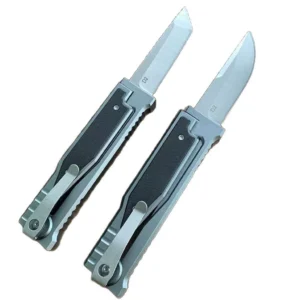
A drop point is the safest commercial choice because customers already understand it. It looks useful, not specialized. It can be explained in one sentence: good for everyday cutting, general utility, and gift buying. By contrast, daggers, tantos, and highly aggressive grinds often need more explanation and attract a narrower buyer type.
- Drop point: easiest to demonstrate for utility and everyday carry.
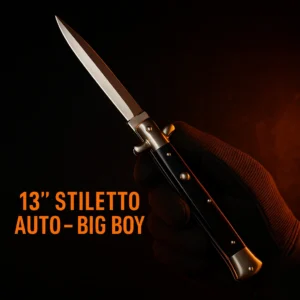
- Dagger: strong visual appeal, but more polarizing and less practical for some buyers.
- Tanto: good for buyers who want a tactical look, but less universal at the counter.
- Serrated or combo edge: adds maintenance questions and can slow impulse purchases.
2. Low-friction ownership
The easiest style to sell is also the easiest to live with. Medium-size double-action OTFs with plain edges and standard aluminum handles usually create fewer post-sale issues. They are easier to sharpen, easier to clean, and easier for a broad range of users to carry comfortably.
Low-friction ownership also means the action should feel consistent without requiring the buyer to understand special maintenance routines. A wholesale-friendly OTF should open and retract with predictable switch pressure, have a practical pocket clip, and avoid unusual finishes that show wear too quickly in glass-case retail.
3. Broad display appeal
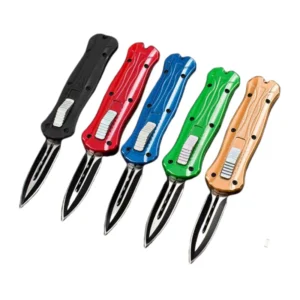
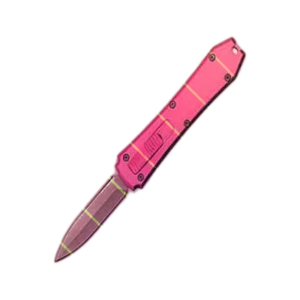
In local stores, the knife has to sell from a short interaction. Neutral colors, medium dimensions, and a clean blade finish usually outperform louder combinations because they work for more customers. Black handles and stonewashed or satin blades are easier to merchandise than bright colors, mirror finishes, or novelty graphics.
A quotable rule for buyers is this: the easiest local-market OTF is the one that looks useful before it looks collectible. Utility-first styling broadens the buyer pool.
The style most buyers should start with
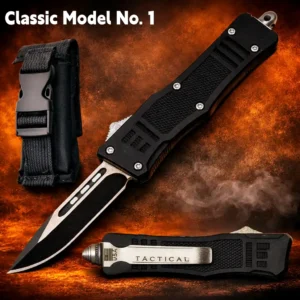
For most resellers, the best starting point is a double-action OTF, medium body size, drop point blade, plain edge, black handle, and working finish blade. If you are reviewing OTF knife buying options, this is the configuration that usually deserves the deepest initial buy.
Here is why this style is commercially easier to move:
- Double-action operation is easier to explain: one switch deploys and retracts the blade, which reduces customer hesitation.
- Medium size fits more hands and pockets: oversized OTFs attract attention but narrow the buyer pool.
- Drop point broadens use cases: customers can picture opening boxes, cutting cord, and routine utility work.
- Plain edge reduces sharpening objections: fewer buyers walk away because they do not want serrations.
- Neutral handle color makes gifting easier: black is safe for first-time buyers and easier for stores to stock in depth.
- Practical finish hides wear: stonewashed or satin blades present better over time than highly polished surfaces.
This is not the flashiest OTF style, but it is often the easiest to restock with confidence because the sales pitch is short and the buyer profile is wide.
Best for different buyer types, not one absolute winner
There is no single OTF style that fits every local market. The right inventory mix depends on who walks into your store and how much explanation your staff can provide. Use these commercial fit recommendations instead of chasing one universal answer.
Best for hardware, outdoors, and utility-heavy retail
Choose a medium-size double-action drop point with plain edge. Commercial reason: these customers respond to practical tools, and this style looks useful immediately. It also generates fewer questions about sharpening and everyday carry.
Best for tactical shops and enthusiast counters
Keep the drop point as the core stock, then add a smaller number of dagger or tanto variants. Commercial reason: enthusiasts like visual variety, but a store still needs a dependable base style that sells to walk-in buyers who are not collectors.
Best for gift-focused and general retail
Choose neutral-color handles, plain edges, and clean blade finishes. Commercial reason: gift buyers want something that feels premium without looking too specialized. A black or dark gray handle with a non-reflective blade is easier to approve quickly.
Best for private-label buyers
Start with a simple medium-body platform with broad logo placement area. Commercial reason: private-label programs work better on styles with repeatable mass appeal, fewer finish defects visible at inspection, and packaging that can support gift and utility positioning.
Tradeoffs: when not to choose the standard drop point OTF
The medium-size plain-edge drop point is easiest to sell in many local markets, but it is not always the best lead item.
- Do not lead with it if your store is built around collector traffic: a collector-heavy market may expect more distinctive blade shapes, premium handle textures, or limited-look finishes.
- Do not overbuy one neutral variant if your case depends on visual excitement: some stores need a few eye-catching pieces to start conversations, even if those are not the fastest repeat sellers.
- Do not choose the cheapest possible version of the style: a familiar configuration still fails if the switch feels rough, blade play is excessive, or the clip is weak. Returns erase margin fast.
- Do not ignore local legal constraints: automatic knife rules vary by state and municipality, and local enforcement climate matters for sell-through.
In other words, the easiest style to sell is only easy if the execution is sound. A practical shape cannot rescue poor fit, poor action, or poor compliance planning.
Mistakes that slow sales and the checklist to use before ordering
Wholesale buyers lose momentum when they buy OTFs that look exciting in photos but create friction at retail. The most common mistakes are avoidable.
- Buying too many serrated blades: they narrow the audience and add edge-maintenance objections.
- Leading with oversized models: large OTFs draw attention but often convert more slowly in general retail.
- Mixing too many colors in the first order: inventory gets fragmented before you know which finish your market actually wants.
- Ignoring switch feel: if deployment force is inconsistent across units, customers notice immediately at the counter.
- Underchecking clip tension and carry depth: pocket clip complaints are common and highly visible in store handling.
- Skipping legal review: if staff cannot explain local sale and carry realities clearly, customers hesitate.
Use this short procurement checklist before placing a larger order or requesting customization through a bulk quote request.
What to verify with the supplier
- Action consistency: ask whether switch force and deployment reliability are checked unit by unit or by batch sampling.
- Blade steel and finish: confirm the exact steel, finish type, and whether the finish helps hide handling marks.
- Edge configuration: specify plain edge if you want the broadest local-market appeal.
- Handle material: verify whether the body is aluminum, zinc alloy, or another material that affects weight and perceived quality.
- Clip hardware: ask about screw security, replacement availability, and whether the clip is reversible or fixed.
- Packaging: check whether the box presentation supports gift sales or private-label relabeling.
- Compliance and labeling: confirm any warnings, age-gating practices, and invoice descriptions needed for your market.
- Spare parts or warranty process: know in advance how misfires, broken clips, or cosmetic defects are handled.
A practical buying rule is simple: if you cannot explain why a feature helps retail sell-through, do not pay extra for it in the first order.
FAQ
Is a dagger OTF harder to sell than a drop point?
Usually yes in general local retail. A dagger has strong visual appeal, but a drop point is easier to position as an everyday utility knife and tends to draw fewer practical objections.
Should I stock plain edge or serrated OTF knives first?
Start with plain edge. It fits the widest range of buyers, is easier to sharpen, and reduces explanation time at the counter.
What size OTF sells best for first orders?
Medium-size models are the safest starting point. They balance pocketability, hand feel, and display presence better than very small or oversized bodies.
Are bright handle colors worth stocking?
Only after you establish your core sellers. Neutral colors such as black or dark gray are easier to gift, easier to merchandise, and safer for deeper inventory positions.
What is the safest first wholesale mix?
Build around one dependable medium-size double-action drop point with plain edge and neutral handle, then test a small number of tactical-looking variants for display interest. That approach protects cash flow while still giving your case some variety.