

Which OTF Knives Are Best for Wholesale?

Short answer
A practical guide to the best OTF knives for wholesale, with a buyer comparison table, sample test protocol, QC risks, MOQ bands, lead-time ranges, and channel-
Key Takeaways
- Knife rules can vary by state, city, blade style, opening mechanism, carry method, and intended use.
- Do not treat a product nickname as a legal category; check the actual features and local rule.
- Retailers should keep legal or safety language factual and avoid promising that one item is allowed everywhere.
Terms Used Here
- OTF
- Out-the-front; a knife design where the blade moves forward from the front of the handle.
In this article
- 01 Quick comparison: best wholesale OTF types by buyer need
- 02 What kind of OTF knife usually performs best in wholesale?
- 03 Best OTF wholesale picks by buyer type
- 04 1. Entry-price buyer: basic double-action platform
- 05 2. Core mid-tier buyer: standard-spec double-action seller
- 06 3. Premium buyer: upgraded steel or finish, limited depth
- 07 4. Private-label buyer: simple chassis with stable QC
- 08 What sample test protocol should wholesale buyers use?
- 09 What MOQ and lead-time ranges are realistic?
- 10 When does the top answer change by sales channel?
- 11 Online retail and marketplaces
- 12 Distributors serving mixed dealers
- 13 Brick-and-mortar specialty retail
- 14 Private-label and brand builders
- 15 Common wholesale mistakes to avoid
- 16 What is a workable first assortment?
- 17 Limitations
- 18 FAQ
- 19 What blade shape is safest for wholesale OTF buying?
- 20 How many cycles should an OTF sample survive before approval?
- 21 Should new buyers start with private-label OTF knives?
The best OTF knives for wholesale are usually mid-priced double-action models built on simple, repeatable platforms: common blade shapes, aluminum handles, standard finishes, and packaging that survives parcel shipping. That answer is based on concrete wholesale criteria rather than hype: sample cycle testing, ranked return drivers, acceptable defect thresholds, MOQ and lead-time ranges, and landed-margin math.
Methodology note: the rankings and thresholds in this guide are not presented as market-wide facts. They are house buying heuristics drawn from typical wholesale review inputs: pre-order sample checks, supplier QC sheets, incoming inspection patterns, packaging tests, and supplier quote ranges commonly used in OTF sourcing decisions. Treat them as planning ranges to validate with your own samples and supplier audits.
In practice, most buyers are not looking for the most exotic OTF. They are looking for the knife that can be reordered with the same switch feel, similar blade play, consistent color, and fewer customer complaints. For that reason, the strongest wholesale picks tend to win on four named criteria: sell-through, reorder rate, return risk, and margin fit.
Quick comparison: best wholesale OTF types by buyer need
| Archetype | Best for | Typical price band | Key QC risk | MOQ range | Core or test SKU? |
|---|---|---|---|---|---|
| Entry-price DA OTF | Value retail, promotions, first trial orders | Opening-price wholesale tier | Misfire risk and rough switch break-in | 24-100 per SKU | Test first; can become core if action is stable |
| Core mid-tier DA OTF | Broad retail, mixed dealers, repeat wholesale programs | Mid-priced wholesale tier | Consistency between batches more than one-off defects | 50-200 per SKU or mixed starter orders | Best core SKU for most buyers |
| Premium limited-run OTF | Specialty retail, collector-leaning accounts, margin layering | Upper mid to premium tier | Cosmetic claims on coatings, upgraded finishes, and tighter buyer expectations | Small runs to 100+ | Test SKU, not first foundation item |
| Private-label simple chassis | Brand builders, custom packaging, logo programs | Varies by spec and packaging | Lead-time drift, artwork delays, tolerance repeatability across runs | 100-300 for logo work; 300-1,000+ for fuller customization | Core only after sample approval and pilot run |
Recommended sample protocol by type: test at least 2 units per shortlisted stock SKU; use 200-300 cycles per sample for trial items and about 500 cycles for any candidate core SKU. For private-label projects, approve both knife samples and final packaging mockups before committing to launch dates.
What kind of OTF knife usually performs best in wholesale?
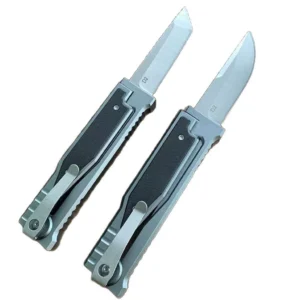
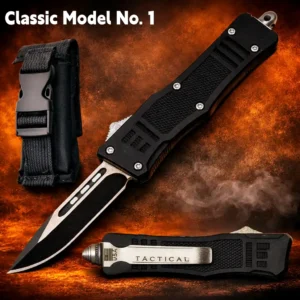
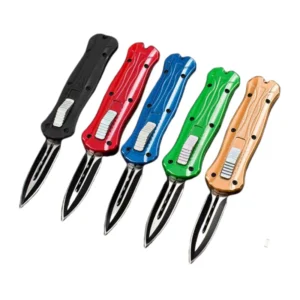
If you need one default answer, start with a double-action OTF in the mid-price band with a drop point, tanto, or dagger blade; a black, gray, or earth-tone anodized handle; and a plain or stonewashed blade finish. This type of SKU is easier to photograph, easier to explain to end buyers, and less likely to create cosmetic claims than coated, oversized, or highly decorative variants.
Using the evidence basis above, the most common return drivers in OTF review work typically rank like this:
- Misfire or incomplete lockup after repeated use
- Switch feel problems such as gritty travel, excessive stiffness, or inconsistent spring force
- Cosmetic defects including uneven anodizing, coating marks, or mismatched hardware finish
- Blade play complaints beyond what the end customer expected for the price tier
- Packaging damage from weak inserts, crushed corners, or clip or switch contact inside the box
That is why a plain, stable platform often beats a flashy sample. If you are comparing current options, a wholesale OTF knife catalog is most useful when you filter first by mechanism consistency, finish simplicity, and reorder suitability rather than appearance alone.
Best OTF wholesale picks by buyer type
1. Entry-price buyer: basic double-action platform
Best for value retail, promotions, and price-sensitive online sellers. The strongest fit is usually a compact or mid-size OTF with aluminum handle scales, a standard clip, and minimal finish complexity.
Pros: easier landed-cost control, broader price accessibility, lower cosmetic expectations.
Risks: lower-cost OTFs can hide tolerance issues, especially in switch smoothness and lockup consistency after break-in.
Buy if: you can sample aggressively and keep the first order narrow.
2. Core mid-tier buyer: standard-spec double-action seller
This is the safest broad-market segment and the answer for most wholesale buyers. Think neutral handle colors, common blade profiles, clean machining, and no extra decorative milling.
Pros: best balance of sell-through, reorder rate, return risk, and margin fit.
Risks: batch-to-batch consistency matters more than sample attractiveness, so review repeatability, not just one good pre-production unit.
Buy if: you want a dependable core line that works across online retail, mixed dealers, and many specialty accounts.
3. Premium buyer: upgraded steel or finish, limited depth
Premium OTFs can work well for specialty retailers or collector-leaning channels, but usually as a smaller layer above your core assortment. Higher-end coatings, special finishes, or upgraded blade materials can lift ticket price, but they also raise return sensitivity.
Pros: stronger margin per piece, visual differentiation, better upsell value.
Risks: more cosmetic claims, narrower audience, slower replenishment planning.
Buy if: your base line already works and you need a premium add-on rather than a first-volume SKU.
4. Private-label buyer: simple chassis with stable QC
For private label, the best OTF is not always the sample with the most visual impact. It is the platform that can hold tolerances across repeat runs while accepting logo marking, packaging changes, and compliance labeling without creating avoidable delays.
Pros: brand control, better assortment identity, room for packaging upgrades.
Risks: artwork revisions, packaging approvals, and production drift can turn a simple launch into a delayed one.
If you are moving toward branding, the OTF bulk inquiry form is most useful early in the process, when you still need to confirm MOQ structure, logo method, packaging steps, and what the quoted lead time actually starts from.
What sample test protocol should wholesale buyers use?
A real OTF buying decision should include at least 2 sample units per shortlisted SKU. For any item expected to become a core seller, more samples are better than a deeper first PO on unproven stock.
- Cycle test: 200-300 open-close cycles per sample for stock buys; about 500 cycles for a likely core repeat item
- Switch check: test with dry hands and light gloves; note rough spots, thumb hot spots, and force inconsistency
- Blade play check: compare all samples, not just one unit
- Lockup check: watch for failures to fully deploy or retract after repeated cycling
- Clip check: test retention on denim and standard workwear fabric
- Finish check: inspect under direct light for grind asymmetry, coating streaks, anodizing mismatch, and hardware color variance
- Packaging check: do a simple drop test and confirm the knife does not move enough to mark the interior or damage the switch area
As a house rule for planning, many buyers treat mechanical defects above 1%-2% as a warning sign on OTF programs, while cosmetic defects above 3%-5% can become costly depending on channel and price tier. These are not universal standards; they are review thresholds to discuss with suppliers before scale orders.
What MOQ and lead-time ranges are realistic?
These ranges are planning bands based on common wholesale quoting patterns, not universal supplier terms:
- Stock models: often 24-100 pieces per SKU
- Mixed-carton starter orders: often 50-200 total pieces across several SKUs
- Laser logo on a stock item: often starts around 100-300 pieces
- Custom packaging or private-label setup: commonly 300-1,000+ pieces depending on print and box complexity
Lead time usually breaks into three practical tracks:
- In-stock standard goods: roughly 3-10 business days to dispatch after payment and final confirmation
- Stock item with logo or packaging edits: often 2-5 weeks
- Private-label production: commonly 30-60 days, sometimes longer if artwork or inserts need revision
One of the easiest buying mistakes is failing to ask whether the lead time starts from deposit, artwork approval, or packaging approval. On OTF programs, that detail changes launch planning more than many buyers expect.
When does the top answer change by sales channel?
Online retail and marketplaces
Favor neutral colors, standard blade shapes, and packaging that presents well in photos. Stonewashed or plain finishes usually create fewer appearance disputes than glossy coatings.
Distributors serving mixed dealers
Choose a small number of dependable mid-tier OTFs with stable replenishment. Three reliable sellers usually outperform a wide assortment of experimental variants.
Brick-and-mortar specialty retail
In-store buyers can support one premium layer, but switch comfort and perceived solidity matter more because the product is handled before sale.
Private-label and brand builders
Prioritize platform repeatability over visual complexity. Standard screws, stable anodizing, and box dimensions that do not change are usually more valuable than aggressive styling.
Common wholesale mistakes to avoid
- Buying the flashiest sample instead of the most repeatable one
- Approving only one sample unit and assuming batch consistency
- Using premium coatings as a launch SKU before proving action consistency
- Ignoring packaging movement inside the box, which can create avoidable transit claims
- Starting private label too early before a stock platform has shown reorder stability
What is a workable first assortment?
These are heuristics, not universal rules, but they are a practical starting point:
- 3-5 base SKUs
- 2 handle colors per core SKU, led by black or dark gray
- 1 blade finish for entry tier, 1-2 for mid-tier
- One opening price point, two mid-tier sellers, and one premium or private-label-ready platform
- At least 2 tested samples per chosen SKU before scaling
Before final approval, return to the same evidence basis used at the start: cycle-test results, defect thresholds, MOQ structure, lead-time definition, packaging performance, and landed margin after a realistic defect allowance. Those inputs are more reliable than general claims about what is “best.”
Limitations
- Legal availability and shipping rules vary by destination, so the right assortment can change by market.
- Defect tolerance differs by channel; specialty retail may reject cosmetic issues that value channels will accept.
- MOQ and lead-time ranges above are planning bands, not universal supplier terms.
FAQ
What blade shape is safest for wholesale OTF buying?
Drop point and standard tanto are usually the safest starting shapes because they are easier to position for broad retail demand than oversized or novelty profiles.
How many cycles should an OTF sample survive before approval?
Use 200-300 cycles per sample as a minimum, and about 500 cycles for any SKU expected to become a core repeat item.
Should new buyers start with private-label OTF knives?
Usually not. Most new buyers are better served by proving one or two stock platforms first, then moving into logo marking or custom packaging once reorder stability is clear.
Verdict: for most wholesale buyers, the best OTF knives are mid-priced, double-action, neutral-color, standard-blade platforms with proven action consistency and low cosmetic complexity.