




What Is a Flick Knife? A Clear Guide for Buyers and Retailers

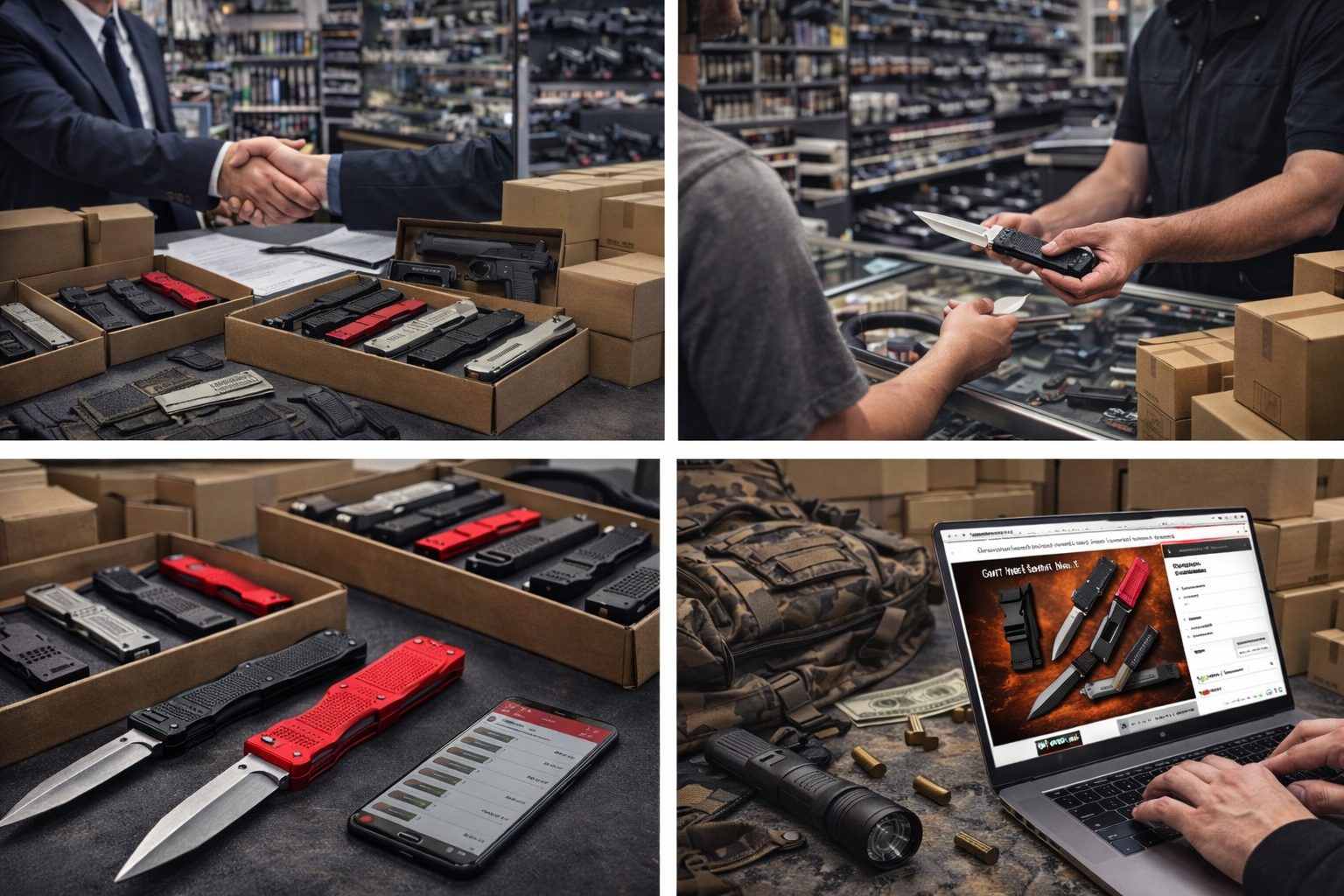
A flick knife is a folding knife designed so the blade can be opened quickly with one hand, usually by pressing a button, sliding a switch, or using a spring-assisted mechanism. People often use the term to describe automatic knives and similar quick-opening styles, but the exact meaning can vary by region, so it is always smart to check local definitions before buying or selling.
What people usually mean by a flick knife
In everyday conversation, “flick knife” often refers to a knife that opens fast with a simple hand motion rather than requiring two hands and a full manual pull on the blade. In some places, the phrase is used broadly for automatic knives, switchblades, and other fast-deploying folders. In other places, it may describe a knife with a strong spring or thumb-assisted opening that can be “flicked” open with the thumb or wrist. Because the term is used loosely, buyers should focus on the actual mechanism and the rules that apply where they live or sell.
For retail shoppers and wholesale buyers, the important point is not the nickname alone. It is the opening system, blade size, build quality, and legal status. Those details affect how the knife performs, how customers perceive it, and whether it is suitable for a display case, online catalog, or specialty inventory.
How a flick knife differs from other folding knives
A standard folding knife usually opens manually, often with a nail nick, thumb stud, or flipper tab. A flick knife is designed for faster deployment, which can come from a spring, button release, or a well-tuned pivot and opening tab. That quick action is the main difference, and it is what makes the category appealing to buyers who want convenience, speed, and a more modern feel.
Common related styles include:
- Automatic knives: blades open by pressing a button or switch that activates an internal mechanism.
- Assisted-opening knives: the user starts the opening action, and a spring helps finish it.
- Manual flippers: the blade opens with a flipper tab and a smooth pivot, without a spring-driven deployment.
These categories can overlap in casual use, which is why product descriptions should be clear. A retailer who labels a knife accurately helps reduce returns and customer confusion.
Why buyers look for flick knives
Many customers are drawn to flick knives because they combine quick access with a compact folding design. In everyday carry markets, that can mean easier one-handed opening, a satisfying action, and a knife that feels efficient and modern. For trade buyers, the appeal often comes from strong shelf interest and repeat demand from collectors, outdoor users, and customers looking for tactical-inspired styling.
Wholesale buyers and resellers also value the category because it can span multiple price points. Entry-level models can serve budget shoppers, while premium versions may feature aluminum, titanium, stainless steel, or upgraded blade coatings. That range gives stores room to build a balanced lineup instead of relying on one customer type.
What to check before buying for retail or wholesale
If you are sourcing flick knives for a store, website, or distribution channel, focus on practical product details rather than appearance alone. A knife that looks impressive but has poor action, weak lockup, or inconsistent finishing can damage customer trust.
Key buyer criteria
- Opening mechanism: confirm whether it is automatic, assisted, or manual flipper-style.
- Blade steel: common steels vary in edge retention, corrosion resistance, and ease of sharpening.
- Handle material: aluminum, G10, stainless steel, and polymer each offer different weight and grip characteristics.
- Locking system: a secure lock matters for confidence and everyday handling.
- Fit and finish: look for even blade centering, smooth action, and clean assembly.
- Presentation: retail-ready packaging, product labeling, and consistent SKUs matter for inventory management.
- Compliance notes: verify whether the product can be sold in your market and whether age or shipping restrictions apply.
If you are building a broader catalog, it can help to group similar products together. For example, many buyers browse by opening style first, then compare blade shape, handle color, and price. A category such as OTF and automatic knife wholesale options can make that shopping process easier for both store owners and end customers.
Common mistakes to avoid
One of the biggest mistakes is assuming every quick-opening folder is the same. A buyer may order what they think is a flick knife, only to receive a manual flipper or an assisted-opening model. That can create returns, complaints, and inventory mismatches. Product descriptions should be precise enough that staff and customers know exactly what they are getting.
Another mistake is ignoring local rules. Knife laws can vary widely by country, state, province, and even city. Some places restrict blade length, opening mechanism, carry method, or sale to minors. General information is useful, but it is not a substitute for local legal review. Retailers and distributors should verify rules before listing or shipping products.
Buyers also sometimes focus only on speed of opening and overlook practical durability. A knife that opens quickly but has a loose pivot, weak lock, or uncomfortable handle may not satisfy customers for long. In wholesale purchasing, consistency matters more than hype. A dependable mid-range product often performs better than a flashy item with uneven quality.
How flick knives are used in real-world retail
In stores, flick knives are often positioned alongside EDC folders, tactical-style knives, and outdoor utility knives. They can attract buyers who want a compact tool that feels fast and modern. Online resellers usually benefit from clear photos showing the closed knife, open knife, blade profile, and handle details. The more accurately the listing describes the mechanism, the fewer support issues you will face.
For distributors, the category can work well as part of a layered assortment. Offering several price tiers gives buyers a reason to trade up. A basic model may appeal to first-time customers, while a better-finished product with smoother deployment and stronger materials can serve repeat buyers and collectors.
Safety and responsible ownership
Any knife should be handled carefully, stored securely, and kept away from children. Customers should understand local carry rules and use the knife only for lawful purposes. For retailers, adding a simple care note can reduce misuse and improve customer confidence. Basic guidance such as keeping the pivot clean, avoiding unnecessary force, and storing the knife closed can help the product last longer.
It is also good practice to remind buyers that a knife is a tool, not a toy. Clear product education builds trust and can reduce post-sale problems. Responsible ownership is especially important when selling fast-opening models, since some customers may not be familiar with their operation or legal limitations.
Practical FAQ
Is a flick knife the same as a switchblade?
Sometimes the terms are used interchangeably, but not always. In many conversations, flick knife refers broadly to a knife that opens very quickly, while switchblade usually means a specific automatic opening mechanism. Because usage varies, it is best to check the product description and local definition.
Are flick knives legal to buy?
That depends on where you are located and how the knife is classified. Some places allow certain models, while others restrict sale, carry, or possession. Always verify local laws before purchasing or listing these products.
What should retailers look for first?
Start with accurate product classification, dependable build quality, and clear compliance information. After that, consider price point, handle material, blade steel, and packaging.
Do customers prefer fast-opening knives?
Many do, especially in EDC and tactical-inspired markets. However, preference varies by customer. Some want fast deployment, while others prioritize simplicity, legality, or traditional manual opening.
Can flick knives work well in wholesale assortments?
Yes, if the lineup is chosen carefully. The strongest assortments usually include a range of mechanisms, finishes, and price levels so different buyer types can find something that fits their needs.
Final thoughts
A flick knife is best understood as a quick-opening folding knife, but the exact meaning depends on the mechanism and the region. For shoppers, the key is choosing a knife that fits their intended use, local rules, and comfort level. For retailers and wholesale buyers, success comes from accurate descriptions, reliable construction, and a balanced product mix. If you source carefully and present the category clearly, flick knives can be a strong, practical part of your knife inventory.