

What Is the Most Practical Blade Style for an OTF Knife?

Short answer
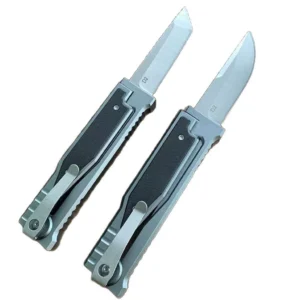
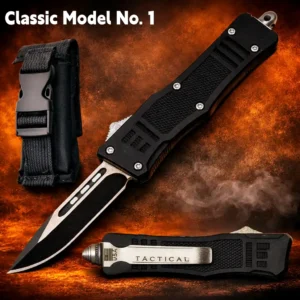
The most practical OTF knife blade style is usually a single-edge drop point. See how drop point, spear point, tanto, and dagger compare on short OTF blades for
In this article
- 01 Best OTF blade style by actual use
- 02 Quick comparison table
- 03 Why single-edge drop point is the most practical OTF blade
- 04 1. Short OTF blades benefit from extra belly
- 05 2. It keeps a useful tip without becoming overly delicate
- 06 3. Single-edge orientation is easier to manage in controlled cuts
- 07 4. It is simpler to maintain
- 08 How the other common OTF blade styles compare
- 09 Spear point: a strong second choice
- 10 Tanto: useful when tip reinforcement matters more than slicing comfort
- 11 Dagger or double-edge: least practical for routine utility
- 12 Blade shape is only part of practicality
- 13 OTF-specific observations that change the answer less than people expect
- 14 When this answer varies
- 15 Mistakes to avoid when choosing an OTF blade style
- 16 Bottom line
- 17 FAQ
- 18 What is the best all-around OTF blade shape?
- 19 Is spear point better than drop point on an OTF?
- 20 Why is double-edge less practical on an OTF?
- 21 Is tanto a good OTF blade?
- 22 Does blade shape matter more than grind?
The most practical blade style for an OTF knife is usually a single-edge drop point. On the short blades commonly seen on OTF models, it makes the best use of limited cutting edge, stays easy to control in routine tasks, and avoids the handling compromises of double-edge designs.
That answer can vary if your OTF is used mainly for puncturing, tip-focused work, or if you simply prefer a certain profile, but for everyday utility a drop point is the clearest starting point.
Best OTF blade style by actual use
- Best for everyday utility: Single-edge drop point
- Best for centered tip control with decent utility: Single-edge spear point
- Best for reinforced tip work: Tanto
- Best for symmetry and visual appeal, not general utility: Dagger / double-edge
If your knife mostly opens boxes, cuts tape, trims shrink wrap, slices cord, or handles light warehouse and daily carry tasks, drop point is the most practical shape to start with.
Quick comparison table
| Blade style | How it cuts on a short OTF blade | Tip behavior | Control in packaging cuts | Sharpening | General practicality |
|---|---|---|---|---|---|
| Drop point | Uses belly well for draw cuts and cardboard | Strong enough for normal daily work | Easy to orient and guide | Easy | Highest for mixed utility |
| Spear point | Good, but often less belly on the edge | Centered tip helps precise starts | Good in single-edge form | Easy to moderate | Very good |
| Tanto | Less smooth in long slicing cuts | Very strong front section | Good for push cuts, less natural in draw cuts | Moderate | Best for specific tasks |
| Dagger / double-edge | Usually gives up safe contact points for utility work | Fine piercing profile | Less forgiving around boxes and plastic | Harder | Lowest for routine use |
Why single-edge drop point is the most practical OTF blade
1. Short OTF blades benefit from extra belly
Many OTF knives have compact blades, so every usable millimeter of edge matters more than it does on a larger folder or fixed blade. A drop point usually gives you more belly than a spear point and a smoother continuous edge than a tanto. That helps when you are breaking down cardboard, cutting packing tape along a seam, or slicing through plastic banding in one clean pull.
On a short blade, a shape with more belly feels more efficient because more of the edge stays engaged during a draw cut. In practical terms, that means fewer repeated passes through box board and less tendency to snag when cutting tape or wrap.
2. It keeps a useful tip without becoming overly delicate
OTF users still need a tip that can start cuts cleanly. A drop point does that well enough for ordinary tasks such as piercing heavy tape on a carton corner, starting a cut in clamshell packaging, or opening plastic mailers. It is not as reinforced as a tanto, but it is usually less fragile in everyday misuse than a very narrow dagger-style point.
That balance matters on OTF knives because the handle is often large relative to the blade length. You are carrying a compact cutting edge inside a longer chassis, so the blade should earn its space by doing common work well, not just by looking aggressive.
3. Single-edge orientation is easier to manage in controlled cuts
Packaging cuts are a good example. When you are guiding the blade under tape, trimming wrap near a product, or making a shallow cut in cardboard, it helps to know instantly where the safe spine side is. A single-edge drop point gives you that orientation immediately. A double-edge dagger removes that safe reference and reduces the places your thumb or index finger can rest during careful work.
This is one of the clearest OTF-specific practicality differences: double-edge blades may look natural on an out-the-front knife, but they are usually less comfortable for the kind of close, controlled utility cuts people actually make.
4. It is simpler to maintain
A drop point with one primary edge is easier to sharpen and easier to keep consistently useful. On compact OTFs, edge length is limited, so losing sharpness is noticed quickly. A blade that is straightforward to touch up is more practical than one that demands more time, more angle control, or matching two sharpened edges.
For most owners, that matters more than small theoretical differences in piercing performance.
How the other common OTF blade styles compare
Spear point: a strong second choice
Spear point is often seen on OTF knives because the centered tip suits the straight-line deployment and gives a clean, balanced profile. In single-edge form, it can be very practical.
Where it works well:
- Starting cuts precisely in plastic or heavy tape
- Users who prefer a centered tip line
- Those who want an OTF look without moving to a double-edge blade
Its main tradeoff is that many spear points have less belly than a drop point. On a 3-inch class OTF blade, that difference is noticeable when cutting long strips of cardboard or cord. The knife still works, but the edge shape is doing slightly less for you.
Tanto: useful when tip reinforcement matters more than slicing comfort
Tanto blades make sense when the front of the blade does more work than the belly. If you often puncture dense material, make short push cuts, or want a stronger tip section, tanto has a real advantage. On an OTF, that can be useful for tasks like punching into thick plastic strapping or starting cuts in tougher synthetic material.
But on short blades, the tanto tradeoff becomes clearer. The angular edge profile gives less continuous slicing contact, so cardboard and rope often feel less smooth than they do on a drop point. The secondary angle also takes a bit more care to sharpen cleanly. That does not make tanto impractical; it makes it more task-specific.
Dagger or double-edge: least practical for routine utility
Dagger blades are closely associated with OTF styling, but for normal cutting they are usually the least practical option. The problems are easy to observe:
- No obvious safe spine side for thumb-guided cuts
- More caution required around packages, work surfaces, and fingers
- Twice the edge maintenance if both sides are sharpened
- Less everyday benefit when most tasks are slicing, not thrusting
For display appeal or personal preference, dagger is a valid choice. For opening cartons, trimming wrap, and making controlled shop or warehouse cuts, it usually gives up more than it gains.
Blade shape is only part of practicality
On compact OTF knives, edge geometry and blade stock can matter as much as blade shape. A thinly ground spear point may out-cut a thick drop point, and a bulky drop point behind the edge may feel wedge-like in cardboard even though the shape is theoretically better.
When comparing two OTFs with similar blade styles, look at:
- Blade stock thickness: thinner stock usually slices better
- Grind and edge thickness behind the edge: a thinner edge often matters more than profile alone
- Actual sharpened edge length: some OTFs lose useful edge to choils or geometry near the handle
So the practical answer is not just “drop point.” It is more precisely: a single-edge drop point with sensible grind and moderate stock thickness.
OTF-specific observations that change the answer less than people expect
Several OTF design traits make utility performance different from a manual folder:
- Short blade, long handle: because the mechanism takes space, the blade has to justify itself with efficient cutting geometry. That favors drop point over more specialized shapes.
- Quick one-handed use: clear edge orientation matters more, which favors single-edge blades over double-edge profiles.
- Compact edge length: extra belly is more valuable because there is less edge to spare.
- Frequent light-duty cutting: many real OTF tasks are tape, cardboard, plastic, and cord, not hard puncture work.
One practical inspection note: if you handle a knife in person, deploy it and look at how much of the sharpened edge is actually usable near the front opening. On some commonly listed OTF models, the shape may look good in photos, but the real working edge can feel shorter than expected once you account for the chassis and plunge area.
When this answer varies
Drop point is the most practical choice in general, but there are clear exceptions:
- Choose single-edge spear point if precise puncture starts matter more than maximum slicing ease.
- Choose tanto if you expect more tip stress or front-edge push cutting than long draw cuts.
- Choose dagger if appearance and symmetry are the main reasons for buying the OTF.
Also, knife laws vary by location, and double-edge blades can be treated more restrictively than single-edge designs.
Mistakes to avoid when choosing an OTF blade style
- Confusing blade shape with grind. A good profile cannot fully compensate for thick stock or a thick edge.
- Buying for silhouette alone. A dramatic dagger profile may fit the OTF look, but that does not make it better at box work.
- Overvaluing tip strength for light-duty use. If you mostly cut tape and cardboard, a reinforced tanto tip may solve a problem you rarely have.
- Ignoring safe control points. Single-edge blades are usually easier to manage in close, careful cuts.
Bottom line
If you want the most practical blade style for an OTF knife, choose a single-edge drop point. It makes better use of short OTF blade length, offers more useful belly for common cutting tasks, keeps a durable enough tip for everyday work, and is easier to control and sharpen than the more specialized alternatives.
If you want to compare profiles across currently listed designs, browse the OTF knife models page.
FAQ
What is the best all-around OTF blade shape?
Usually a single-edge drop point, because it balances slicing, control, tip strength, and easy maintenance better than other common OTF shapes.
Is spear point better than drop point on an OTF?
Only for users who want a more centered tip or more precise puncture starts. For mixed utility cutting, drop point is usually more efficient.
Why is double-edge less practical on an OTF?
Because it removes the safe spine side that helps with controlled packaging cuts and also adds sharpening and legal complications.
Is tanto a good OTF blade?
Yes, if your work emphasizes tip strength or short push cuts. For cardboard, wrap, and general slicing, it is usually less convenient than drop point.
Does blade shape matter more than grind?
Not always. On compact OTF knives, thin stock and a slicey edge can outweigh shape differences between otherwise similar models.