




What Size OTF Knife Should I Buy? A Practical Size Guide for Everyday Buyers

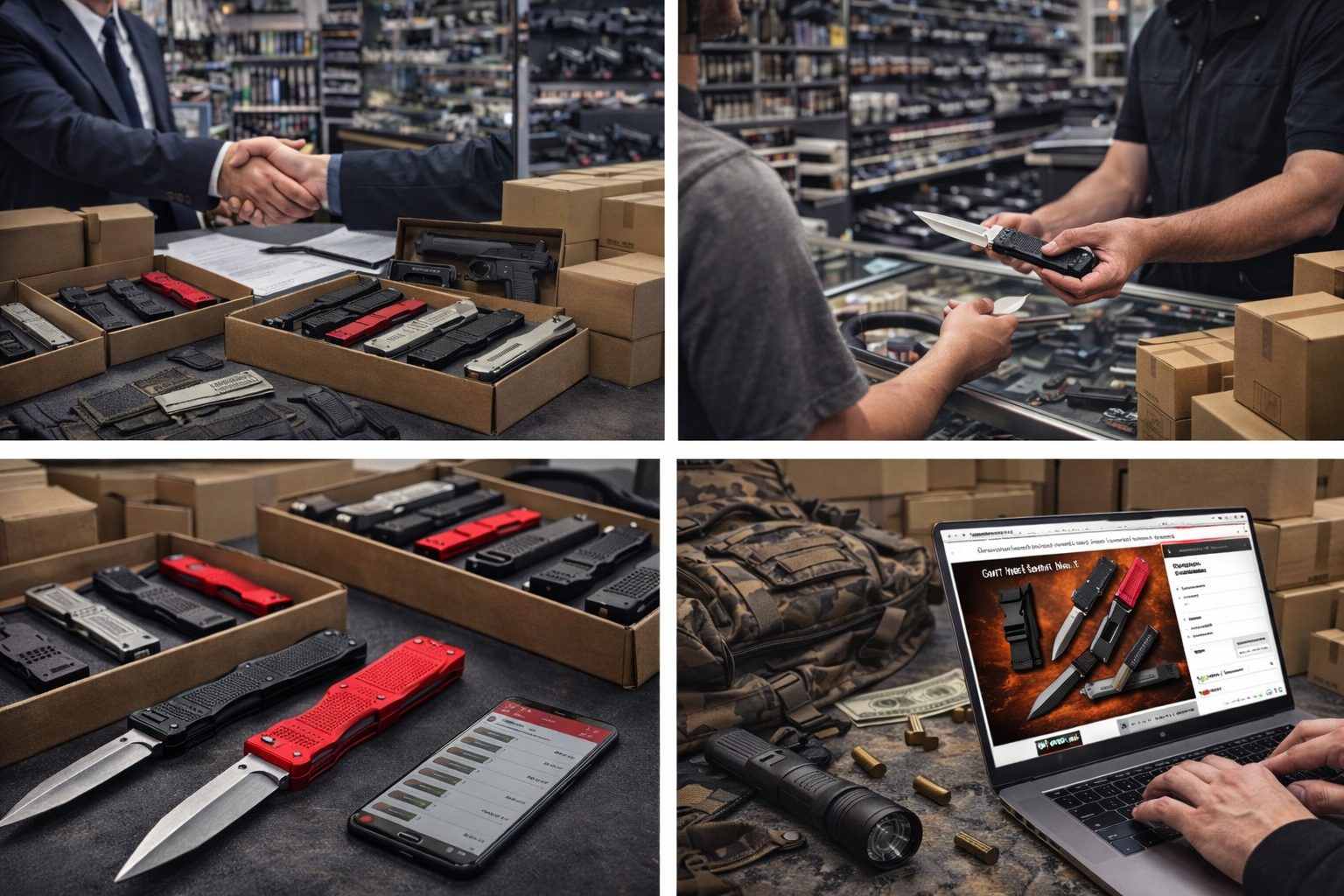
Most people should buy a mid-size OTF knife with a blade around 3.0 to 3.5 inches and an overall length around 7.5 to 8.5 inches. That size usually gives enough edge for everyday cutting while still carrying comfortably in a front pocket. The answer changes if your use case is different: go smaller if low weight and discreet carry matter most, and go larger if you have bigger hands, wear gloves, or do longer utility cuts.
Three decision criteria matter most: carry comfort, grip fit, and actual cutting task. On an OTF knife, blade length alone does not tell the whole story because the internal mechanism makes the handle longer than many buyers expect.
Best when: mid-size OTF knives work best for mixed daily tasks like opening boxes, cutting tape, trimming cord, and general pocket carry. Worse when: small OTFs can feel cramped for large hands or glove use, while large OTFs can feel heavy in lighter clothing and may be harder to carry legally in some areas.
Small vs mid-size vs large OTF knives
| Size | Typical blade length | Typical overall length | Best use | Tradeoffs | Who should buy it |
|---|---|---|---|---|---|
| Small | Under 3.0 in. | Under 7.5 in. | Light package opening, low-bulk pocket carry, backup use | Less grip space, harder with gloves, less comfortable for repeated cuts | Buyers who prioritize compact carry, lighter pants, or occasional light use |
| Mid-size | 3.0 to 3.5 in. | 7.5 to 8.5 in. | General daily carry, mixed utility work, broadest all-around use | Not the smallest option for restrictive carry, not the most spacious grip for very large hands | Most buyers, especially those with average hand size and mixed tasks |
| Large | Over 3.5 in. | Over 8.5 in. | Gloved use, larger hands, longer or heavier utility cuts | More pocket bulk, more weight, more printing, more likely to run into local limits | Buyers with XL hands, work gloves, or frequent cutting in tougher materials |
The short answer: which size should you buy?
If you want one safe starting point, buy a mid-size OTF. It fits the widest range of adult hands, handles common cutting jobs well, and is usually easier to carry all day than a large model.
Choose small if your priority is minimal pocket bulk and your cutting is limited to tape, mailers, plastic wrap, and occasional cord. Choose large if a small handle makes your pinky hang off the knife, if you regularly wear gloves, or if your work involves repeated cuts through cardboard, insulation, rope, or similar material.
Why OTF size feels different from other knives
Buyers often misjudge OTF size because they compare blade length only. With an out-the-front design, the mechanism takes up space inside the handle, so a knife with a 3.3-inch blade may have a longer closed handle than a side-opening knife with the same blade length.
That affects three things:
- Pocket comfort: an OTF can carry larger than the blade number suggests.
- Grip length: two knives with similar blades can feel very different in hand.
- Button reach: if the slider sits too far forward or back for your thumb, deployment can feel awkward even when the blade size seems right.
A practical way to judge fit is to think about your deployed grip, not just the closed profile. If your ring finger and pinky feel crowded, the knife is probably too small for regular use. If the handle feels long and heavy relative to your actual cutting jobs, it is probably larger than you need.
Choose by real use, not by looks
Daily carry
For daily carry, a blade around 3.1 to 3.4 inches is the most balanced range for many users. It is enough for boxes, tape, zip ties, plastic clamshells, and light cord without making the knife feel oversized in normal jeans or work pants.
If you wear office clothes, athletic pants, or lighter shorts, a small OTF may ride better because it prints less and weighs less. The tradeoff is reduced grip security. Buyers with medium or large hands often find that a very small OTF is fine for one quick package, but less comfortable if used several times a day.
As a rough fit guide, buyers who usually wear medium gloves can often use either small or mid-size comfortably, while buyers who wear large or XL gloves usually prefer mid-size or large handles for a full grip.
Dirty or outdoor use
In dusty, gritty, or wet conditions, size matters more for control than for mechanism cleanliness. A slightly longer handle is usually easier to stabilize when your hands are wet, dirty, or gloved. That is why many users prefer mid-size to large OTF knives for outdoor work, warehouse environments, or rougher jobsite use.
The common mistake here is assuming a longer blade is the fix. In practice, handle traction and thumb access to the slider matter more. A mid-size knife with a secure grip can be easier to use than a larger knife with poor button reach.
Repetitive utility cutting
If you break down cartons, cut shrink wrap, open pallet straps, or do repeated shallow cuts through a shift, handle comfort matters more than maximum blade length. A small OTF can do these jobs, but hand fatigue usually shows up sooner because your grip is tighter and there is less room for your last two fingers.
For repetitive cutting, mid-size is usually the best starting point. Large can make sense if you have bigger hands or wear gloves, but for many users the extra size adds carry burden without much gain in cutting efficiency.
How hand size changes the answer
Hand size is one of the clearest reasons to buy outside the mid-size range.
- Small hands: a compact or lower-end mid-size OTF may feel easier to index and carry.
- Average hands: mid-size is usually the safest choice.
- Large hands: avoid very short handles unless the knife is strictly for occasional light use.
- Glove use: move up at least one size band if possible, especially in work gloves.
A simple test is whether your hand can stay stable without shifting during a normal draw cut. If your pinky slips off the handle or your thumb has to reposition to work the slider, the knife is probably too small. If the knife feels long and top-heavy for opening mail and boxes, it is probably too large.
Common sizing mistakes buyers make
- Focusing only on blade length. On OTFs, overall length and handle length often matter more.
- Buying for appearance. A large OTF may look impressive but may be less comfortable for normal pocket carry.
- Going too small for glove use. What feels acceptable barehanded can become awkward with gloves.
- Ignoring weight and pocket bulk. Half an inch more blade can mean a noticeably larger handle in the pocket.
- Overestimating cutting needs. Most people opening packages do not need the longest blade available.
- Forgetting local law. A size that works well physically may still be a poor choice if local rules are stricter.
A simple decision framework
Use this quick framework:
- Buy small if you want the lightest, easiest-carry option and your use is occasional and light.
- Buy mid-size if you want one OTF that can handle most everyday tasks without feeling oversized.
- Buy large if you need more grip length for large hands, gloves, or repeated work cuts.
If you are comparing specific models, look at blade length, overall length, handle thickness, and slider position together. If you want to browse current OTF knife buying options, those dimensions are more useful than blade length alone.
Legal note before you buy
Blade-length limits, automatic-knife rules, and carry laws vary by state, city, and country. Before buying or carrying an OTF knife, confirm your local laws and any workplace or property rules that apply to you. A knife that is practical in size may still be restricted where you live or travel.
FAQ
Is a 3.5-inch OTF too big for daily carry?
Not always. For many users, 3.5 inches is still practical. It becomes less comfortable when the handle gets long or heavy for your clothing and pocket space.
Should I buy a small OTF if I only open packages?
Usually yes, if the handle still fits your hand securely. For package opening, grip comfort is often more important than extra blade length.
What size OTF is best for larger hands?
Most buyers with large or XL glove size do best with a mid-size at minimum, and often prefer large if they use the knife regularly or with gloves.
What size works best for work gloves?
Mid-size to large is usually better. Small OTF knives can be harder to deploy and easier to crowd in the hand when gloves are on.
Do I need a large OTF for cardboard and warehouse work?
Not necessarily. Mid-size is often enough for repeated carton and packaging cuts. Large makes more sense when you also need extra grip room or use gloves throughout the day.
Final takeaway
For most buyers, the right answer is still a mid-size OTF with a 3.0 to 3.5 inch blade and 7.5 to 8.5 inch overall length. Move down to small for compact carry and light use, or up to large for bigger hands, gloves, and longer utility cuts. If you are buying in quantity for a store or program rather than for personal use, use the same size logic first, then request details through the bulk quote page.