

Which OTF Knives Are Best for Display Sales?

Short answer
Which OTF knives are best for display sales? This B2B guide ranks the top display-winning OTF formats, names representative models, and shows how to evaluate bl
Key Takeaways
- Knife rules can vary by state, city, blade style, opening mechanism, carry method, and intended use.
- Do not treat a product nickname as a legal category; check the actual features and local rule.
- Retailers should keep legal or safety language factual and avoid promising that one item is allowed everywhere.
Terms Used Here
- OTF
- Out-the-front; a knife design where the blade moves forward from the front of the handle.
- Automatic knife
- A knife that opens by a spring-driven mechanism after the user activates a button, switch, or slider.
- EDC
- Everyday carry; gear intended for regular daily tasks.
In this article
- 01 Top display-winning OTF formats
- 02 Representative models and SKU archetypes
- 03 How to rank OTF knives for display sales
- 04 1. Blade readability through glass
- 05 2. Finish contrast under store lighting
- 06 3. Action consistency
- 07 4. Clip and hardware security
- 08 5. Packaging quality
- 09 Best by store format
- 10 Sample inspection checklist for buyers
- 11 Simple decision matrix for case planning
- 12 Tradeoffs buyers should weigh
- 13 Mistakes that hurt display sell-through
- 14 FAQ
- 15 Which OTF blade shape is best overall for display sales?
- 16 How many OTF SKUs should a new display start with?
- 17 What usually causes avoidable OTF returns in retail?
- 18 Are compact OTF knives better than full-size models for glass counters?
- 19 Do store policy and legal rules matter for OTF displays?
The best OTF knives for display sales are compact drop-point double-action models for broad appeal, mid-size dagger OTFs for visual stopping power, and mid-size tantos for tactical counters, with one dependable entry-price single-edge model rounding out the case.
Why this answer: this guide ranks display-oriented OTF knives using observable retail criteria only: blade readability through glass, finish contrast under normal case lighting, action consistency during sample checks, and fit by store type and posted price. It is written as a buying reference first, not a sales pitch.
Top display-winning OTF formats
| Rank | Format | Best for | Why it works in a case | Watch-outs |
|---|---|---|---|---|
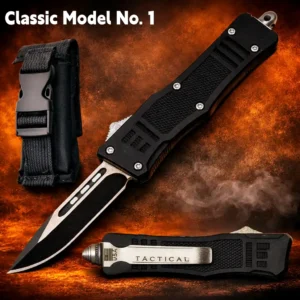
| 1 | Compact DA OTF, drop-point, aluminum handle | Gift shops, smoke shops, mixed EDC counters | Easy blade shape, approachable size, broad buyer comfort | Can look toy-like if finish, slider feel, or packaging are weak |
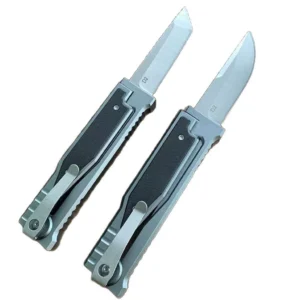
| 2 | Mid-size DA OTF, dagger blade | Hero slot, visual anchor, enthusiast counters | Symmetrical blade reads clearly through glass and grabs attention fast | Narrower utility appeal than drop-point or single-edge |
| 3 | Mid-size DA OTF, tanto blade | Gun stores, tactical displays, hard-use themed cases | Angular geometry matches tactical merchandising well | Uneven grinds and tip defects show quickly |
| 4 | Entry-price DA OTF, single-edge | Add-on sales, first-time auto buyers | Lower intimidation and clearer value at the opening price | Most sensitive to weak action, loose clips, and rough finish |
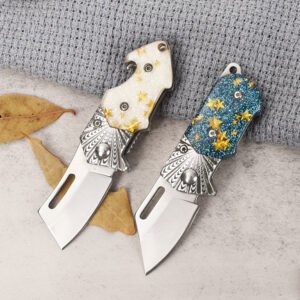
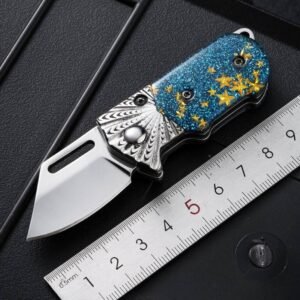
| 5 | Mid-premium DA OTF with inlay or upgraded machining | Gift-focused premium step-up slot | Adds visible price ladder without jumping into slow luxury pricing | Decorative details increase scratch and fit-risk |
Representative models and SKU archetypes
Because wholesale availability changes, the most useful answer is a mix of named market-known models and tightly defined SKU archetypes buyers can actually source. Use these as display targets, not as a claim that one brand is always best in every store.
- Microtech UTX-85, single-edge or drop-point: a strong display benchmark because the size is approachable, the machining reads cleanly through glass, and the model is recognizable to enthusiasts.
- Microtech Ultratech, dagger: a proven hero-piece benchmark because the blade silhouette is easy to identify at a distance and gives a case instant visual energy.
- Benchmade Shootout, drop-point: useful as a display reference for stores that want a more utility-led premium OTF rather than a purely aggressive look.
- Compact 2.75-inch aluminum-handle DA OTF, drop-point: the best wholesale archetype for broad display sales because it fits small counters, gifts, and first-step EDC buying.
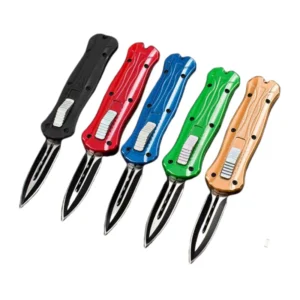
- 3.25-inch aluminum-handle DA OTF, dagger, two-tone blade: a strong archetype for the center slot because finish contrast makes the blade easier to read under average retail lighting.
If you are comparing current inventory options rather than brand benchmarks, review available OTF knife buying options against the checklist below instead of buying by blade style alone.
How to rank OTF knives for display sales
For display-led selling, the knife has to succeed before the customer touches it. These are the criteria that matter most when you inspect samples in person:
1. Blade readability through glass
Blades that read clearly from three to six feet away sell better in glass counters. Drop-point and dagger profiles usually read faster than busy compound grinds or very short novelty blades. A blade under about 2.5 inches often disappears unless the finish contrast is strong.
2. Finish contrast under store lighting
Black handle with satin or stonewashed blade is still the safest display formula because the blade stands out. All-black knives can work in tactical stores, but in mixed retail they often flatten visually unless the handle machining is crisp.
3. Action consistency
Display sellers create returns if the action feels inconsistent. During sample checks, fire and retract each sample multiple times. Look for misfires, slider drag, uneven spring feel, and blade seating that changes from one cycle to the next.
4. Clip and hardware security
Loose clips, soft screws, and visible body gaps create customer doubt immediately. On display merchandise, these flaws are often noticed before blade steel or internal mechanics are discussed.
5. Packaging quality
For gift-led stores, packaging is part of the display sale. A clean box, molded insert, and readable labeling help justify price. Thin cartons and poor printing make even a decent knife feel cheaper.
Best by store format
| Store format | Best first choice | Best second choice | Avoid overbuying |
|---|---|---|---|
| Smoke shop or small glass counter | Compact drop-point DA OTF | One entry-price single-edge | Large daggers that take space but convert narrowly |
| General EDC or gift counter | Compact or mid-size drop-point | One mid-premium upgraded finish model | Too many all-black tactical variants |
| Gun store or tactical retailer | Mid-size tanto | Mid-size dagger hero piece | Novelty colors and decorative inlays |
| Knife-focused enthusiast shop | Mid-size dagger | Compact utility-oriented drop-point | Low-grade budget OTF depth |
Sample inspection checklist for buyers
Before placing a display-focused order, inspect at least one sample per finish family and run this checklist:
- View the knife through glass or a phone camera from several feet away. Can the blade shape be identified quickly?
- Check finish contrast. Does the blade stand apart from the handle under indoor lighting?
- Cycle the action at least 10 times. Any misfire, hesitation, or gritty slider feel should disqualify a display SKU.
- Inspect the clip by hand. It should feel tight, centered, and free from rocking.
- Check grind symmetry, especially on dagger and tanto blades where errors are easy to see.
- Look at body screws and seams. Gaps, uneven anodizing, or mismatched hardware lower perceived quality fast.
- Review packaging for shelf appeal, damage resistance, and barcode or SKU clarity for staff.
- Confirm that the knife fits your posted price lane without needing a long explanation from staff.
Simple decision matrix for case planning
If you are building a first OTF case, use this practical mix instead of chasing too many styles at once:
- 40% core sellers: compact or mid-size drop-point models in black, gray, or blue.
- 25% visual anchors: mid-size dagger models with strong blade contrast.
- 20% tactical lane: one or two tantos if your store already sells firearm or tactical accessories.
- 15% opening-price or step-up lane: one dependable budget single-edge or one upgraded mid-premium model, depending on customer profile.
That mix keeps the case readable and prevents one narrow style from dominating the assortment. If your traffic is mostly gifts and casual EDC, shift more depth into compact drop-points. If your traffic is enthusiast or tactical, move some of that share into dagger and tanto facings.
Tradeoffs buyers should weigh
The main tradeoff in display OTF merchandising is attention versus conversion. Dagger blades and aggressive tactical profiles usually pull more eyes, but they do not fit every buyer’s idea of a practical carry knife. Compact drop-points and single-edge knives convert more broadly, but they need strong finish contrast and clean machining or they disappear in the case. The best display assortment uses one dramatic model to stop shoppers, then closes sales with easier shapes and cleaner utility cues.
Mistakes that hurt display sell-through
- Buying too many similar black tactical SKUs: the case turns into a visual wall and shoppers cannot tell models apart.
- Letting the lowest price define the section: one budget SKU helps; a whole budget-heavy case lowers trust and perceived quality.
- Ignoring packaging: especially in gift-oriented stores, packaging quality affects conversion more than many buyers expect.
- Skipping clip checks: customers often notice weak clips immediately, and staff lose confidence showing the item.
- Overcommitting to daggers in mixed retail: they are excellent anchors, but not always the best volume sellers.
FAQ
Which OTF blade shape is best overall for display sales?
For total sell-through, drop-point is usually the safest overall choice. For pure visual stop power, dagger is stronger.
How many OTF SKUs should a new display start with?
Usually 4 to 6 SKUs is enough for a first case set. Start with one hero model, two or three broad-appeal utility shapes, and one opening-price or step-up option.
What usually causes avoidable OTF returns in retail?
The most common avoidable issues are inconsistent firing, sticky sliders, loose clips, visible grind asymmetry, rough coating, and packaging that makes the product feel cheap.
Are compact OTF knives better than full-size models for glass counters?
In many mixed-traffic stores, yes. Compact OTFs use space efficiently and appeal to more buyers, provided the blade shape and finish are still easy to read through glass.
Do store policy and legal rules matter for OTF displays?
Yes. Automatic knife laws and store policies vary by state, city, marketplace, and retailer. Check local rules, age-verification practices, and your own display policy before ordering; this guide is not legal advice.
If you need side-by-side wholesale pricing or want to compare finish tiers after narrowing your shortlist, you can use the bulk quote request once your display plan is already defined.