

What Is a Good Knife Sharpener?


Short answer
Learn what makes a good knife sharpener, how to choose the right style for kitchen, pocket, and OTF knives, and what buyers should look for when sourcing wholes
In this article
- 01 What makes a knife sharpener “good”?
- 02 Different types of sharpeners and when they work best
- 03 Manual pull-through sharpeners
- 04 Whetstones and water stones
- 05 Guided sharpening systems
- 06 Electric sharpeners
- 07 Specialty sharpeners for pocket and OTF knives
- 08 How to choose the right sharpener for your customers
- 09 Common mistakes buyers should avoid
- 10 What retailers and wholesale buyers should look for in a product line
- 11 How to tell if a sharpener is actually working
- 12 Practical FAQ
- 13 What is the best type of knife sharpener for beginners?
- 14 Are electric sharpeners better than manual sharpeners?
- 15 Can one sharpener work for all knives?
- 16 How often should a knife be sharpened?
- 17 What should wholesale buyers ask before ordering sharpeners?
A good knife sharpener is one that restores a clean, usable edge without removing too much metal, damaging the blade, or making the knife harder to control. For most buyers, the best sharpener is the one that matches the knife type, the user’s skill level, and how often the knife is used. A simple guided sharpener may be best for everyday home kitchens, while a more durable system with multiple stages may be better for retail customers, resellers, and buyers who want a dependable product line.
For stores and wholesale buyers, the right sharpener also needs to be easy to explain, consistent in performance, and built well enough to avoid customer complaints. That usually means looking beyond price alone and focusing on angle control, abrasive quality, safety, and the kinds of blades your customers actually own.
What makes a knife sharpener “good”?
A good knife sharpener should do three things well: create a sharp edge, protect the blade, and be easy to use correctly. If a sharpener is too aggressive, it can shorten the life of the knife. If it is too mild, it may not restore a dull edge. The best options strike a balance.
Here are the main qualities to look for:
- Consistent sharpening angle: A steady angle helps produce an even edge and reduces guesswork.
- Appropriate abrasives: Coarse stages remove damage, while finer stages refine the edge.
- Stable design: The sharpener should stay in place and feel secure during use.
- Blade-friendly contact: It should sharpen efficiently without scratching or gouging the blade unnecessarily.
- Clear instructions: Customers are more likely to use it correctly if the process is simple.
For wholesale buyers, a good product is also one that returns fewer complaints, works for a broad customer base, and fits the price points your store needs.
Different types of sharpeners and when they work best
Not every knife sharpener is meant for every knife. A model that works well for kitchen cutlery may not be the best choice for pocket knives, outdoor blades, or specialty knives. Understanding the main types helps you choose better inventory and guide customers more accurately.
Manual pull-through sharpeners
These are popular because they are simple. The user pulls the knife through preset slots, often with coarse and fine stages. They are easy to explain and sell well to casual users who want convenience. The downside is that lower-quality pull-through sharpeners can be rough on blades if the abrasives are too aggressive or the angle is poorly designed.
Whetstones and water stones
These offer excellent control and can produce very refined edges, but they require more skill. They are a strong fit for experienced users who enjoy a hands-on sharpening process. For retail shelves, they may appeal to enthusiasts more than beginners. For many shoppers, the learning curve is the main drawback.
Guided sharpening systems
These systems help hold the blade at a fixed angle, which makes them easier to use than freehand stones while still offering precision. They are a strong middle ground for customers who want better results without advanced technique. Buyers often like them because they can support a wider range of knife styles.
Electric sharpeners
Electric sharpeners are fast and convenient, which makes them attractive for busy households and high-use environments. They are especially useful when customers need repeatable results with minimal effort. Still, they should be chosen carefully, since low-quality units may remove too much material or overheat the edge if used incorrectly.
Specialty sharpeners for pocket and OTF knives
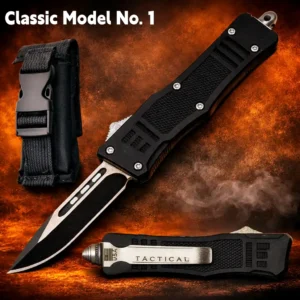
Compact blades and automatic knives can benefit from sharpeners that allow controlled, even passes and precise angle handling. If your customer base includes collectors, enthusiasts, or buyers interested in automatic models, it helps to carry products that pair well with those use cases. You can explore related inventory in the OTF and automatic knife category when planning a broader blade care assortment.
How to choose the right sharpener for your customers
The best sharpener for one buyer may be the wrong choice for another. A practical buying decision starts with the knife type, the user’s comfort level, and the result they expect.
For home cooks: A simple manual or guided sharpener is often enough. Many customers want something fast, safe, and easy to store.
For outdoor users: A compact sharpener with durable construction may be more useful than a large countertop unit. Portability matters.
For knife enthusiasts: Stones or guided systems may be preferred because they offer more control and finer finishing.
For retail and online sellers: Look for products that are easy to describe, have broad appeal, and come back with fewer returns.
For distributors and wholesale buyers: Balance price, durability, packaging quality, and customer satisfaction. A sharpener that looks good on the shelf but fails quickly can create more problems than profit.
If you are sourcing for a store or online catalog, it can also help to ask whether the sharpener is suitable for the mix of knives your customers already own. That includes straight-edge kitchen knives, pocket knives, and specialty blades with different edge profiles. When in doubt, offer a few distinct options rather than one product that tries to do everything.
Common mistakes buyers should avoid
One of the biggest mistakes is choosing a sharpener only because it is cheap. A low-cost unit that damages edges or wears out quickly can lead to returns, negative reviews, and unhappy customers. Another common mistake is assuming all sharpeners work the same way. A coarse system may fix a very dull blade, but it may not be the best finishing tool for regular maintenance.
Other mistakes include:
- Ignoring blade material: Harder steels may need more careful sharpening than basic stainless blades.
- Using the wrong angle: An angle that is too steep can weaken the edge, while one that is too shallow may not sharpen effectively.
- Skipping maintenance: Some sharpeners need cleaning or replacement parts to keep working well.
- Buying without testing feel and stability: A sharpener should feel secure, not shaky or awkward.
- Overpromising results: A good sharpener improves performance, but it cannot fix severe blade damage instantly.
For B2B buyers, product testing matters. A sample order can reveal whether the sharpener is easy to use, how it is packaged, and whether the instructions are clear enough for your customers.
What retailers and wholesale buyers should look for in a product line
When building a sharpening category, it helps to offer a mix of entry-level and upgraded options. Some customers want a quick fix. Others want a tool they can use for years. A balanced assortment can serve both.
Look for sharpeners with:
- Strong packaging: Clear retail presentation helps sell the product and reduces confusion.
- Reliable build quality: Stable bases, durable handles, and quality abrasives matter.
- Simple feature explanations: If a buyer can understand the value in seconds, the product is easier to move.
- Broad compatibility: The more knife types it can handle, the more useful it is to customers.
- Repeat order potential: Replacement parts, consumables, or accessory upsells can strengthen margins.
Wholesale buyers should also think about how the sharpener fits into the rest of the knife category. Accessories often sell best when they are paired with knives, storage, and care products. For buyers adding automatic blades or related inventory, it is worth reviewing the wholesale inquiry form to discuss assortment planning and ordering options.
How to tell if a sharpener is actually working
A sharpener should produce a cleaner cut with less pressure. A properly sharpened knife should slice through paper, produce smoother cuts in food prep, and feel more controlled in the hand. The edge should look even, not torn or visibly uneven. If the knife still struggles after several passes, the sharpener may be too mild, the angle may be wrong, or the blade may need a more thorough restoration.
Customers should also pay attention to how the knife feels after sharpening. If it becomes rough, scratches appear along the edge, or the blade seems to lose too much metal, that is a sign the tool or technique needs adjustment. In a retail setting, being able to explain these basic checks can improve customer confidence and reduce returns.
Practical FAQ
What is the best type of knife sharpener for beginners?
For beginners, a guided manual sharpener is often the easiest choice. It helps control the angle and reduces the chance of making mistakes. Many customers prefer this over freehand stones because it is simpler to learn.
Are electric sharpeners better than manual sharpeners?
Not always. Electric sharpeners are faster and convenient, but manual sharpeners can offer more control and may be gentler when used properly. The better choice depends on the knife, the user, and how often sharpening is needed.
Can one sharpener work for all knives?
Some sharpeners are designed for a wide range of blades, but no single tool is perfect for every knife. A product that works well for kitchen knives may not be ideal for specialty or automatic knives. It is best to match the sharpener to the blade type whenever possible.
How often should a knife be sharpened?
That depends on use, blade quality, and storage habits. A frequently used kitchen knife may need attention more often than a lightly used pocket knife. Regular touch-ups usually work better than waiting until the blade is very dull.
What should wholesale buyers ask before ordering sharpeners?
Ask about build quality, packaging, compatibility, return rates, and whether the product is suited to your customer base. It also helps to request samples and confirm how the sharpener is intended to be used so you can sell it accurately.
A good knife sharpener is not just the one that sharpens quickly. It is the one that fits the blade, the buyer, and the level of use. For shoppers, that means better results and less frustration. For retailers and wholesale buyers, it means choosing products that are easy to trust, easy to explain, and useful enough to earn repeat business.